
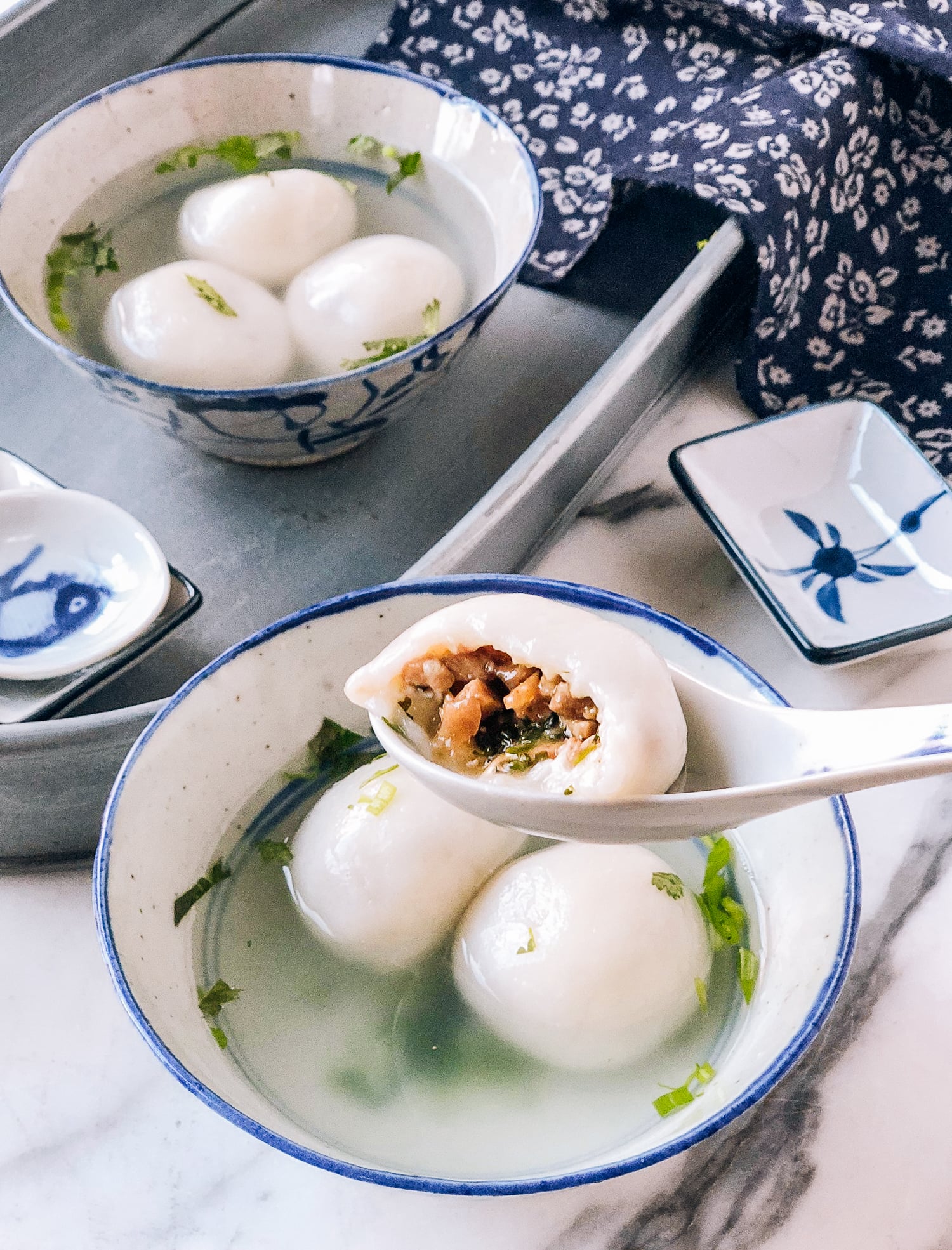
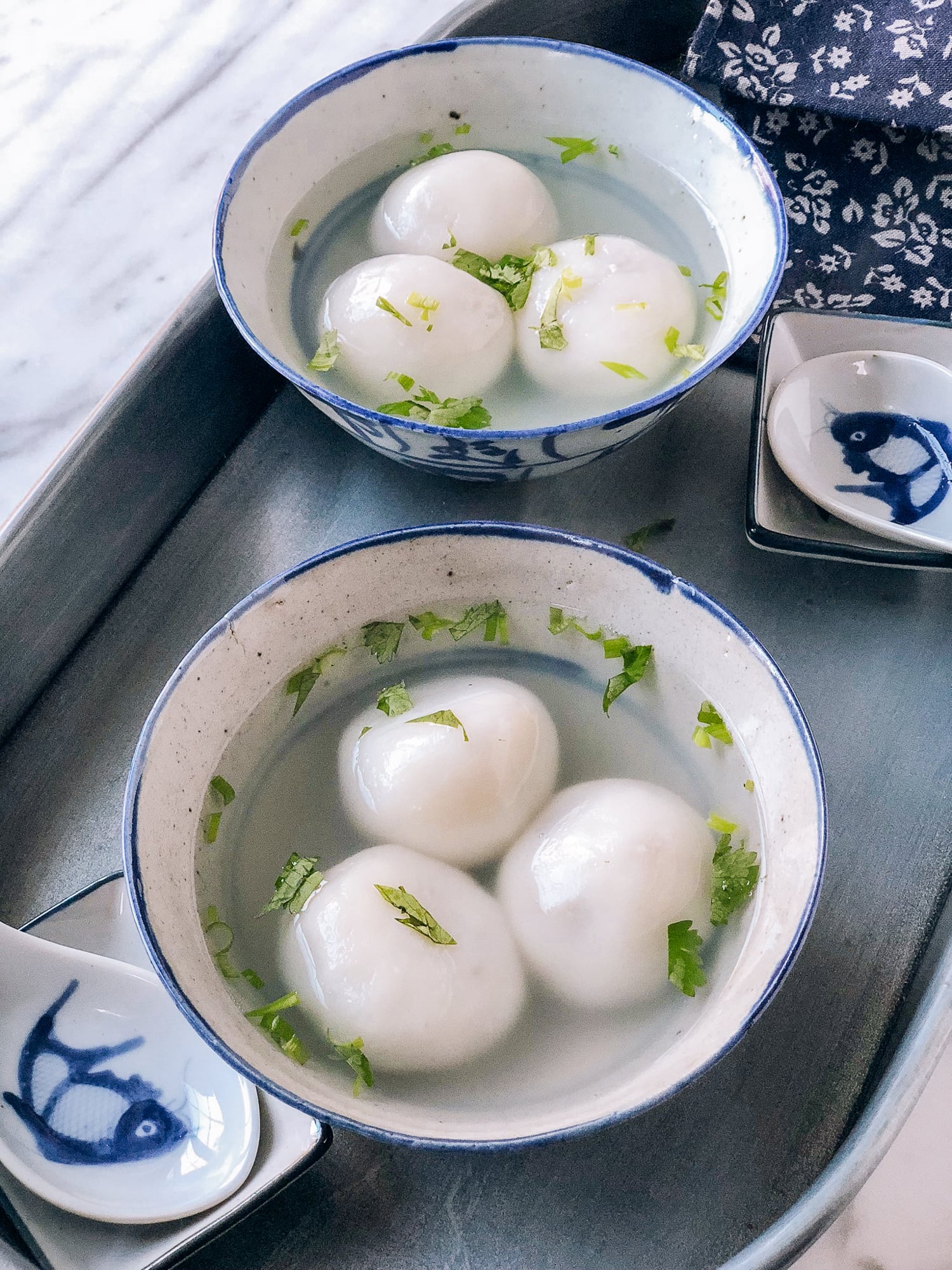
This savory tang yuan recipe is a Hakka Chinese specialty. Make this traditional and delicious treat yourself at home with our step-by-step savory tang yuan recipe!
Sweet vs. Savory Tang Yuan
Tāngyuán (汤圆) are a sign of Chinese New Year—with both sweet and savory fillings. They are served during the Lantern Festival (the last day of the Chinese New Year celebration, or Spring Festival).
In Chinese, the Lantern Festival is actually known as Yuánxiāo jié (元宵节). Yuánxiāo are actually glutinous rice balls, very similar to tangyuan (see below). That just goes to show how essential they are to the Lantern Festival holiday!
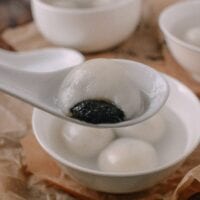
You’re probably most familiar with the sweet version of these round glutinous rice dumplings (the direct translation of tāngyuán is “soup ball”), usually filled with sweet sesame paste, red bean paste, or sweet peanut paste, served in hot water or a light sweet soup. Judy’s recipe for Black Sesame Tang Yuan is traditional, easy to make, and well-tested!
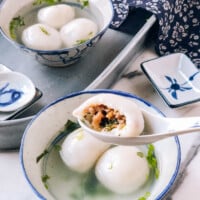
But the much more obscure variety is a Savory Tang Yuan with pork filling. The filling is inspired by Hakka flavors and uses a winning combination of salted radish with pork, dried shrimp and mushrooms.

An Aside: Tangyuan vs. yuanxiao
While they’re both served during the Lantern Festival and are very similar in taste and appearance, tang yuan and yuanxiao have a key difference:
Tangyuan are made very much like dumplings—a glutinous rice flour (i.e. ground sticky rice) dough forms a wrapper, and the filling goes inside the wrapper. Yuanxiao, on the other hand, involves taking a firm ball or cube of filling, and then placing it in a container of glutinous rice flour. The container is then shaken and swirled to make the filling roll around in it. A thick coating of glutinous rice flour surrounds it to form a ball.
The final results for the two methods look very similar! Tangyuan comes from southern China, while Yuanxiao is a northern Chinese food.
A Symbol of Togetherness
During the Lantern Festival, these little round dumplings symbolize togetherness and family unity. Chinese New Year’s eve and day always involve family gatherings and dinners, but the following days are also part of the festivities.
The Lantern Festival is always on the 15th day of the first month of the lunar new year. It marks the first full moon and signifies the official close of Chinese New Year celebrations. People celebrate this day by hanging all kinds of lanterns (like the ones we saw when we went to the Chengdu Temple Fair, watching lion dances, and, of course, eating lots of tang yuan or yuan xiao, both sweet and savory.
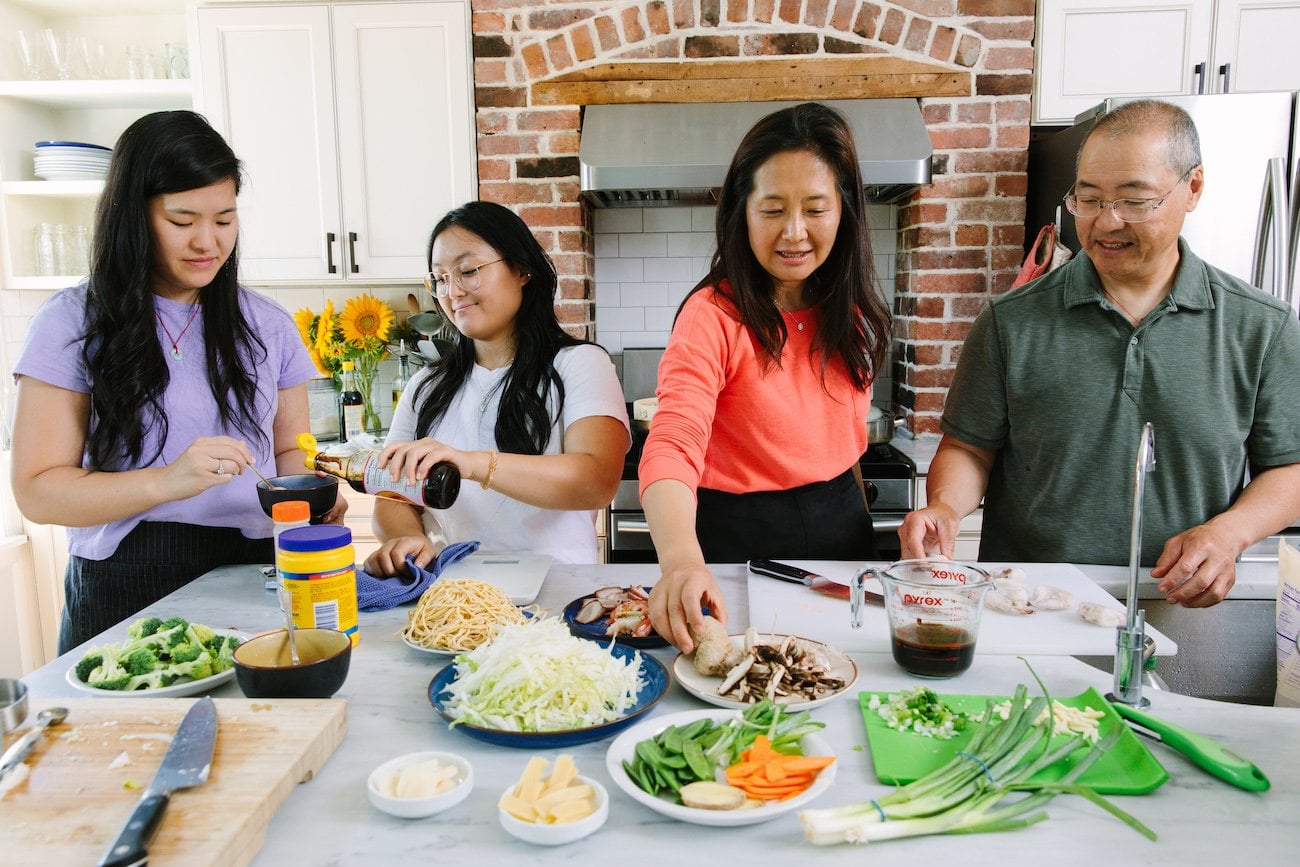
Celebrate your Lantern Festival holiday this year with some of these Savory Tang Yuan. They’re surprisingly easy to make, and they also freeze well for preparing in advance. Get your friends and family to help you make a big batch!
Savory Tang Yuan Recipe Instructions
First make the filling. Soak your dried shiitake mushrooms in a bowl of hot water for 30 minutes. Place a small plate on top to ensure they’re fully submerged. Cut the stems off the mushrooms and discard them. Return the mushrooms to the water if they still seem dry inside, since thicker mushrooms will take longer to rehydrate. Finely chop the mushrooms and set aside, reserving the soaking water.
Also soak your dried shrimp in hot water for 30 minutes. Strain and rinse them before chopping them. Rinse the salted preserved radish under running water and pat dry before chopping.
Tip!
To save time, prep the other ingredients while the dried shrimp and mushrooms are soaking!
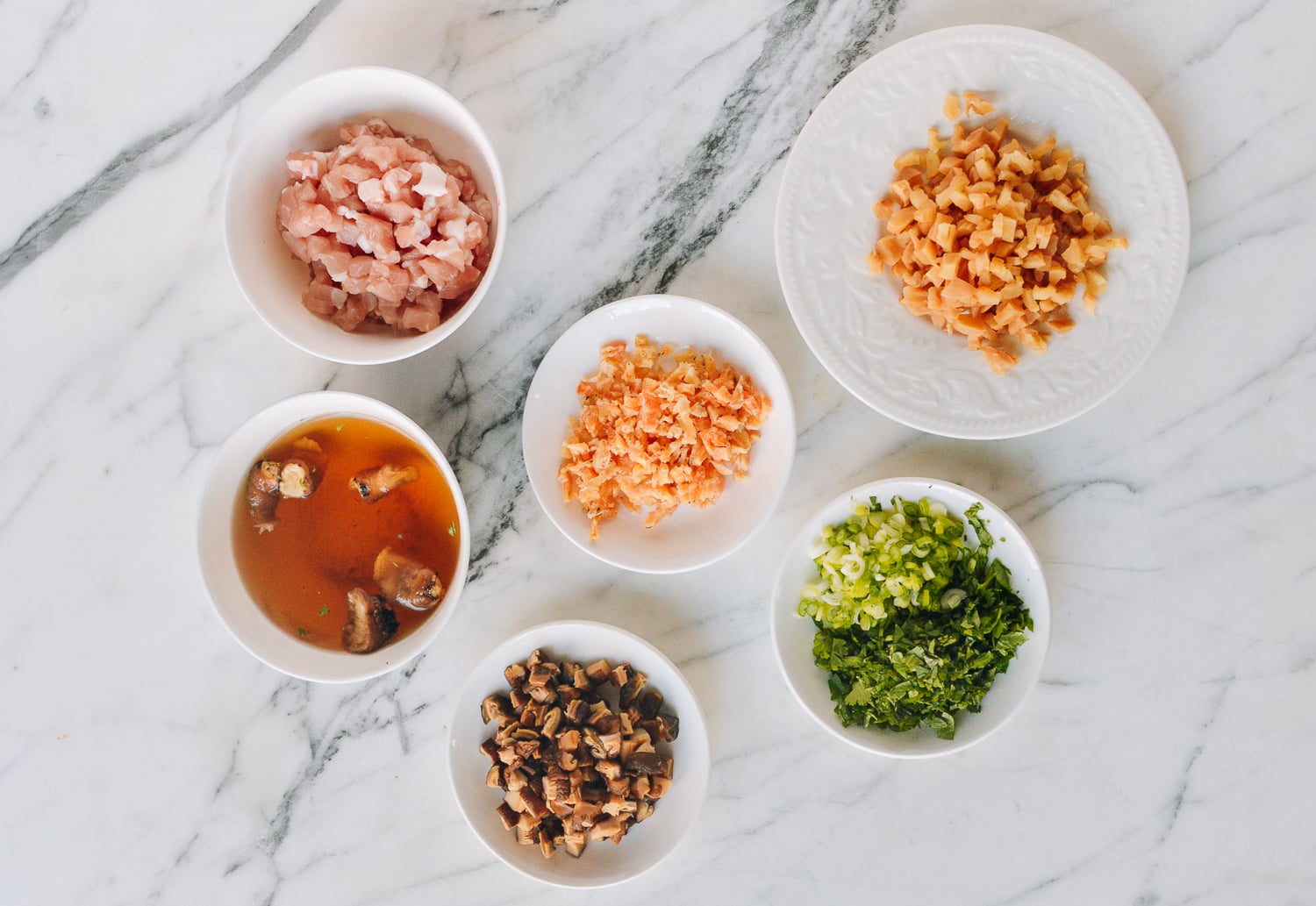
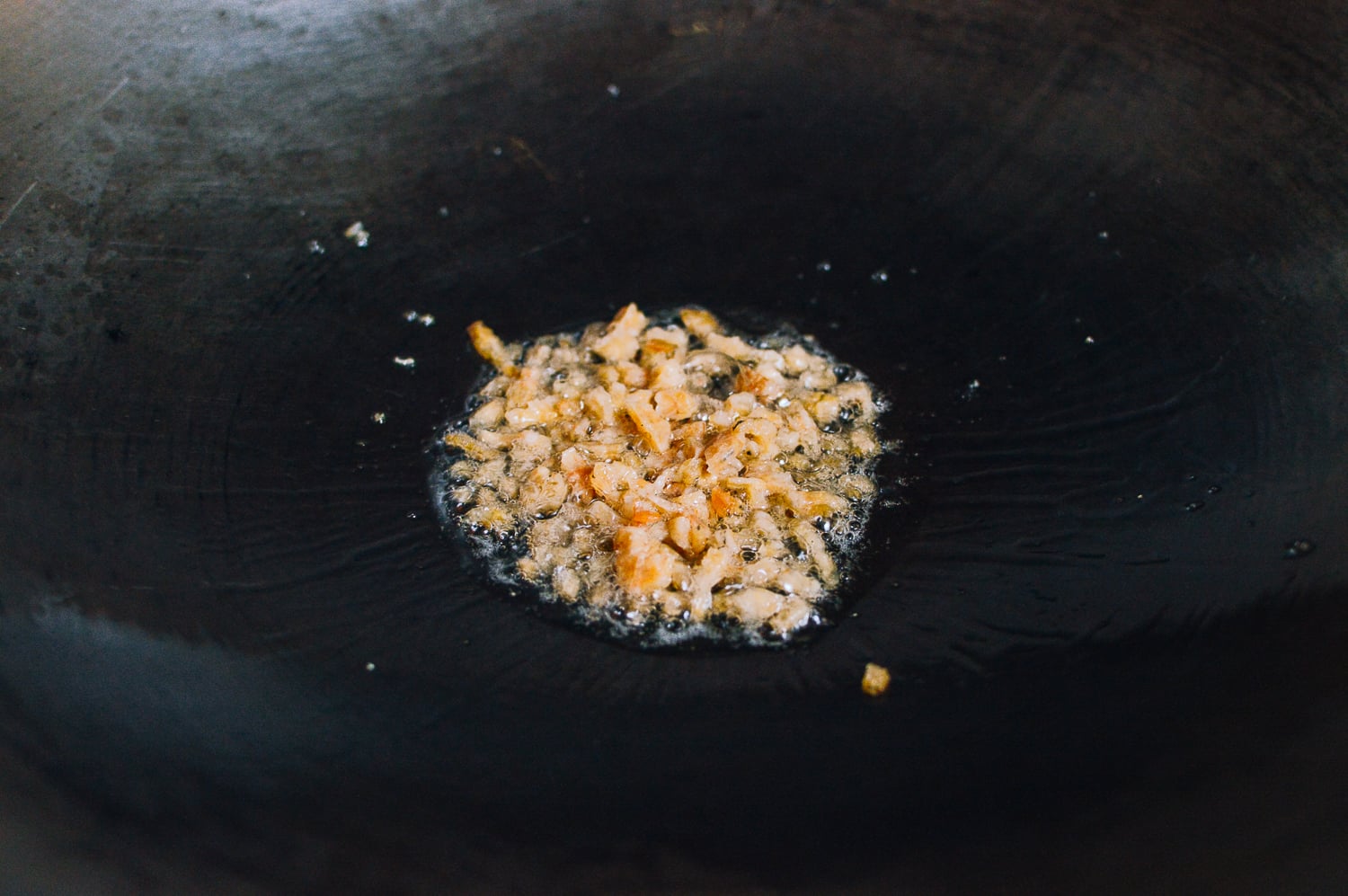
Heat 2 tablespoons vegetable oil in your wok over medium low heat. Add the dried shrimp and cook until fragrant (about a minute).
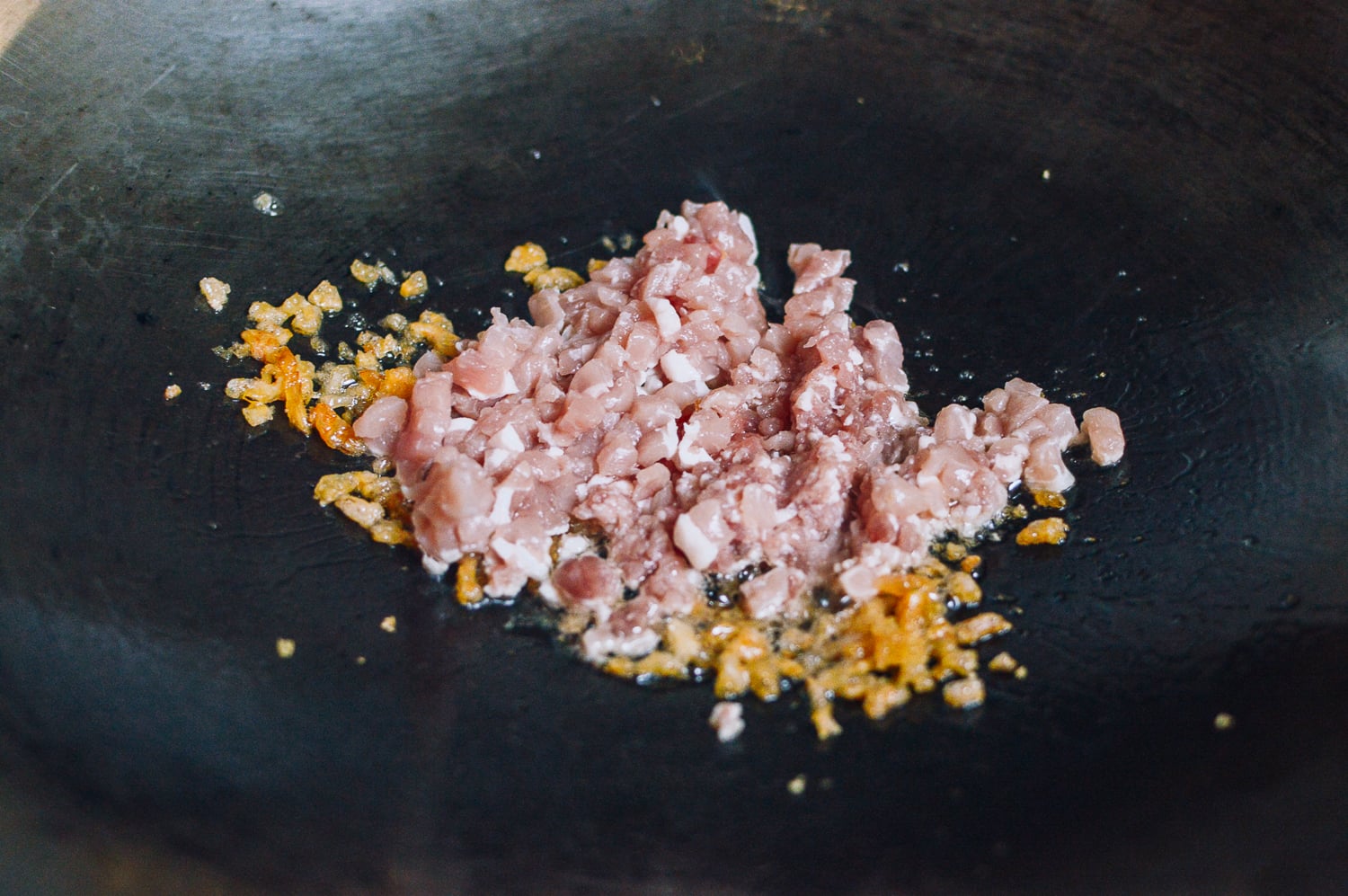
Next, add the finely chopped pork and stir-fry for 30 seconds, or just until the pork is no longer pink.
Add the chopped Shiitake mushrooms, salted preserved radish, and Shaoxing wine.
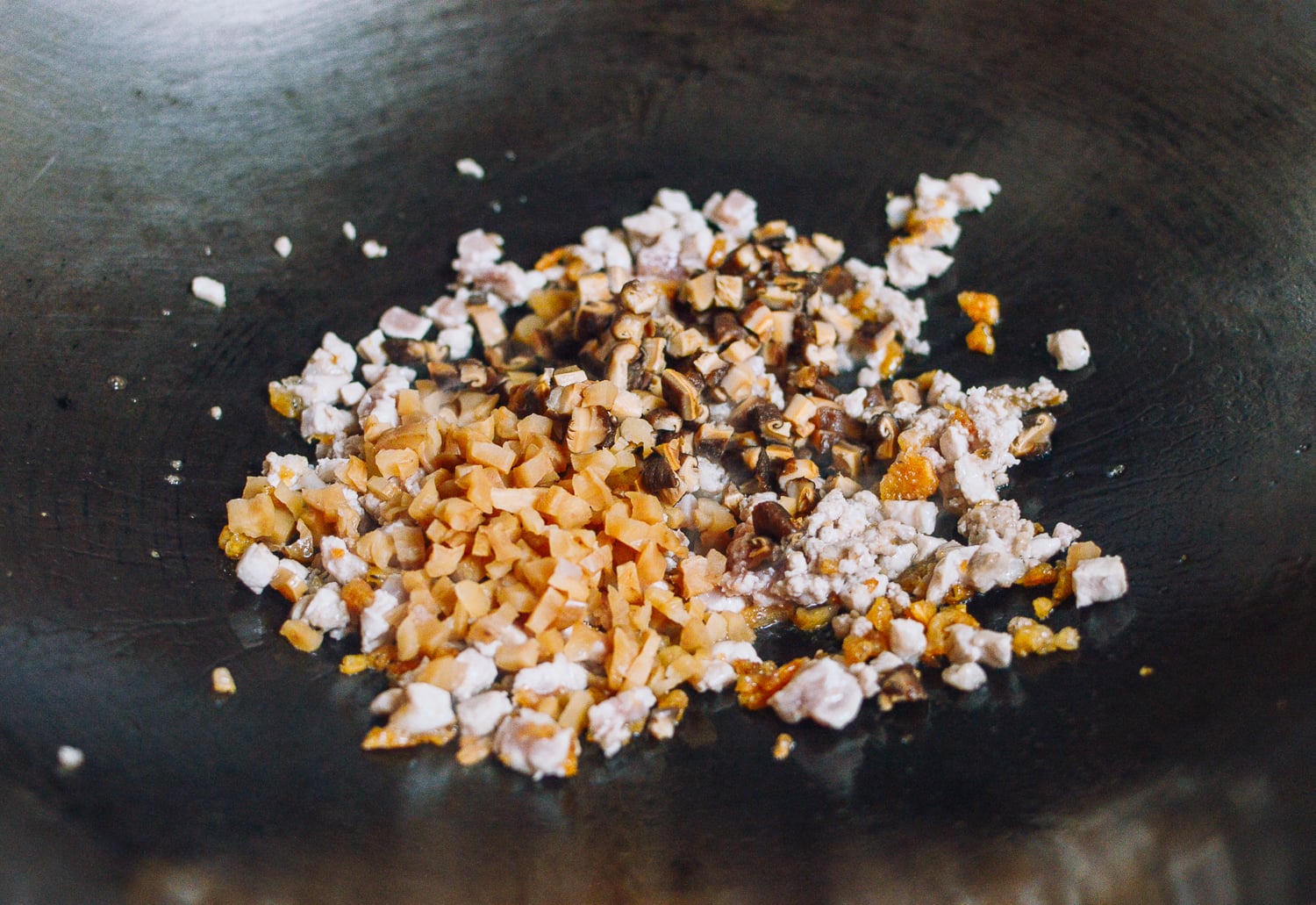
Stir fry for another 30 seconds. Mix in the sesame oil, salt, sugar, white pepper, oyster sauce, chopped cilantro, chopped scallion and 1 cup of the mushroom soaking liquid.
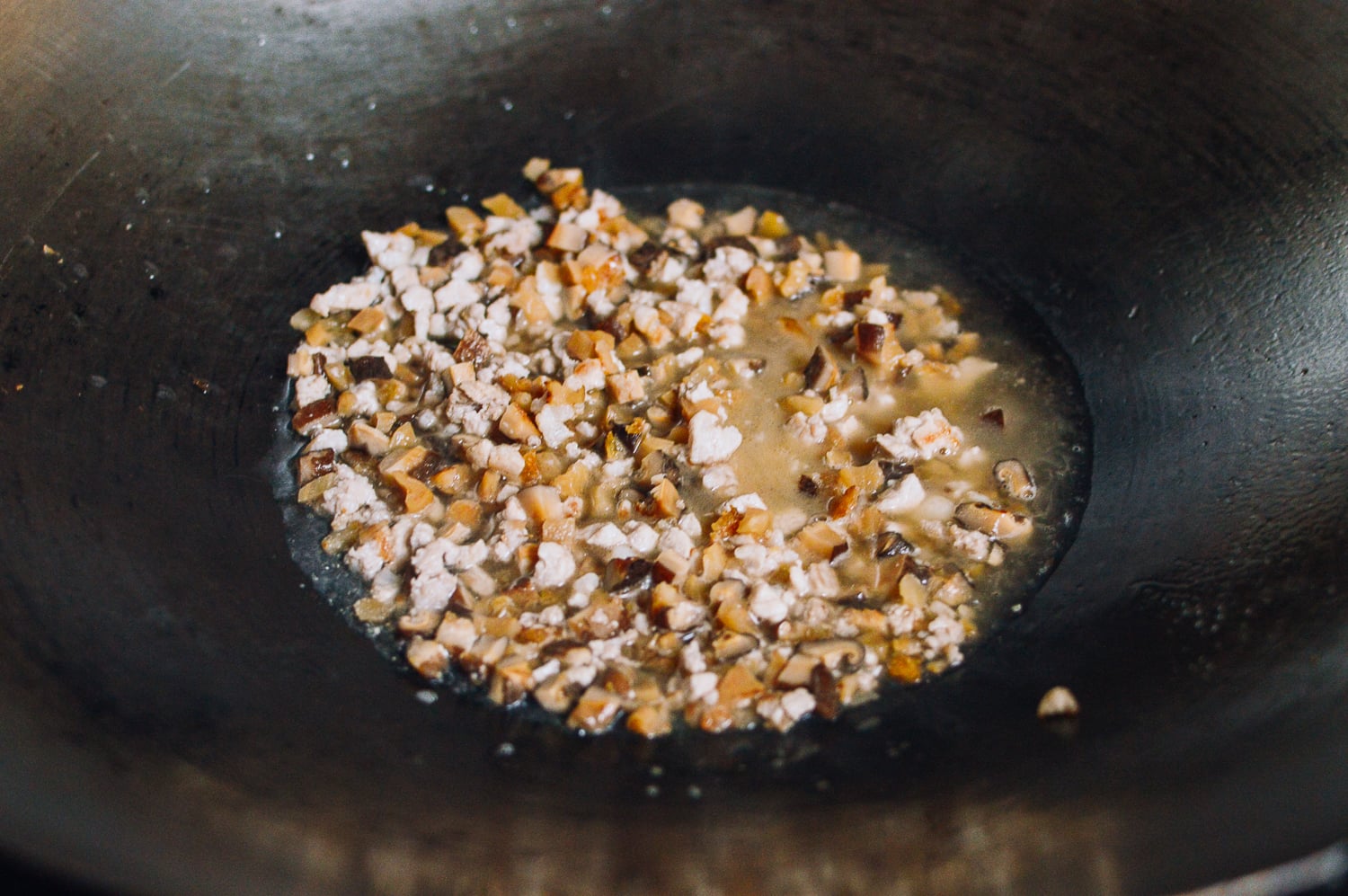
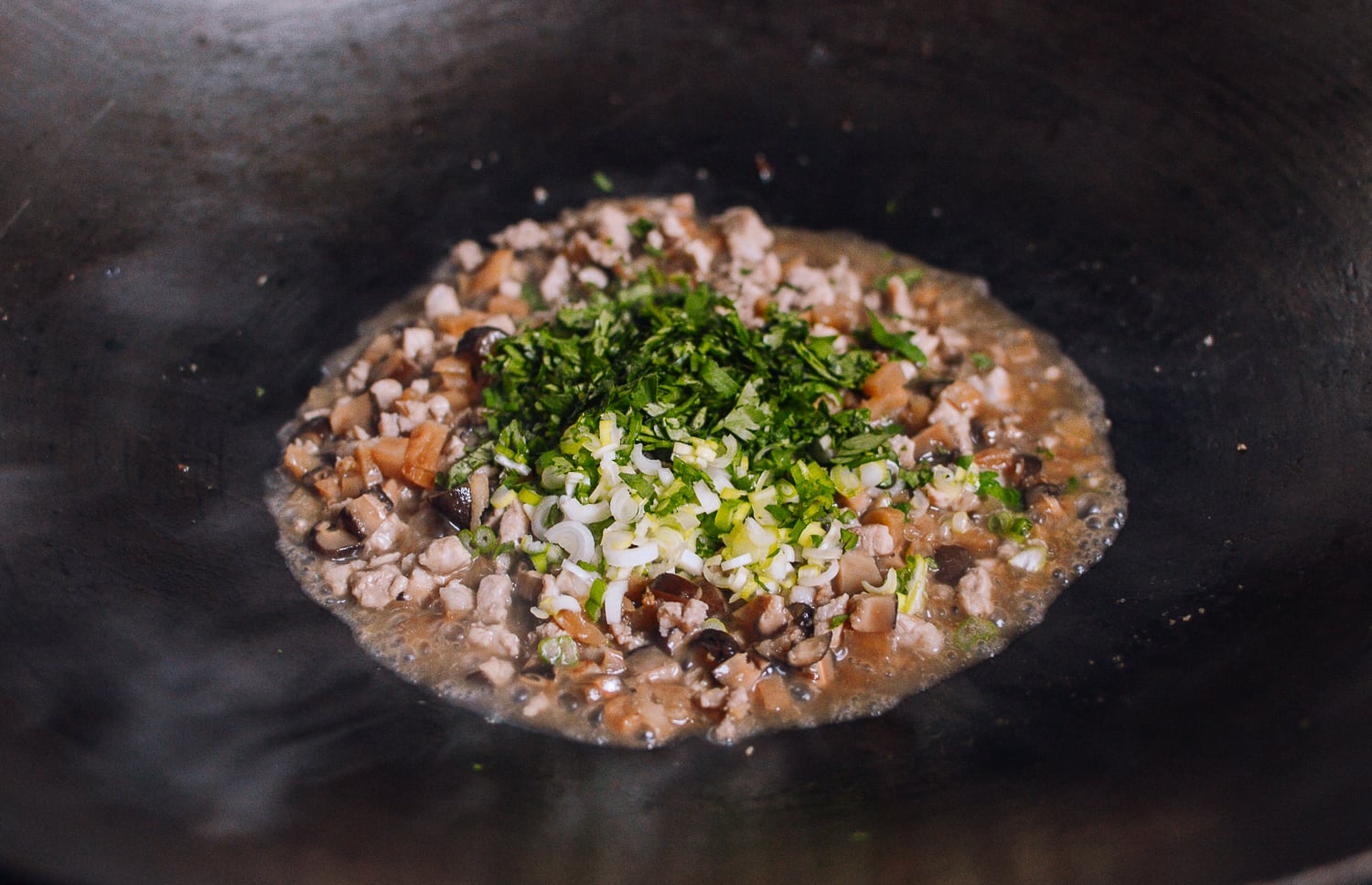
Cook on medium low heat until simmering, stirring often for 2 to 3 minutes, or until about half of the liquid has evaporated.

Next, stir in the cornstarch slurry. Cook until the mixture thickens and all standing liquid cooks off. Set aside, cool, and refrigerate for 30 minutes to an hour.
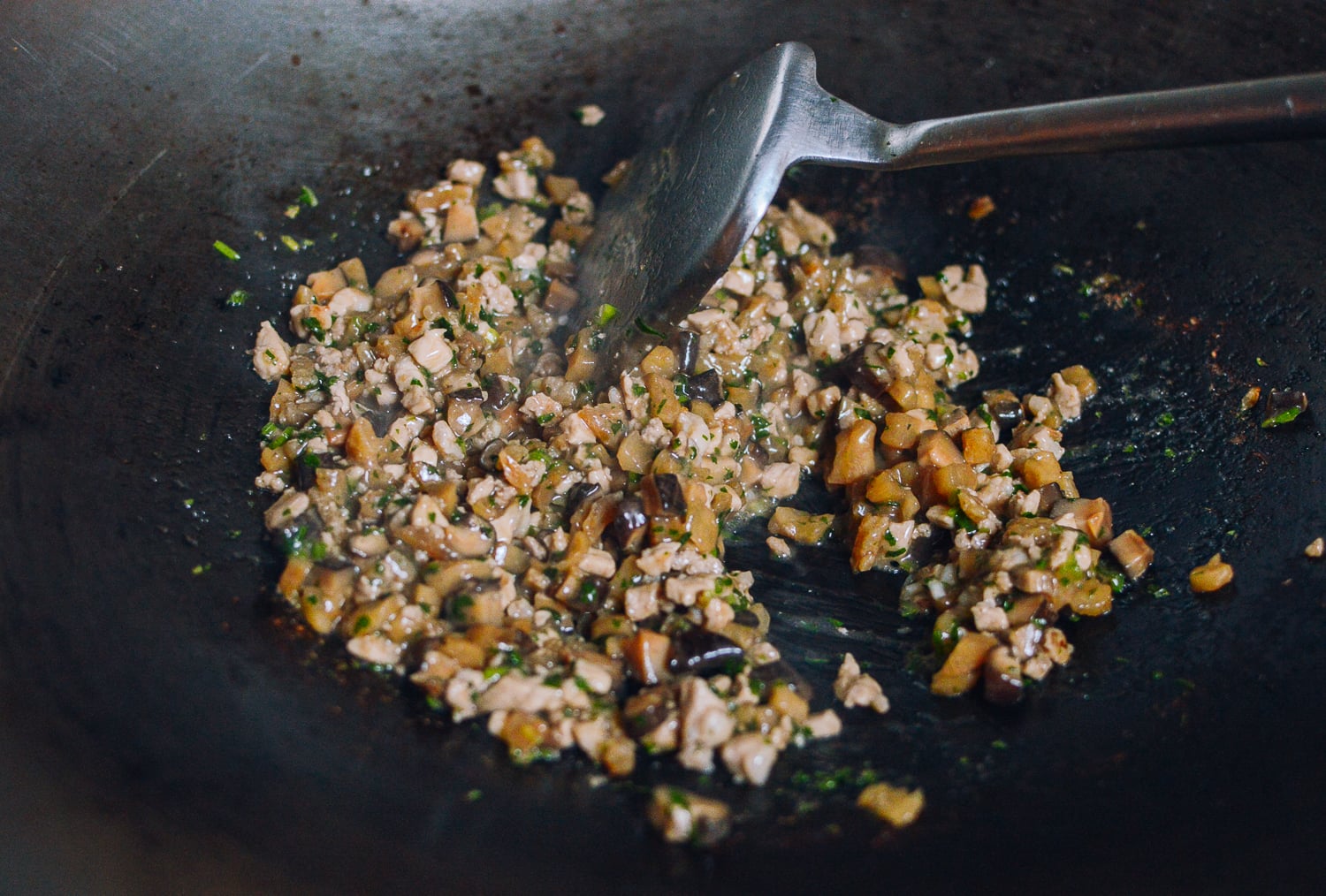
While the filling cools, make the dough. Mix 3½ cups glutinous rice flour and ½ teaspoon salt in a large bowl. Stir in 1½ cups warm water and mix with chopsticks or a rubber spatula until a dough begins to form.
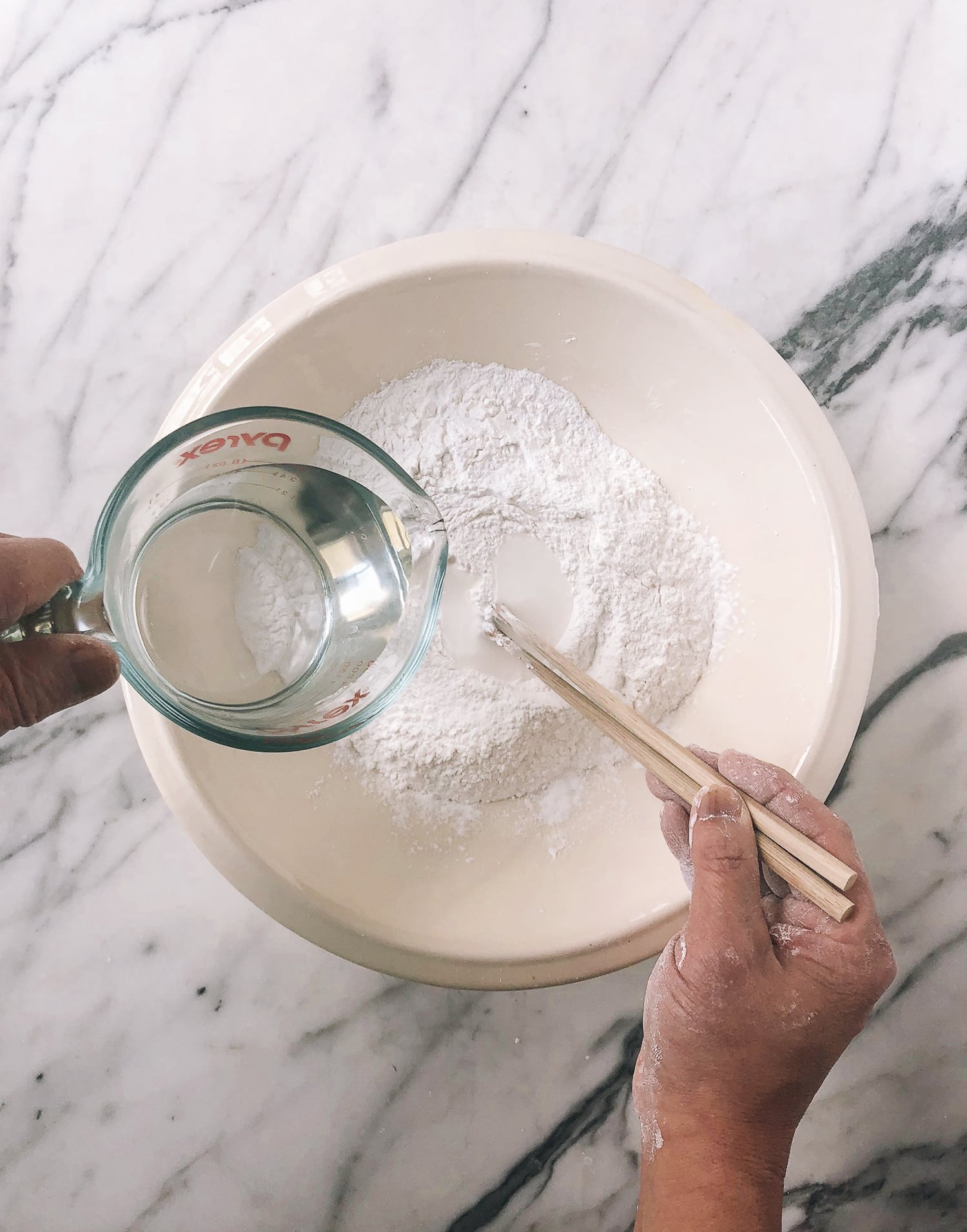
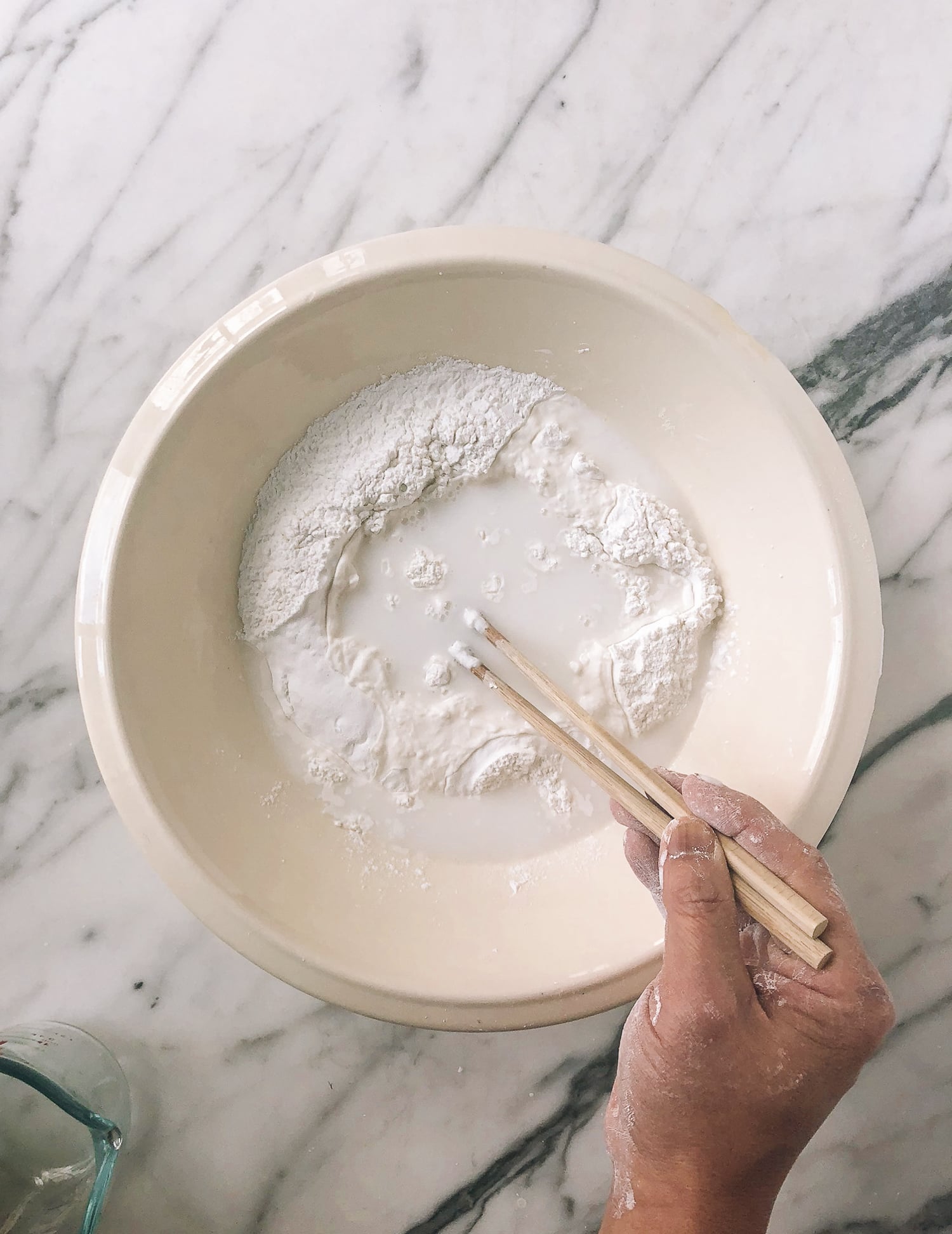
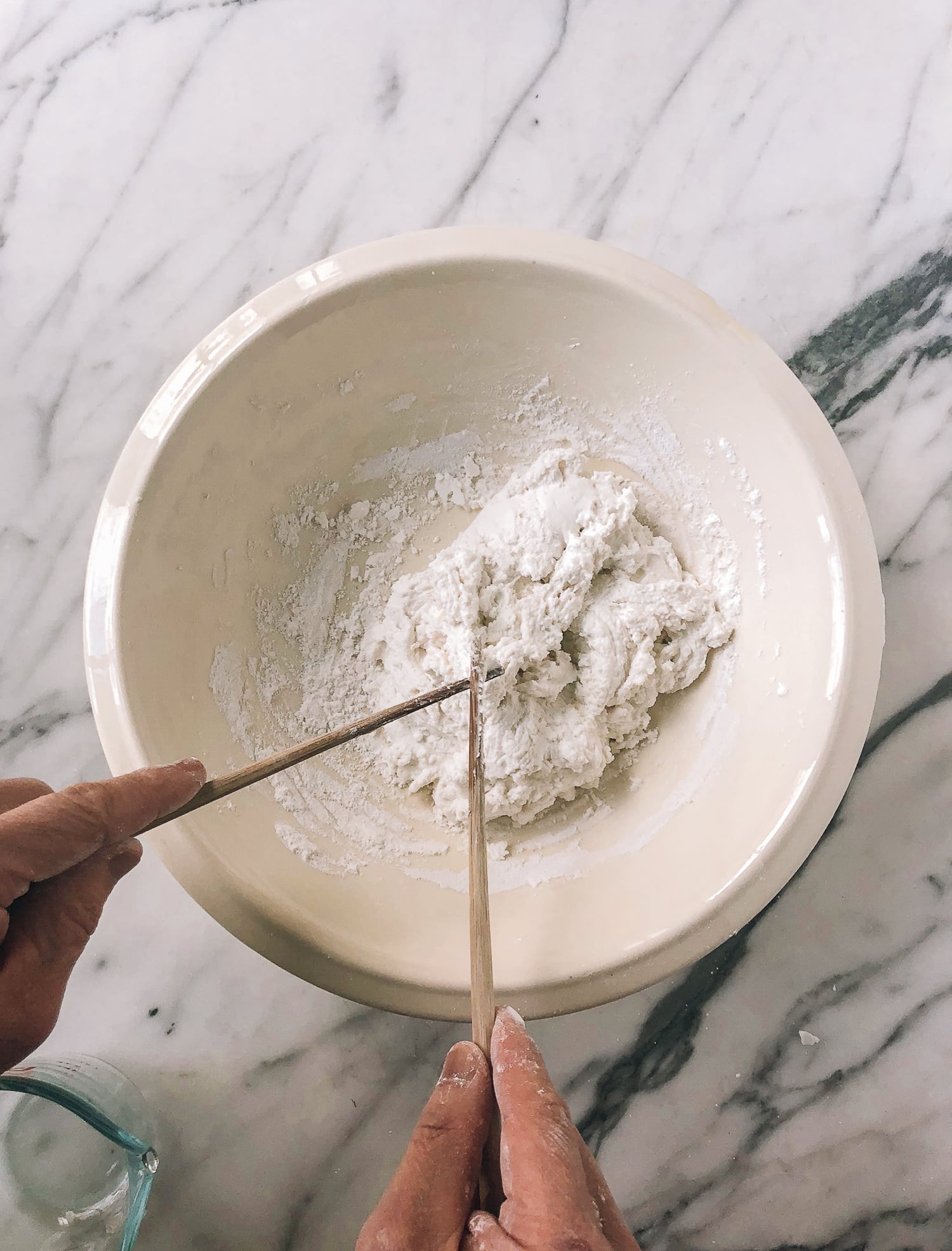
Use your hands to knead until smooth. If the dough is too sticky, simply add more glutinous rice flour 1 tablespoon at a time until the dough forms a smooth ball.
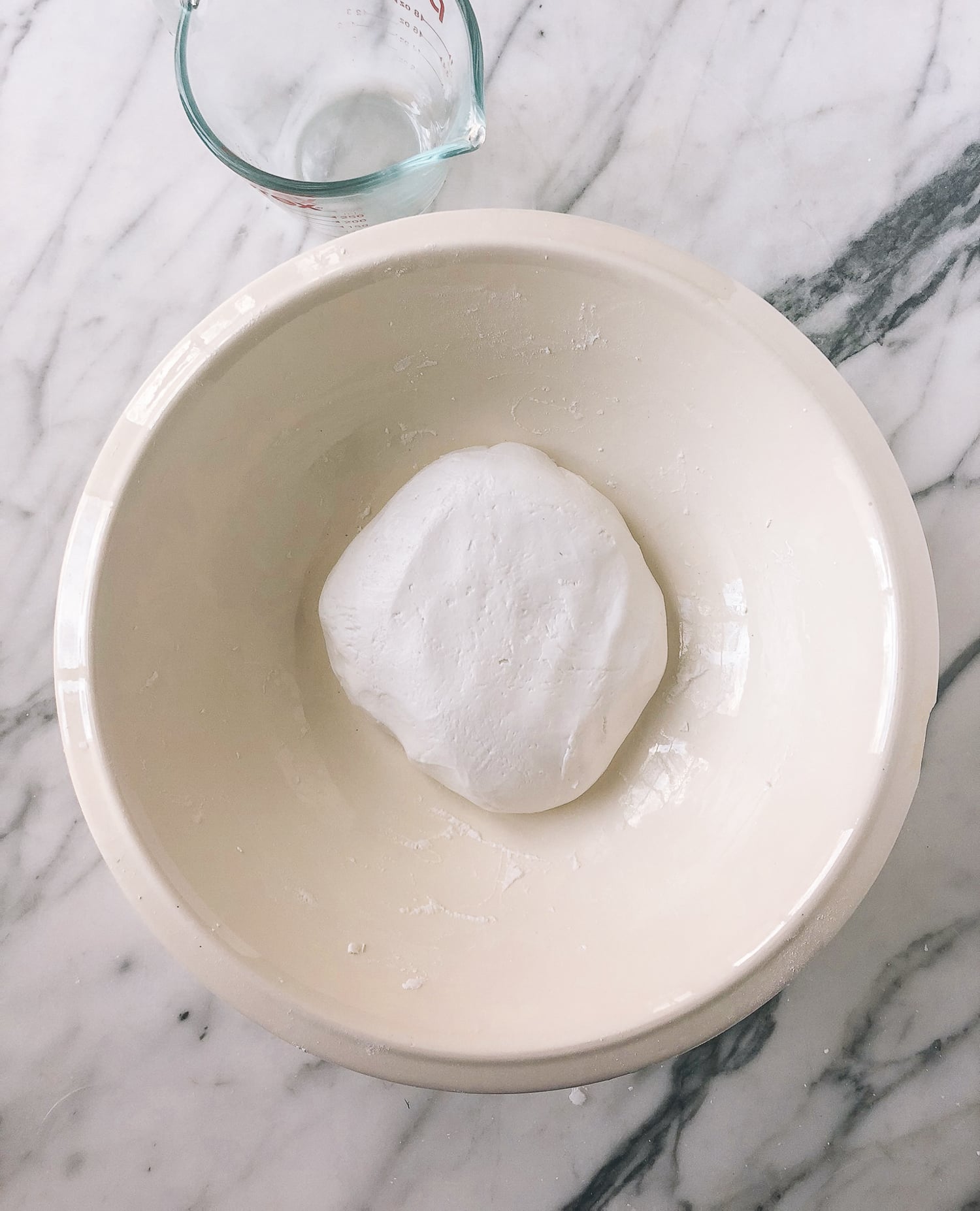
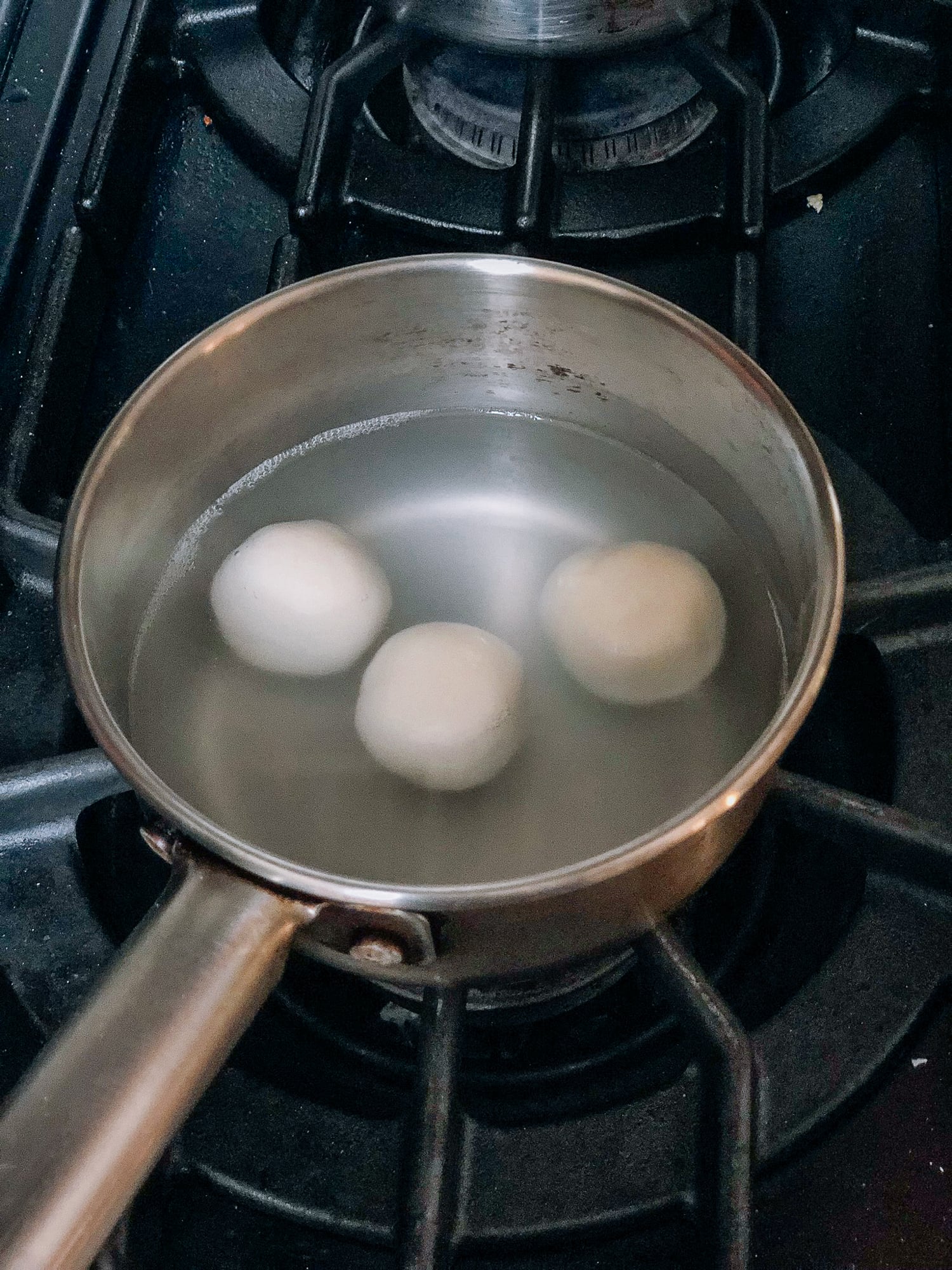
Next, pinch off three small pieces of dough to form three balls about 1 inch in diameter. Cook in a small pot of boiling water until they float, about 6 to 7 minutes.
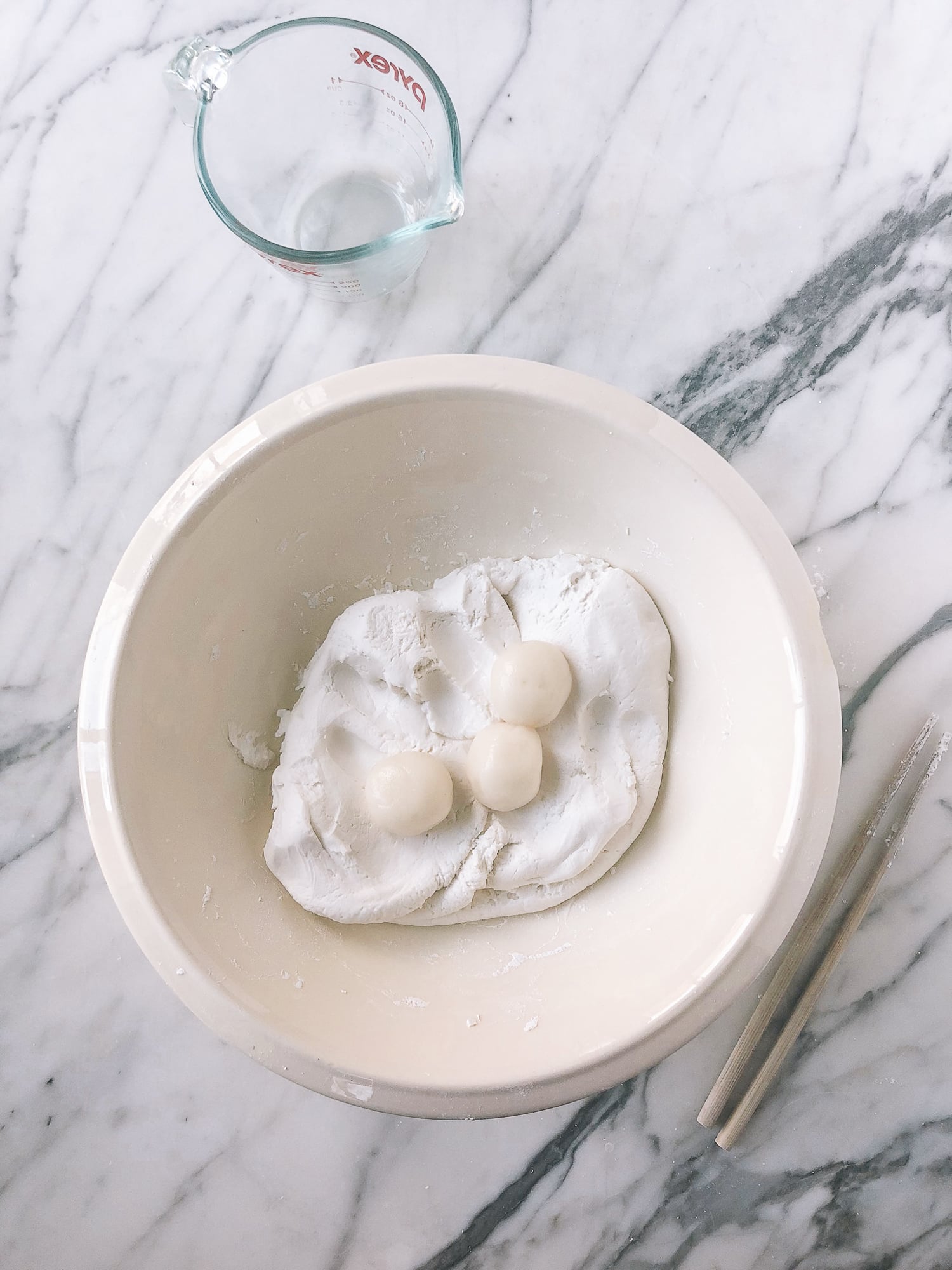
Now, add them to the raw dough, kneading them in until the dough is soft and smooth.
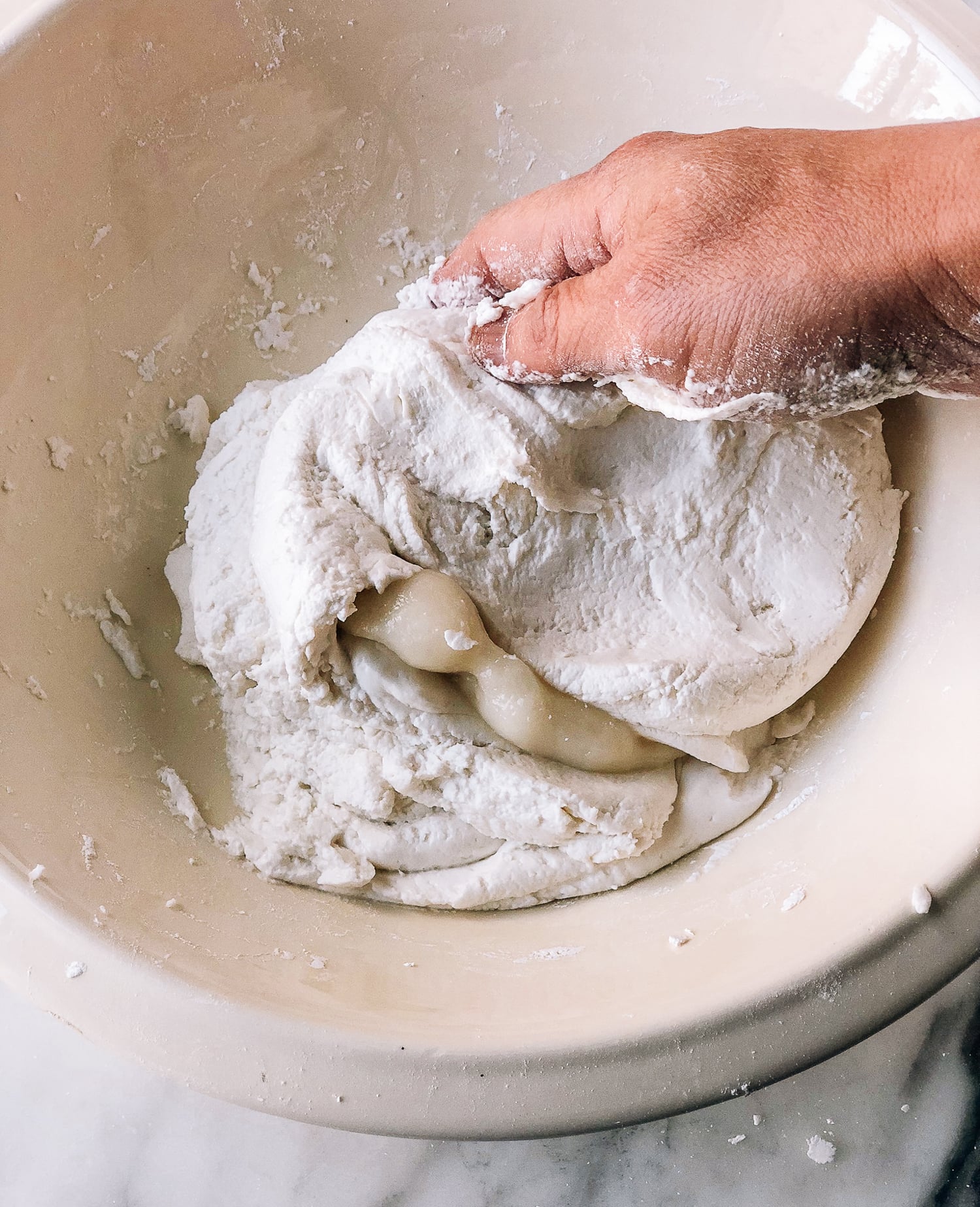
At first, it’ll look like the dough might not come together. But give it a few minutes of kneading, and it does!
Now, divide the dough into 24 equal pieces about 32 grams each (a digital kitchen scale helps to ensure each is the same size), Keep them covered with a clean, damp kitchen towel to prevent drying while assembling your Savory Tang Yuan.
Take your filling out of the refrigerator, stirring it to redistribute the ingredients. There should be no visible liquid, and the filling should be somewhat dry.
Use your fingers to form each dough ball into a round disc.
Spoon about 1 tablespoon (15 g) of filling on the center of the disc. Use the spoon to lightly pack the filling so there are no air pockets. Fold over the edges of the dough to close the tang yuan, lightly pressing in the savory filling if needed. If the dough breaks, you can use a small piece of dough to patch it, using a little dab of glutinous rice flour and water to spackle it back together. Keep a small bowl of both handy for this purpose.
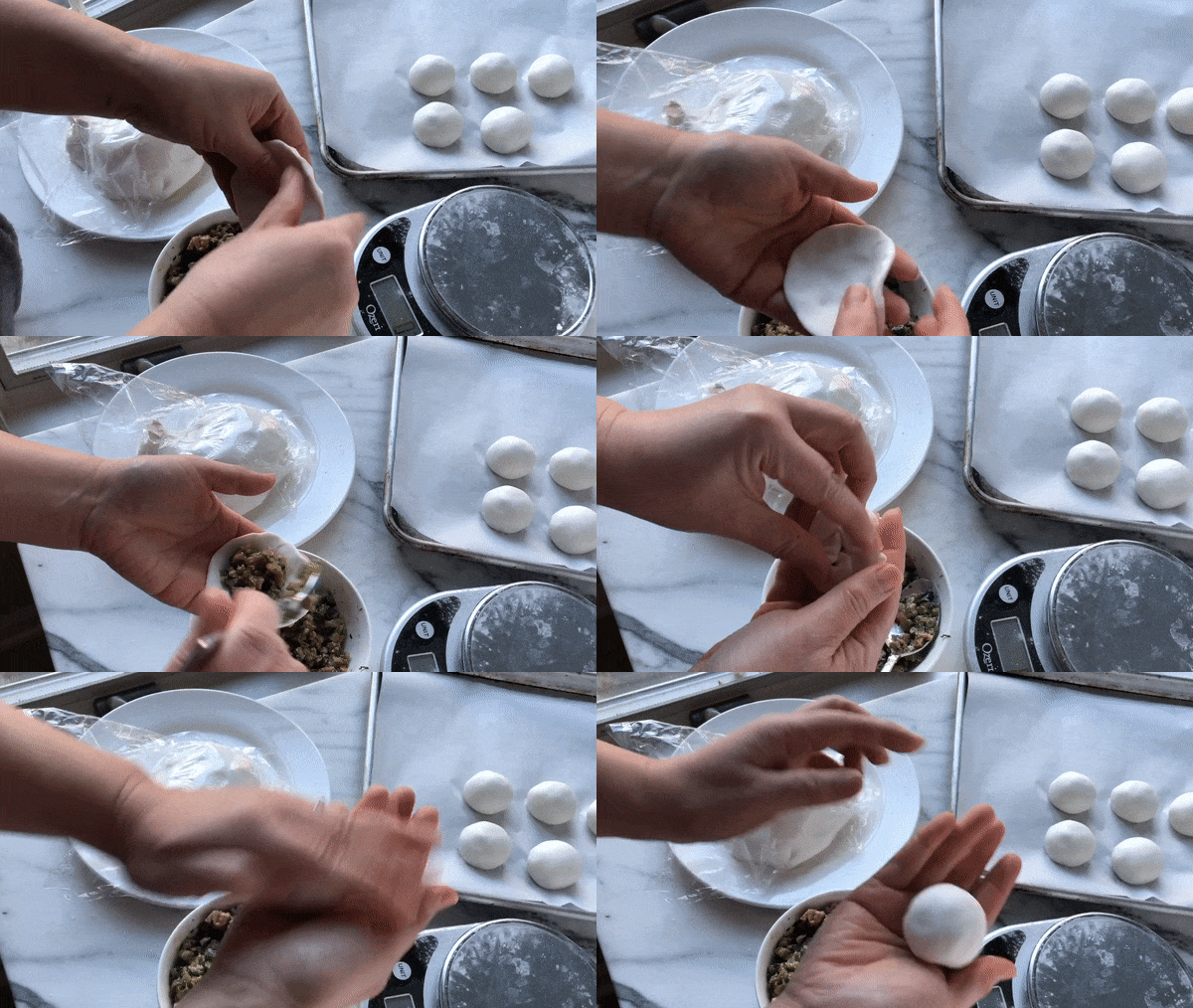
Here’s a video showing the process also:
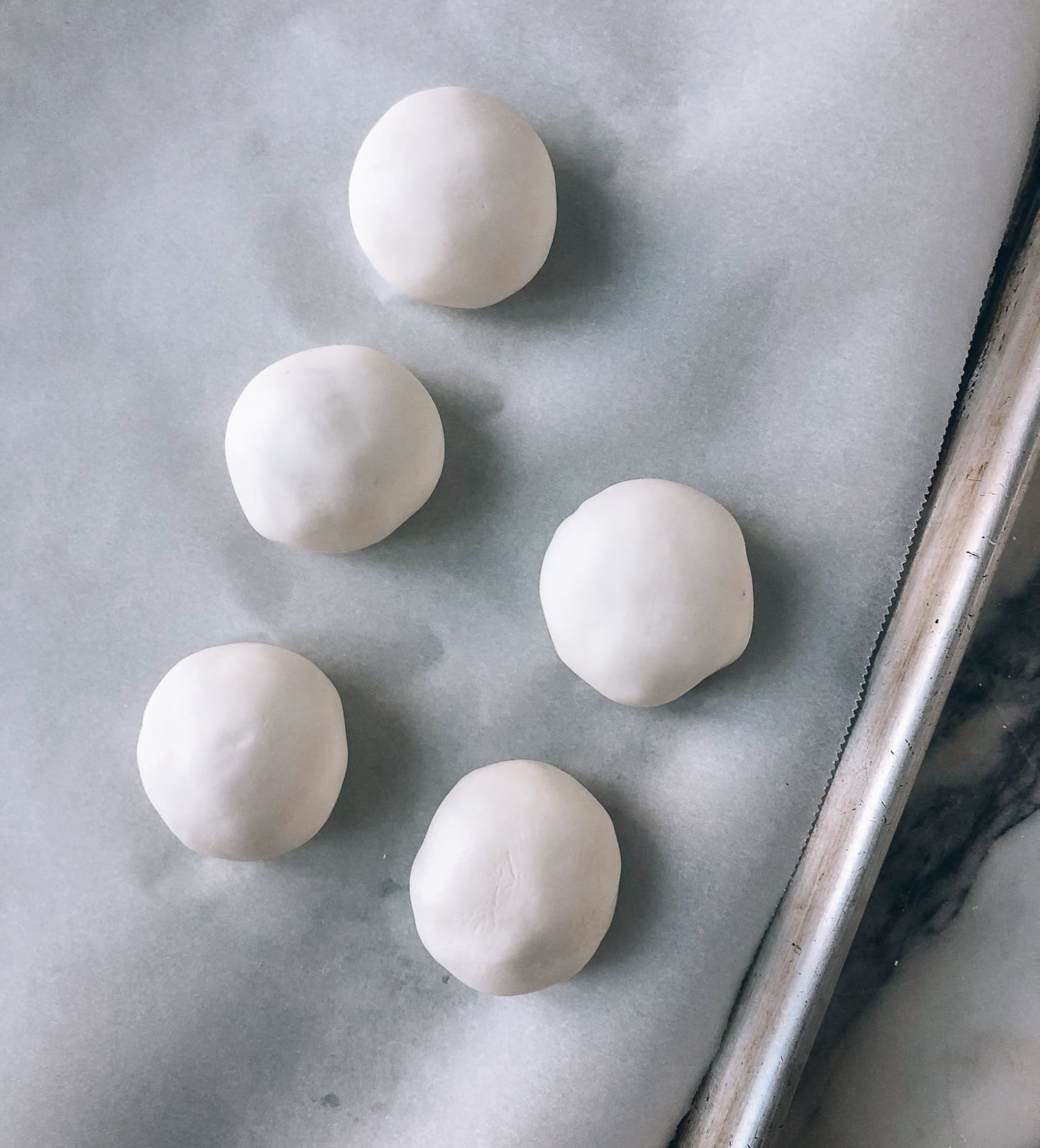
Next, gently roll the tang yuan between the palms of your hands to shape it into a uniform round ball. Set your finished tang yuan on a piece of parchment paper that has been lightly dusted with glutinous rice flour. Repeat this process until you have made all of the savory tang yuan. You’ll need another clean, damp kitchen cloth to cover them. Repeat these steps until you’ve assembled all the tang yuan.
To cook the tang yuan, boil water in a medium pot (you’ll need at least a 4” depth of water). Use a slotted spoon to gently lower the tang yuan into the boiling water, stirring so they don’t have a chance to stick to the pot. Don’t overfill your pot, as this makes it difficult to cook the tang yuan evenly. Lower the heat to a slow boil.
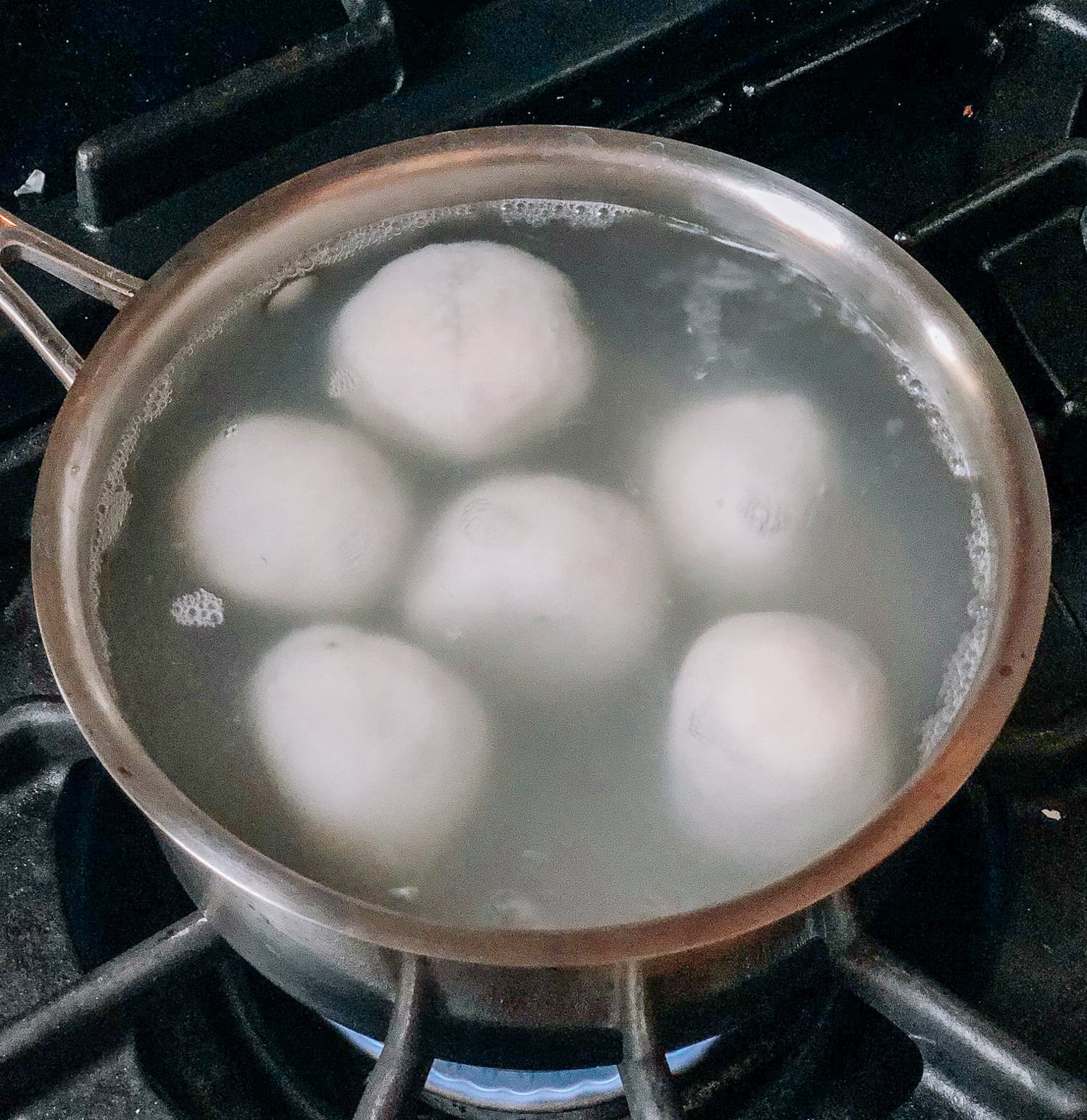
Cook for 6 to 8 minutes or until your Savory Tang Yuan float to the top, stirring periodically.
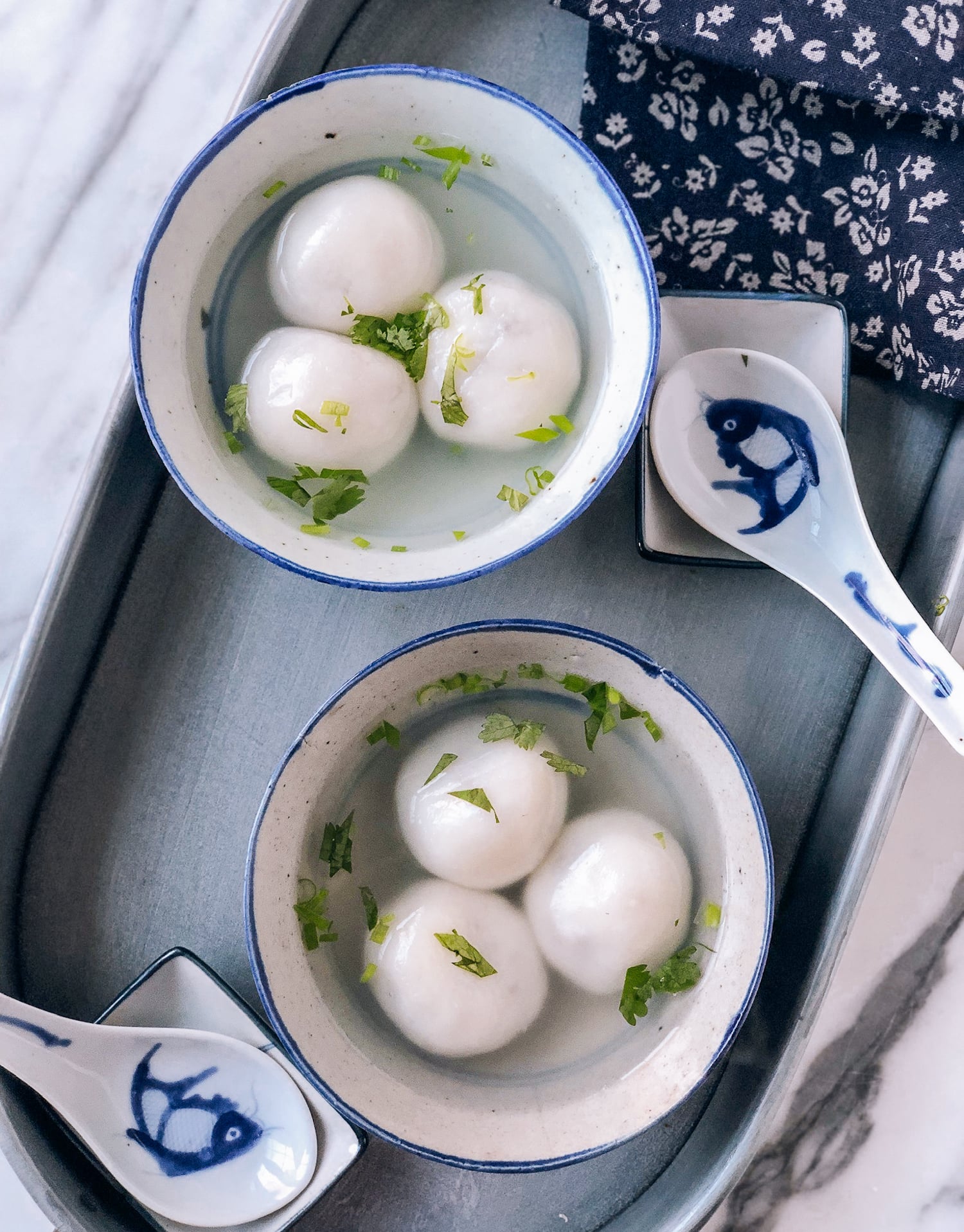
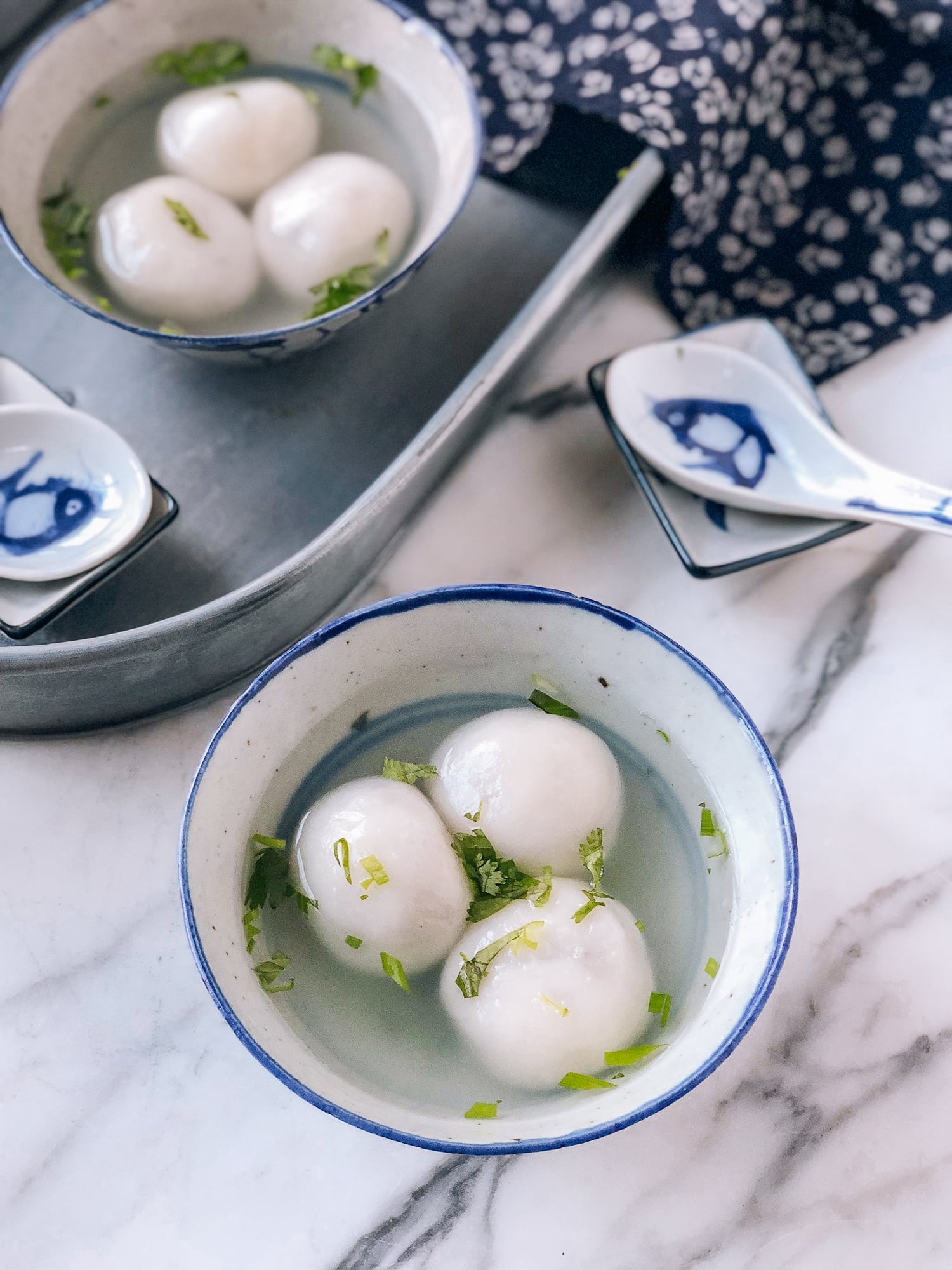
Spoon your savory tang yuan into bowls with some of the cooking water. Add seasonings like sesame oil, salt, and scallions and/or cilantro to taste.
make-ahead/freezer instructions
If you’d like to freeze your tang yuan to enjoy later, simply place all of the assembled tang yuan on a parchment-lined baking sheet so they are not touching. Cover the baking sheet tightly (we use plastic grocery bags for this purpose), and freeze solid. Once the tang yuan are fully frozen, transfer to freezer bags and return to the freezer.
We hope you enjoy these Savory Tang Yuan! Wishing you a healthy lunar new year and a happy Lantern Festival!
Looking for more authentic recipes? Subscribe to our email list and be sure to follow us on Pinterest, Facebook, Instagram, and Youtube!
Recipe
Savory Tang Yuan (Traditional Recipe!)
Ingredients
For the filling:
- ⅔ ounce dried Shiitake mushrooms
- ½ ounce dried shrimp
- 3 ounces salted preserved radish (finely chopped)
- 2 tablespoons vegetable oil
- 5 ounces boneless pork shoulder or pork butt (finely chopped—easier to do if meat is partially frozen; can substitute ground pork)
- 2 teaspoons Shaoxing wine
- ½ teaspoon sesame oil
- ¼ teaspoon salt
- 1 teaspoon sugar
- 1/8 teaspoon white pepper
- 2 tablespoons oyster sauce
- 2 tablespoons fresh cilantro (finely chopped)
- 1 scallion (finely chopped)
- 1 cup Shiitake mushroom soaking water (add water if needed to make 1 cup)
- 2 teaspoons cornstarch (mixed with 1 tablespoon water)
For the dough:
- 3½ cups glutinous rice flour (plus more for dusting)
- ½ teaspoon salt
- 1½ cups warm water
Instructions
- First make the filling. Soak your dried shiitake mushrooms in a bowl of hot water for 30 minutes. Place a small plate on top to ensure they’re fully submerged. Cut the stems off the mushrooms and discard them. Return the mushrooms to the water if they still seem dry inside, since thicker mushrooms will take longer to rehydrate. Finely chop the mushrooms and set aside, reserving the soaking water.
- Also soak your dried shrimp in hot water for 30 minutes. Strain and rinse them before chopping them. Rinse the salted preserved radish under running water and pat dry before chopping.
- Heat 2 tablespoons vegetable oil in your wok over medium low heat. Add the dried shrimp and cook until fragrant (about a minute). Next, add the ground pork and stir-fry for 30 seconds, or just until the pork is no longer pink.
- Add the chopped Shiitake mushrooms, salted preserved radish, and Shaoxing wine. Stir fry for another 30 seconds. Mix in the sesame oil, salt, sugar, white pepper, oyster sauce, chopped cilantro, chopped scallion and 1 cup of the mushroom soaking liquid.
- Cook on medium low heat until simmering, stirring often for 2 to 3 minutes, or until about half of the liquid has evaporated. Next, stir in the cornstarch slurry. Cook until the mixture thickens and all standing liquid cooks off. Set aside, cool, and refrigerate for 30 minutes to an hour.
- While the filling cools, make the dough. Mix 3½ cups glutinous rice flour and ½ teaspoon salt in a large bowl. Stir in 1½ cups warm water and mix with chopsticks or a rubber spatula until a dough begins to form. Use your hands to knead until smooth. If the dough is too sticky, simply add more glutinous rice flour 1 tablespoon at a time until the dough forms a smooth ball.
- Next, pinch off three small pieces of dough to form three balls about 1 inch in diameter. Cook in a small pot of boiling water until they float, about 6 to 7 minutes. Now, add them to the raw dough, kneading them in until the dough is soft and smooth. I have to admit when I did this, I was slightly worried the dough wouldn’t come together, but give it a few minutes of kneading, and it does!
- Now, divide the dough into 24 equal pieces about 32 grams each (a digital kitchen scale helps to ensure each is the same size), Keep them covered with a clean, damp kitchen towel to prevent drying while assembling your Savory Tang Yuan.
- Take your filling out of the refrigerator, stirring it to redistribute the ingredients. There should be no visible liquid, and the filling should be somewhat dry.
- Use your fingers to form each dough ball into a round disc. Spoon about 1 tablespoon (15 g) of filling on the center of the disc. Use the spoon to lightly pack the filling so there are no air pockets. Fold over the edges of the dough to close the tang yuan, lightly pressing in the savory filling if needed. If the dough breaks, you can use a small piece of dough to patch it, using a little dab of glutinous rice flour and water to spackle it back together. Keep a small bowl of both handy for this purpose.
- Next, gently roll the tang yuan between the palms of your hands to shape it into a uniform round ball. Set your finished tang yuan on a piece of parchment paper that has been lightly dusted with glutinous rice flour. Repeat this process until you have made all of the savory tang yuan. You’ll need another clean, damp kitchen cloth to cover them. Repeat these steps until you’ve assembled all the tang yuan.
- To cook the tang yuan, boil water in a medium pot (you’ll need at least a 4” depth of water). Use a slotted spoon to gently lower the tang yuan into the boiling water, stirring so they don’t have a chance to stick to the pot. Don’t overfill your pot, as this makes it difficult to cook the tang yuan evenly. Lower the heat to a slow boil.
- Cook for 6 to 8 minutes or until your Savory Tang Yuan float to the top, stirring periodically.
- Spoon your savory tang yuan into bowls with some of the cooking water. Add seasonings like sesame oil, salt, and scallions and/or cilantro to taste.
Tips & Notes:
Nutrition Facts