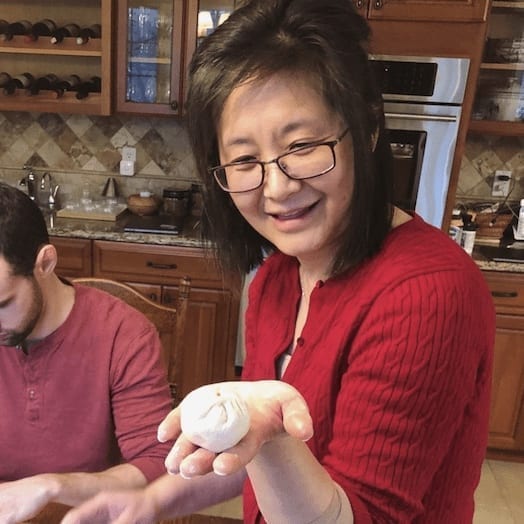


Hi everyone! We’re coming at you with not a recipe, but a quick article gathering some thoughts and kitchen tips / wisdom from the parental half of The Woks of Life. Here are some key lessons that Bill and Judy have learned to minimize waste in the kitchen. Enjoy!
Kitchen Tips From Bill & Judy
Judy: Bill and I are no strangers to penny-pinching. In China in the old days, money was tight. I had one horrifying instance of accidentally letting two live ducks destined for the dinner table out of our house. My mother was so upset with me that I thought that might be my last day on this earth…
Bill: My parents were also savvy about saving money, with three kids to raise.


Judy: When Sarah and Kaitlin were young, trips to the grocery store were my time to teach them about the value of food. We always stocked up on sale items and cut coupons. And I never let the girls cut the crusts off their sandwiches!

Bill: We’ve built up a lot of tips over the years for how to save money in the kitchen in particular. Here are our “waste not, want not” tips for smarter cooking and kitchen maintenance!

1. Keep an inventory of what’s in your refrigerator
Regularly keep an eye on what meats you have thawing in the refrigerator, or when you bought that bag of bok choy. There’s nothing worse than paying for perfectly good vegetables and then having to throw away a third of it because you forgot they were buried in the back of the refrigerator.
2. salvage recipes that go wrong
Let’s say you misread a recipe and accidentally added too much soy sauce. Or you walked away to check on the kids, and the garlic you had on the stove started to burn. Or you ended up with a sauce that’s way too thin.
Many of the common errors that would have some people dumping a pot full of food into the garbage can be remedied with a few tricks and an open mind.
If your dish is too salty, try adding sugar and some extra water to mellow it out. You could also add additional ingredients to spread out the salt.
If your sauce is too thin, just cook it down to reduce it, or drizzle in a cornstarch slurry and simmer until it’s thickened to your liking.
Did you burn garlic early on in a recipe? It’s much better to start over when it’s just oil and garlic then end up with an entire dish that tastes bitter.
If all else fails, we have Barley, our dog, to enjoy kitchen mishaps. (Though who are we kidding; she’s so spoiled at this point that she might not even eat it.)

3. Repurpose dregs
When you cook a lot, you’ll find you’re often left with random bits of food. Maybe there’s some extra cornstarch from dredging, half a lemon, some spare egg wash that never gets used, or extra scallions that you didn’t end up needing to garnish your dish with.
It’s easier to throw it away, but it’s much much better to find a way to repurpose it. Spare cornstarch can go into a cornstarch slurry for stir-fries (as long as you use it quickly that same day), a half-juiced lemon can go into a mug of boiling water for tea, and we always scramble our leftover egg wash for our dog, Barley, or add it to things like meatball mixes or a big bowl of beaten eggs for omelettes.
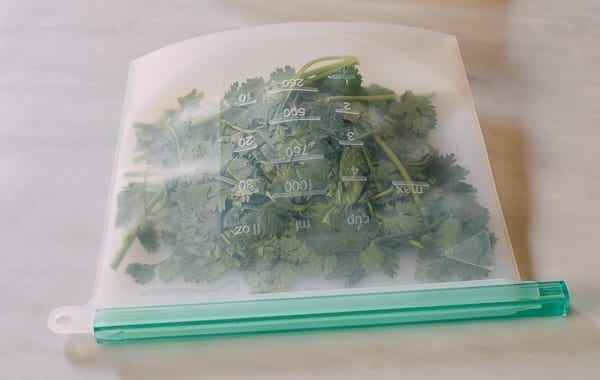
Spare scallions (and even ginger or garlic) can go into a resealable bag in the freezer for another day.
Perhaps you have cold, hard rice that has transformed into little pebbles at the back of the fridge. Simmer it in a pot of water to make pao fan, a plain rice porridge that goes great with cold dishes.
Or maybe you trimmed a large piece of pork and have plenty of fat leftover. Put it into the freezer until you have enough to make your own lard another day (perfect for noodle soups like our Yang Chun Mian, or Southern-style biscuits!).
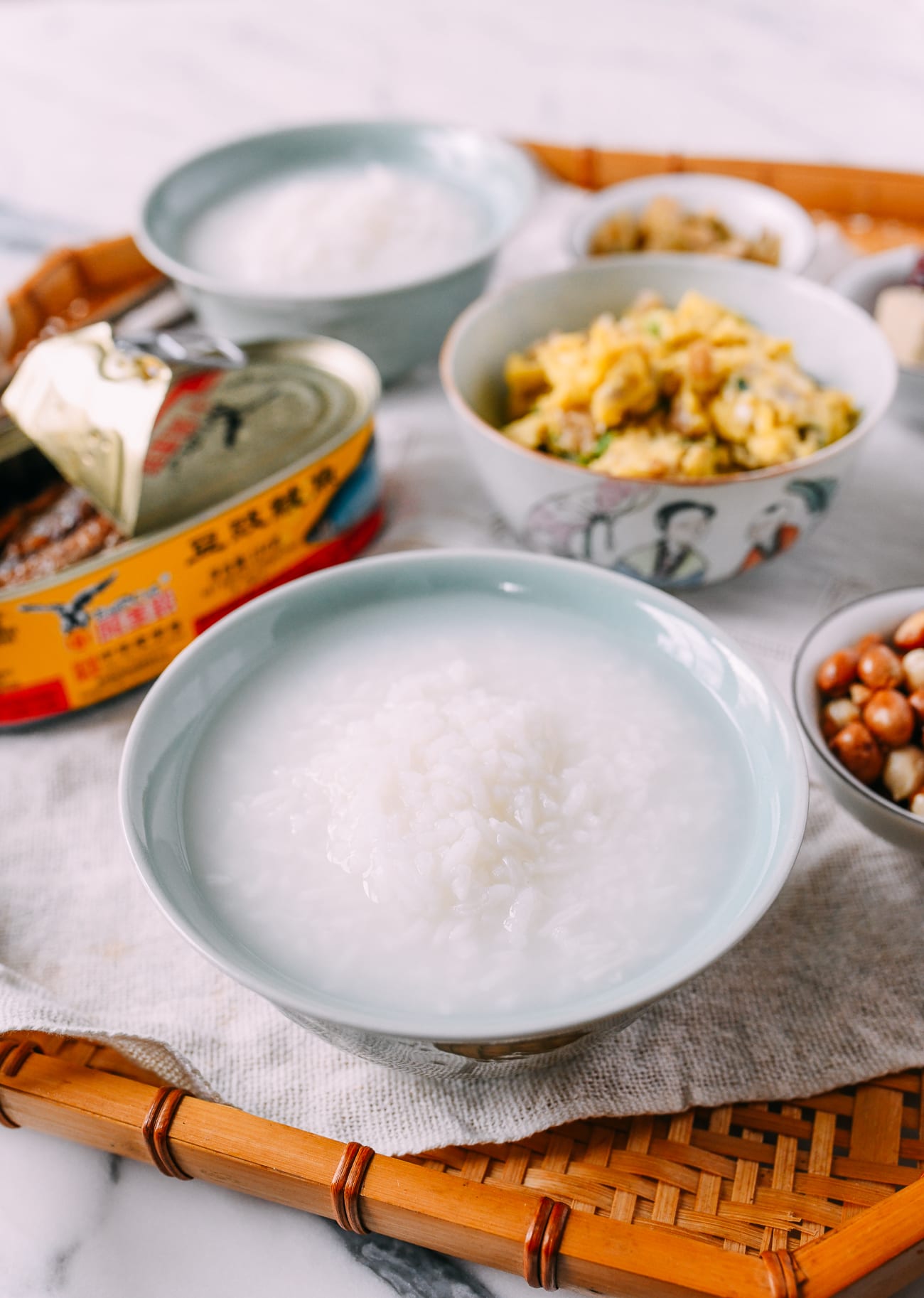
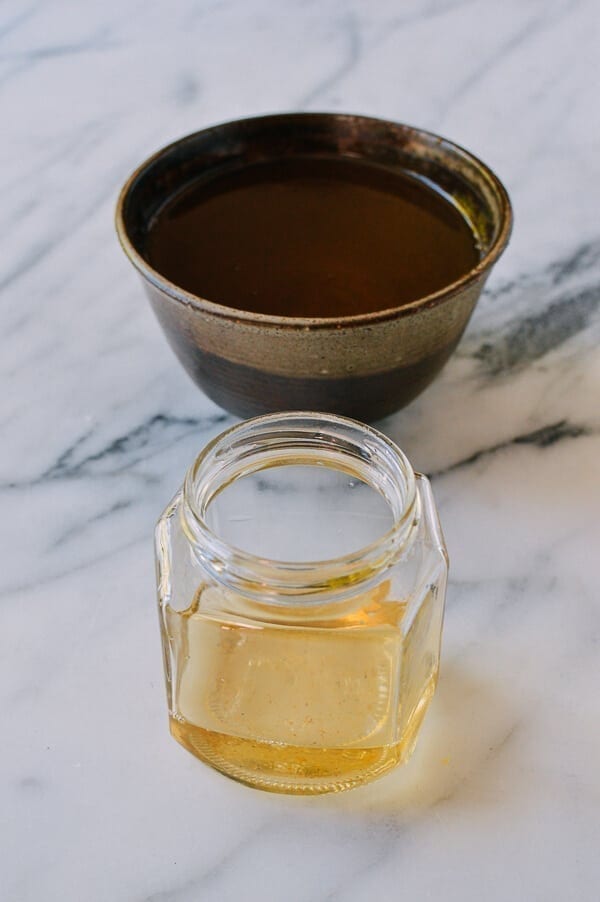
Sarah prides herself on “fridge clean-out meals,” that use up all the random produce, leftover blog experiments, and last scraps from a jar of something that’s probably been in the fridge too long. With a little imagination and care, I bet you can find a use for most things!
One such recipe we have is our Everyday Vegetable Stir-fry, which can help you use up any leftover vegetables you have lying around.
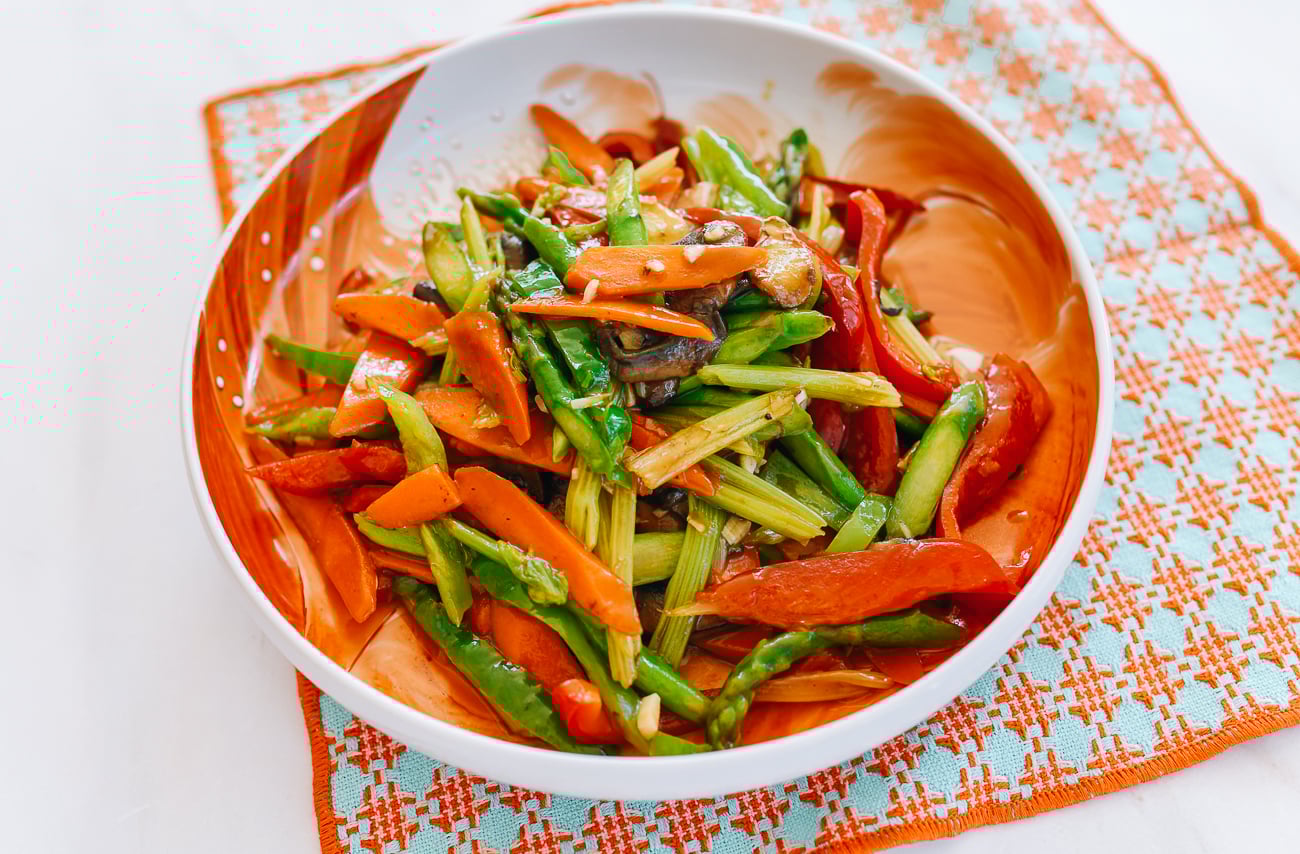
For everything else, there’s the compost heap!
4. Trim greens with a peeler
You know that old trick where you simply snap off the woody end of an asparagus spear and discard it?
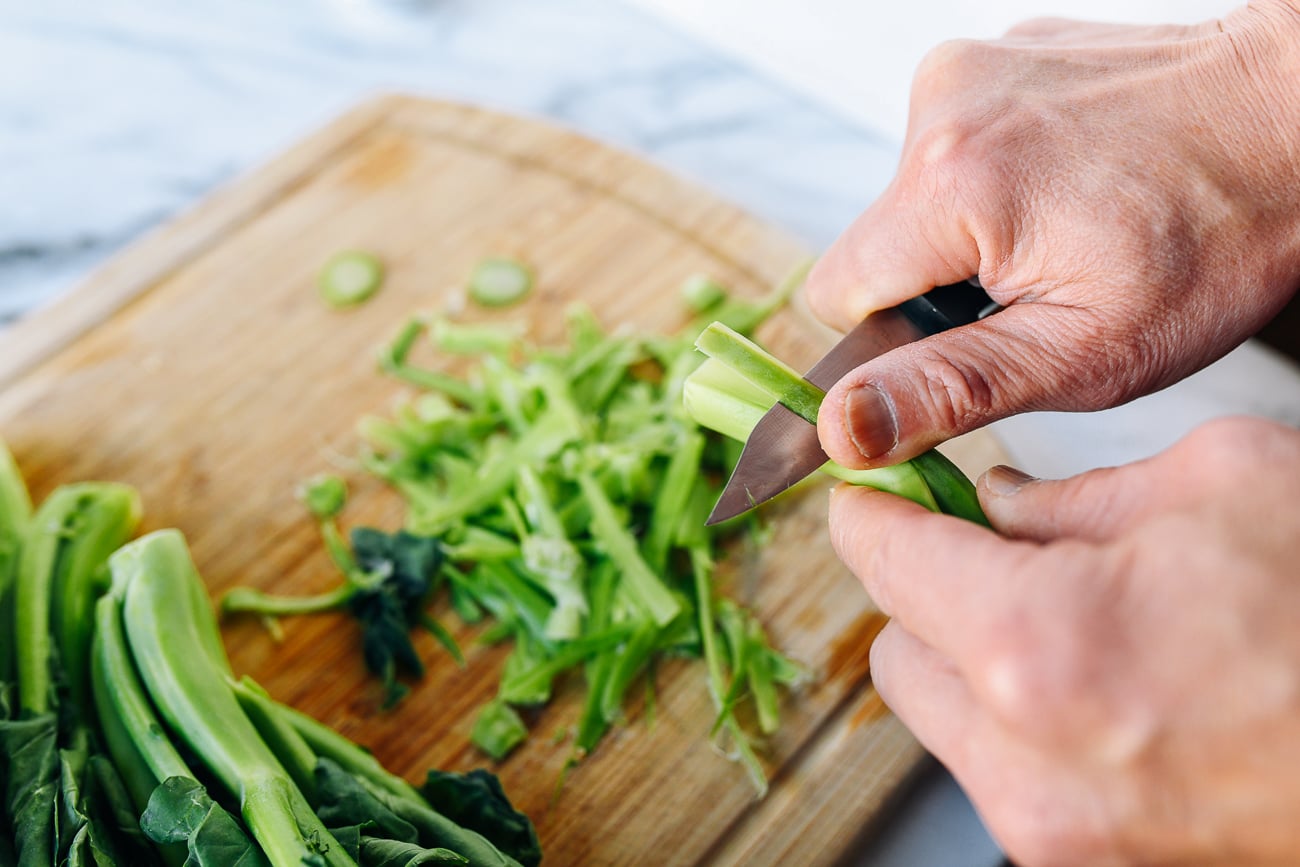
Well, for any vegetable that has a stem that is at least a centimeter thick (like gai lan/Chinese broccoli, asparagus, or broccoli), you need not waste that much.
This is especially true for a more expensive vegetable like asparagus—see Sarah’s asparagus stir-fry. Also check out her broccoli stem stir-fry and her post on how to use broccoli stems for some great ideas.
Instead, just trim a ¼-inch or so off the end. Then use a paring knife or peeler to trim off the tough outer layer. For thinner stems that are not as sturdy, like some Chinese leafy greens (choy sum, yam leaves, etc.), you can use your fingers to peel back the tough outer layers.
5. Discard fat smartly (including in cooking water and stock)
To avoid headaches and the potential expense of a good plumber, never pour fat of any kind down the drain! (That includes fatty stocks and sauces.)
You can refrigerate it or leave it out at room temperature until it’s solidified, skim it off, and toss it into the trash with little mess.

This is especially important if your home has a septic system! Be sure to thoroughly wipe down any extra greasy bowls, pots, or pans. We use lightly used paper napkins from mealtimes to do this.
(Any oil-soaked napkins that are relatively free from sauce or food particles—say from oiling your wok at the end of the day—are also great fodder to get your BBQ grills or backyard fire pits going. Is there such a thing as too frugal of a tip? Eh, who are we kidding. Bill’s grandma collects sugar packets from McDonald’s to make pickled vegetables.)
6. Stretch frying oil
Many don’t know what to do with a big batch of oil after you’ve made spring rolls or fried up some wontons. You can preserve oil in the first place by using smaller, deeper pots for frying.
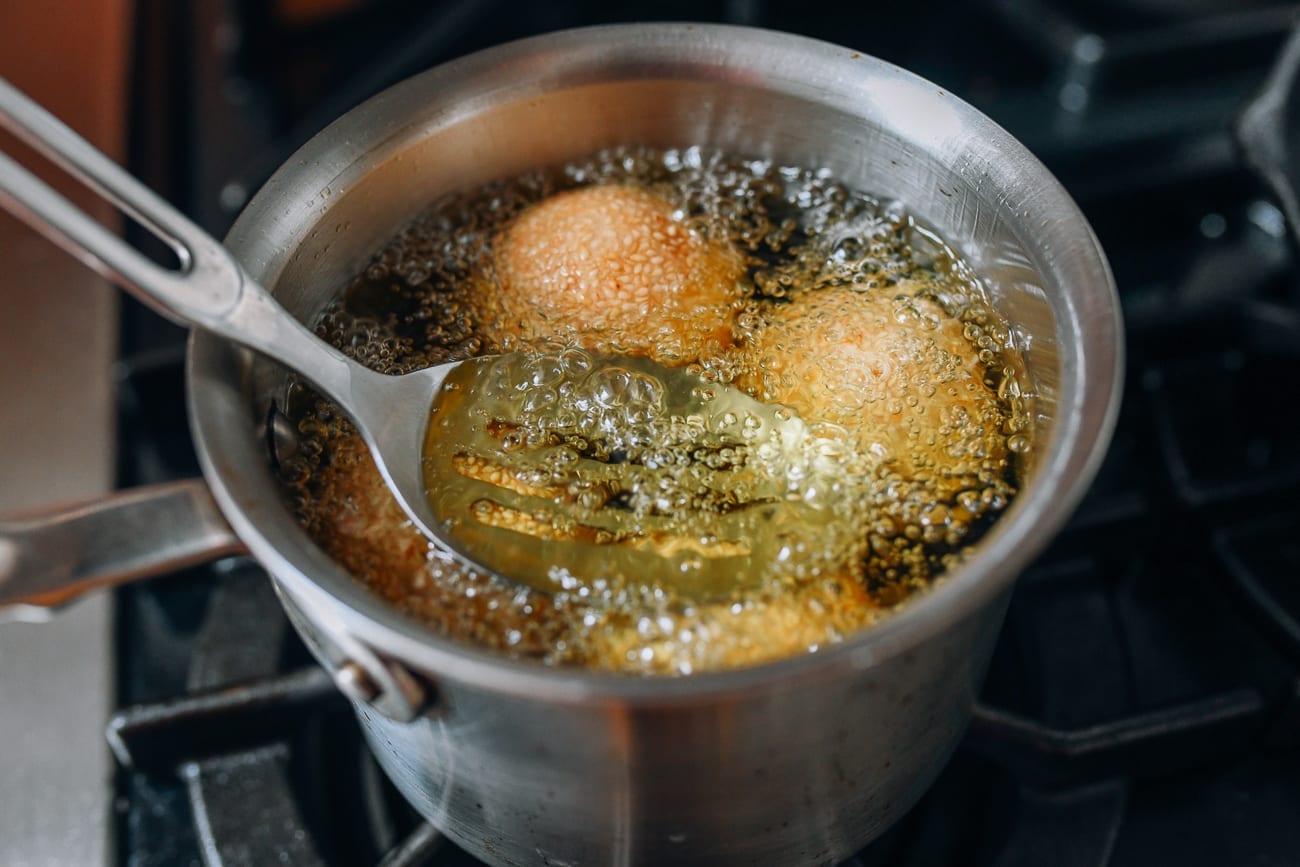
This can halve the amount of oil you need, and still get everything cooked safely and effectively. (We’ve built this into almost all of our recipes.)
If you do have a larger pot of oil left, simply strain out the solids with a very fine-meshed strainer. Then cover and refrigerate. You can use the oil for miscellaneous cooking until it’s gone.
In fact, the taste of “cooked oil” can actually make your Chinese food taste all the more delicious!
If the oil starts to smell noticeably bad or stale, smokes when you try to heat it, or develops any kind of foam or solids on the surface, it’s time to get rid of it. Pour it out into an empty non-recyclable container. Throw it away right before garbage day, so it doesn’t hang around too long.
7. Use reusable bags and containers
Save money on freezer bags (and the planet) by making a one-time purchase of reusable bags (we like Stashers).
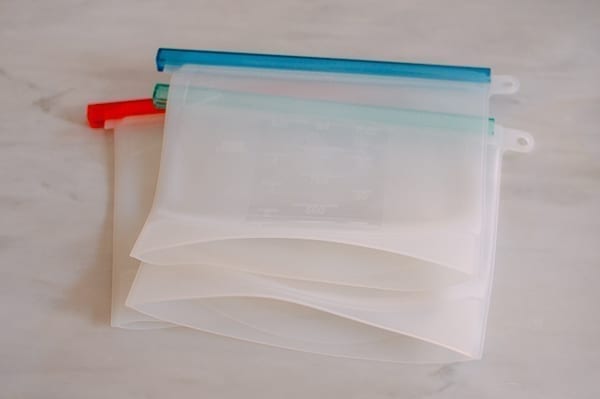
We also like to save and wash takeout containers for guests to pack leftovers at a dinner party, to share food from a big blogging day, or to freeze leftovers for later.
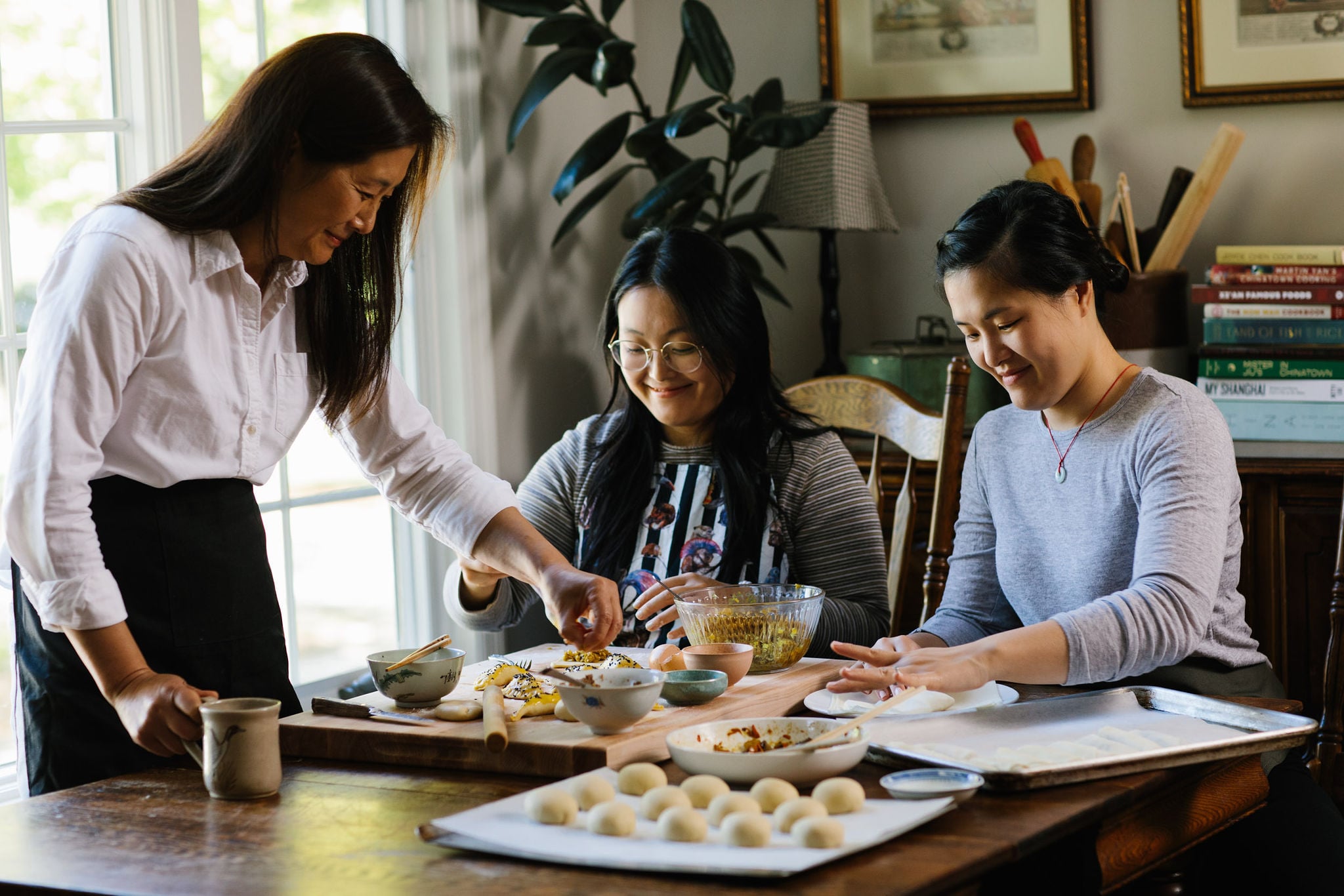
We hope you’ve enjoyed this quick list of tips. What are your kitchen tips and hacks? Share them with us in the comments below!