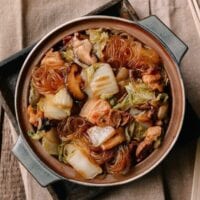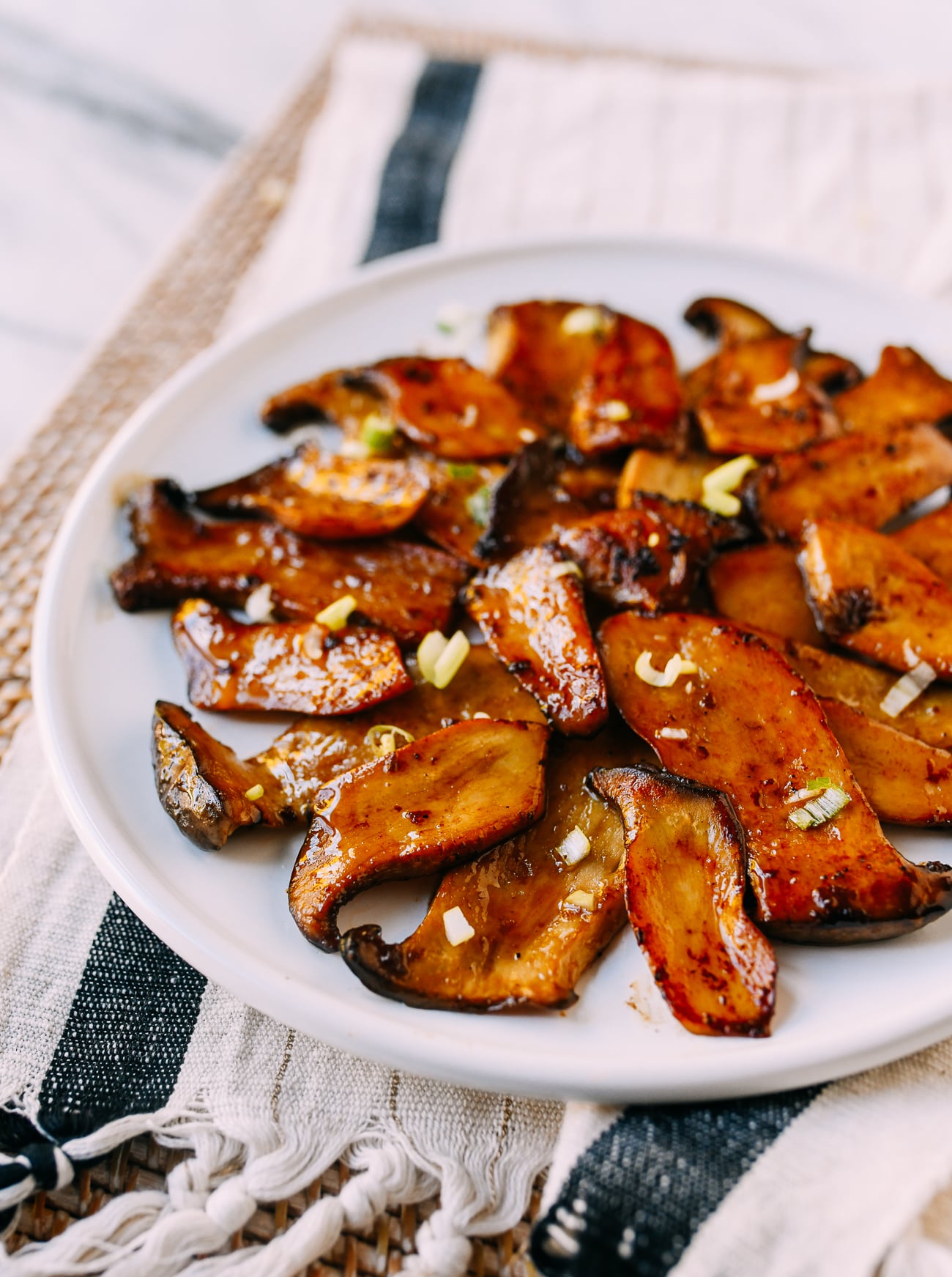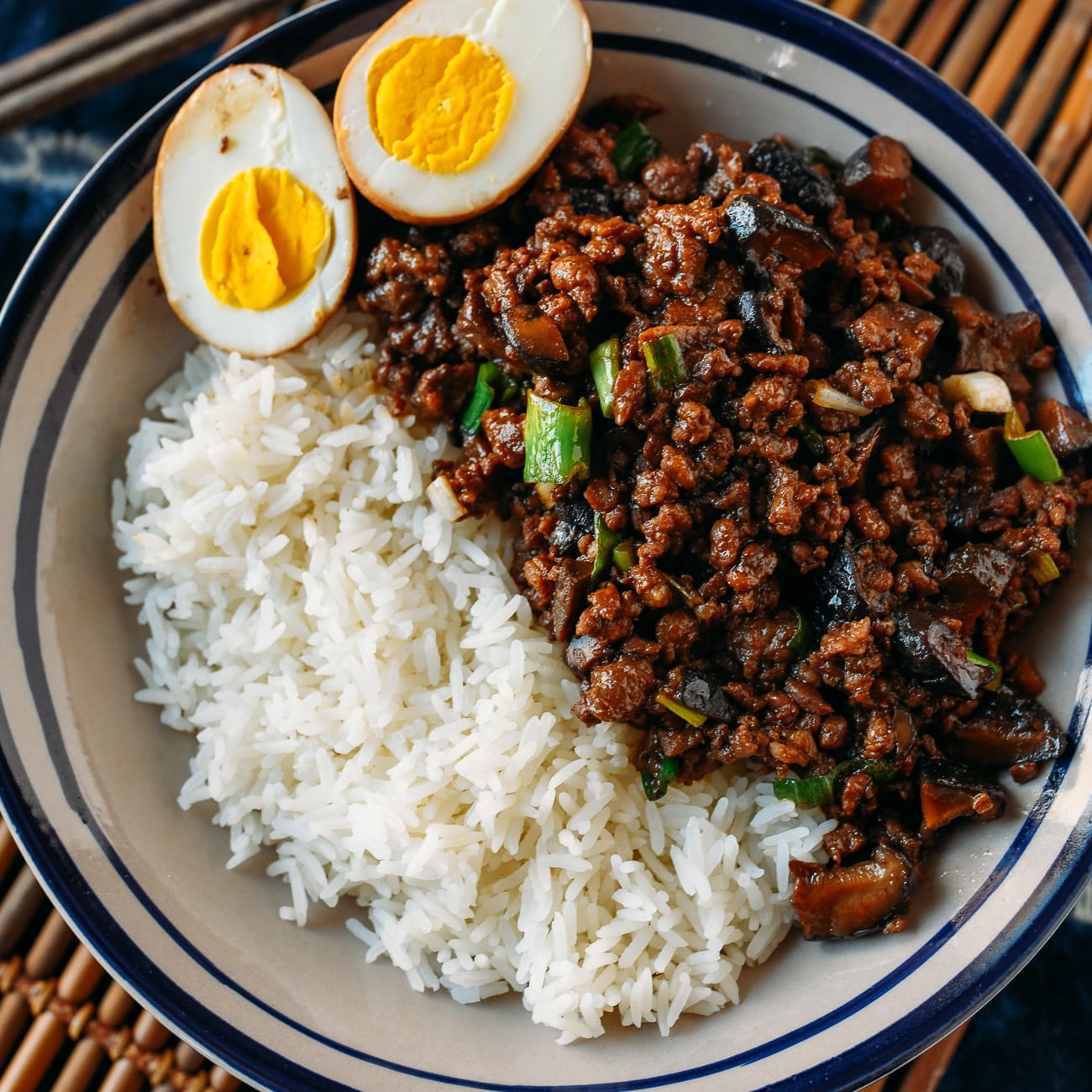

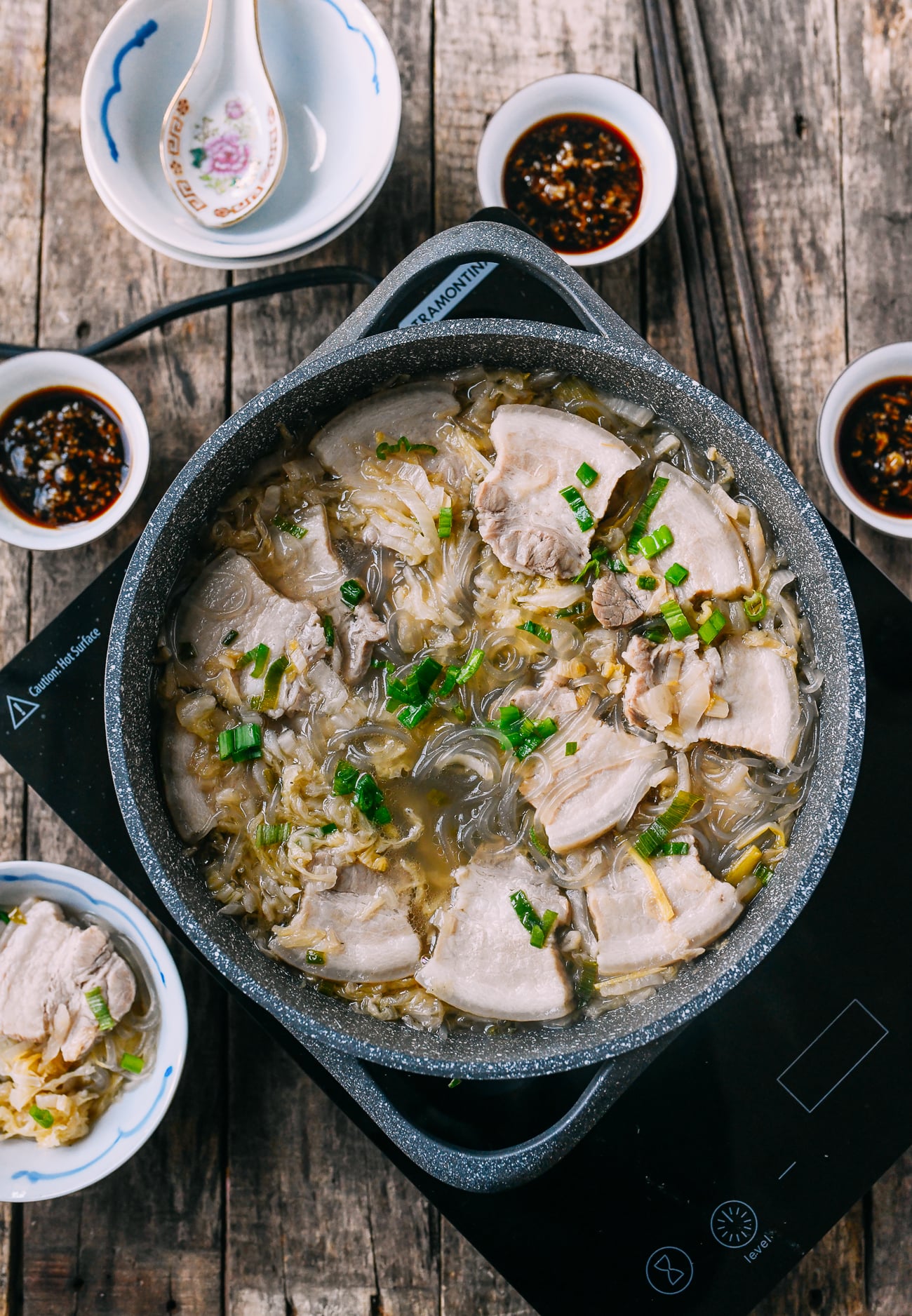
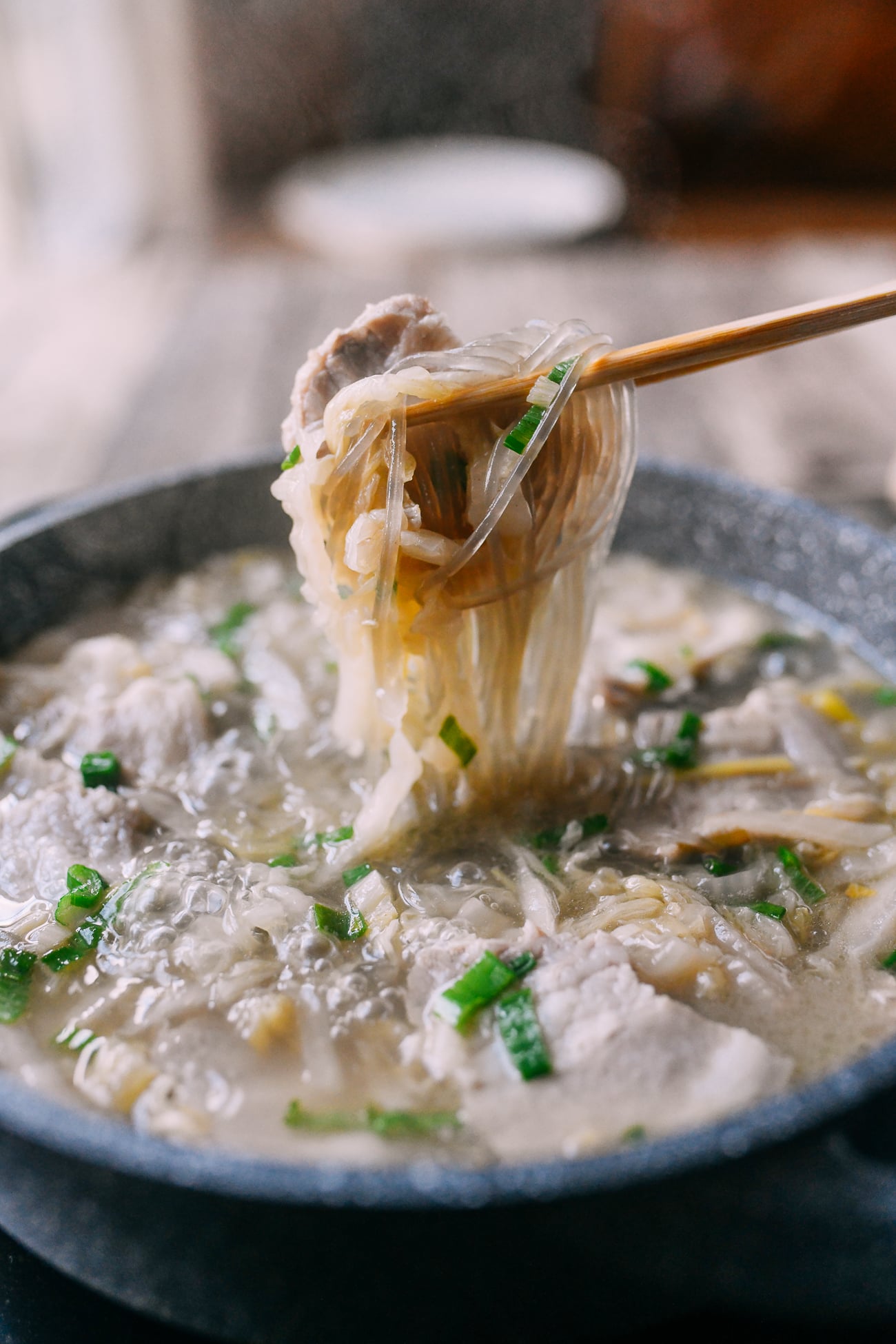
This Northern Chinese Sour Cabbage Stew with pork belly and glass noodles, or suāncài dùn fěntiáo (酸菜炖粉条) has become a new favorite in our house. If you’re a fan of pickled flavors, you have to try this recipe!
A Northern Chinese Cold Weather Classic
The mere mention of sour cabbage stew with glass noodles (酸菜炖粉条, suāncài dùn fěntiáo) would make any northerner start salivating. Many northerners pickle their own cabbage to make this dish, as well as other items like sour cabbage pork dumplings!
In Northern China, this traditional noodle stew is often served in the cold weather months, but enthusiasm for it goes beyond that. It’s a dish that shows up at any happy family occasion.
Imagine a big family feasting on a large pot of bubbling soup, with tangy sour cabbage, chewy cellophane noodles, and rich pork belly. Snow drifts outside the windows as hot steam rises above the hot broth. Multiple pairs of chopsticks fight for noodles, followed by the sounds of loud slurping. Everyone is too busy to talk, instead exchanging satisfied smiles between bites.
That’s the scene I imagine whenever I have a pot of this stew bubbling on the stove.
The Key Ingredient: Sour Cabbage
If you couldn’t already tell from the name, this Chinese sour cabbage stew is supposed to be sour! It should have a similar level of tangy sourness as a hot and sour soup.
That’s why the sour cabbage is so integral to this tasty one pot meal. Since it can be difficult to find, we have three possible options:
- Sour Pickled Napa Cabbage: The cabbage you see in this post, and the most ideal option, is pickled napa cabbage. You can find it at well-stocked chinese grocery stores in vacuum sealed packages.
- Sour Pickled Mustard: These pickled greens are more widely available. Their texture is less “leafy” than the napa cabbage, which makes it less ideal. Be sure you’re purchasing the sour pickled mustard greens!
- Sauerkraut: If the previous two options aren’t available, I’d use sauerkraut. While it isn’t the ideal, it has a similar taste to the sour napa, and it IS made from cabbage!
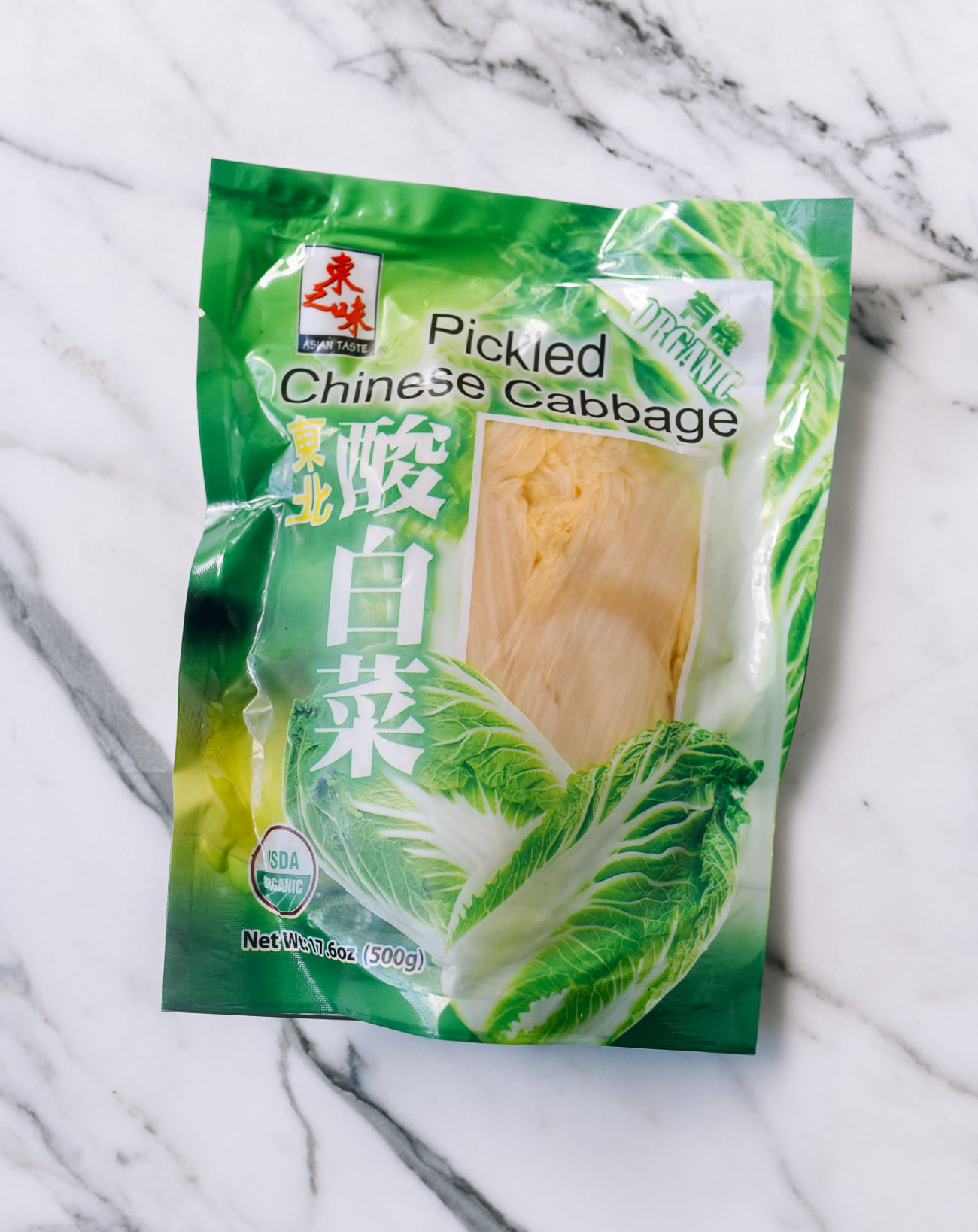
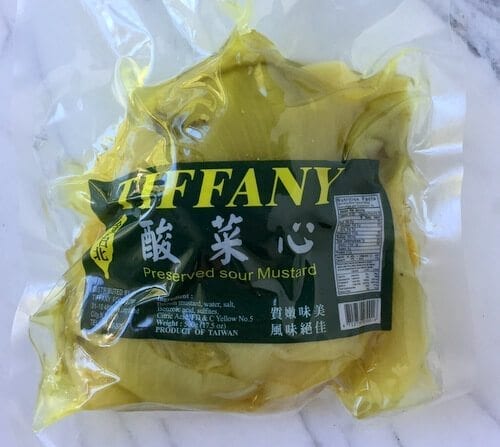
All three of these options are very sour, which is key for this dish. You can also add a little white vinegar to the final dish if it’s not sour enough for your taste buds.
The Proper Type of Noodles
As for the glass noodles, the ideal type to buy is sweet potato starch noodles, cut into a spaghetti-like thickness. They hold their shape well, are less absorbent (so they don’t dry up your soup broth), and have more body than the thinner mung bean vermicelli.
That said, you can use any cellophane noodle you like for this. Whatever noodle you choose, note that they all have slightly different preparation instructions. Many require pre-soaking before cooking.
Please take a look at the cooking instructions on the package, and prepare accordingly.
A Note on Serving
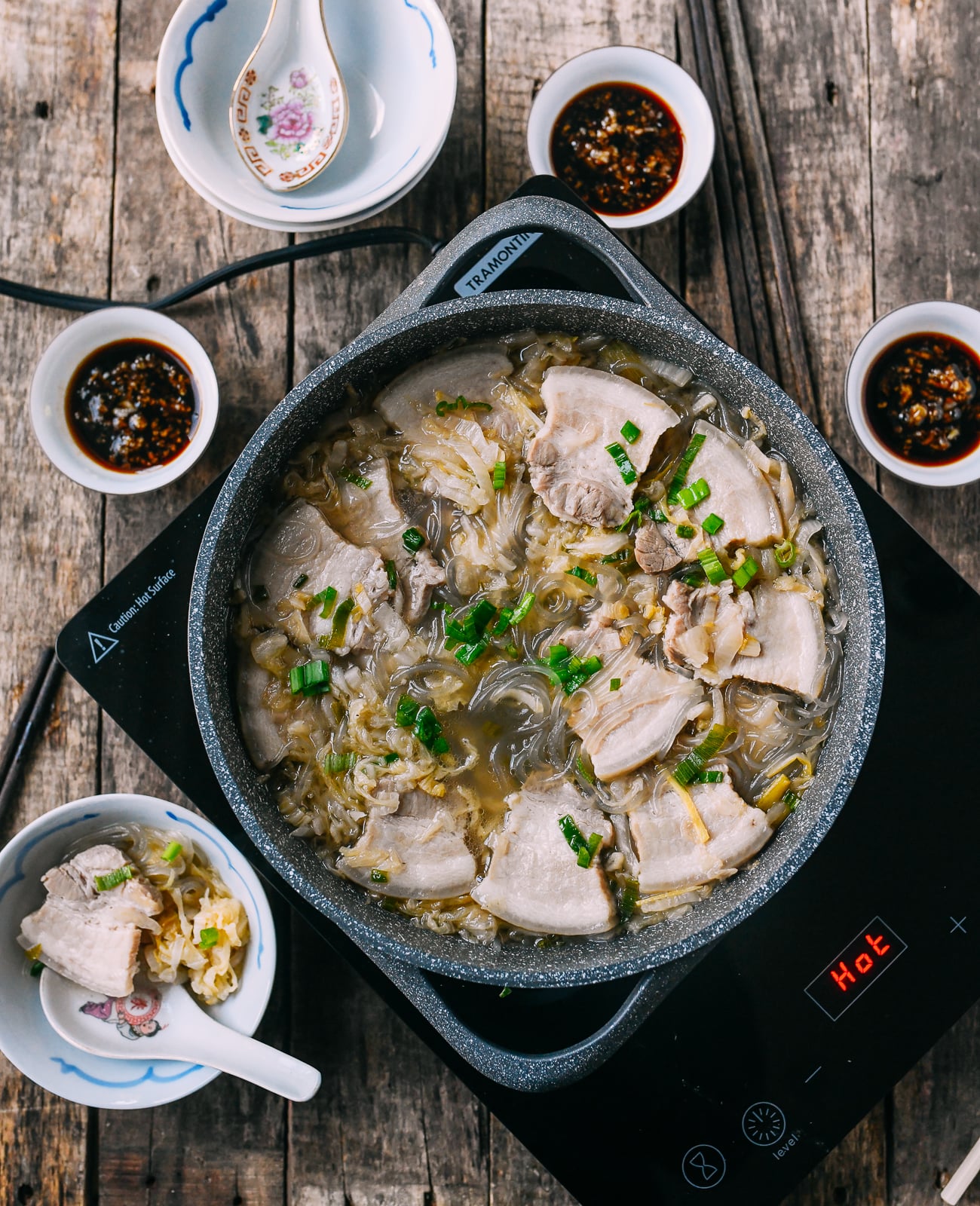
This dish is meant to be served bubbling hot. I suggest using a cast iron dutch oven or clay pot, because they maintain their heat longer after leaving the stove.
If you have a separate induction, electric coil, or butane burner, even better! Serve this stew in a pot over low heat so it stays at a low simmer. You can also serve it in an electric hot pot or shabu shabu pot, if you have one of those.
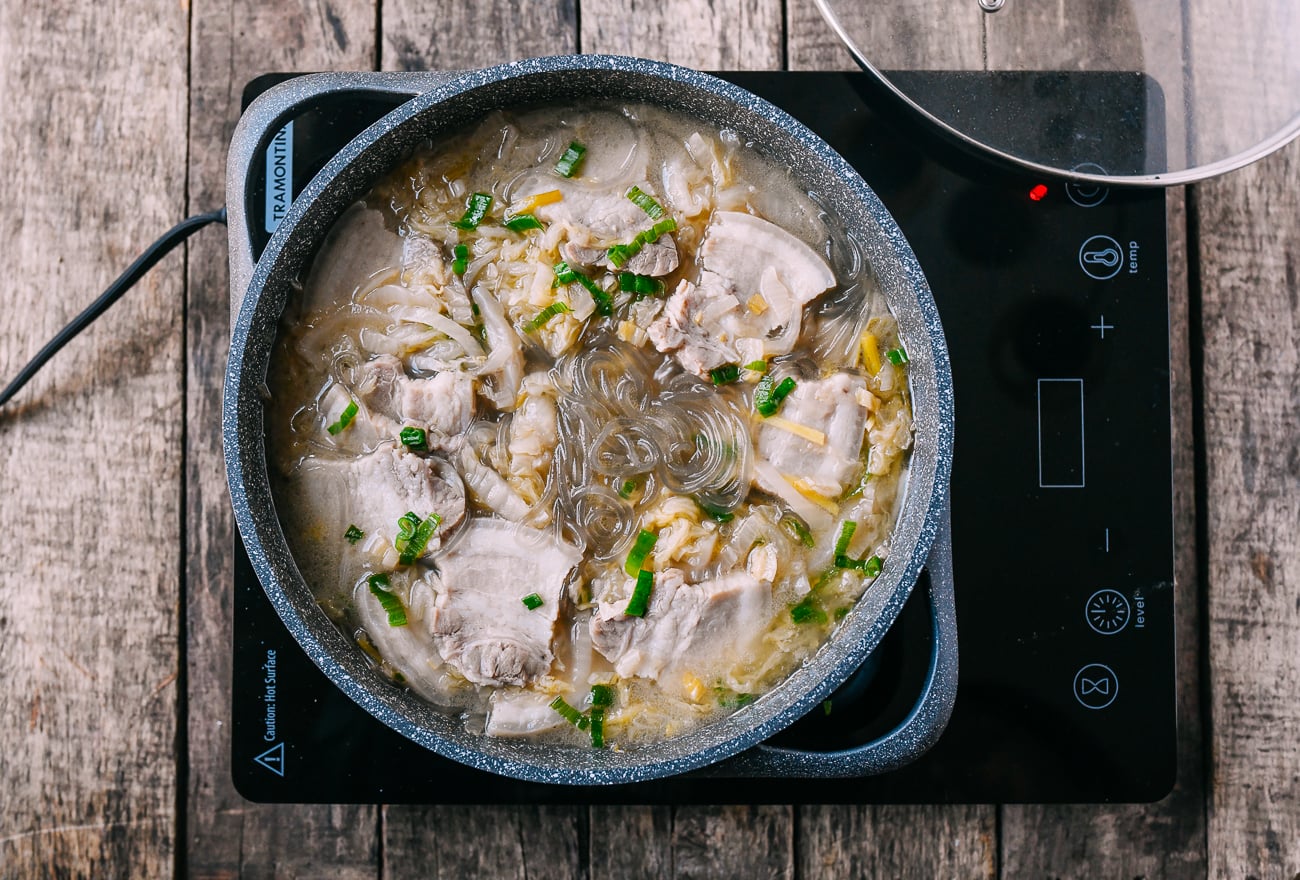
This will create that complete, authentic dining experience that mimics how northerners like to enjoy it. Just be careful around the electrical cords and simmering broth!
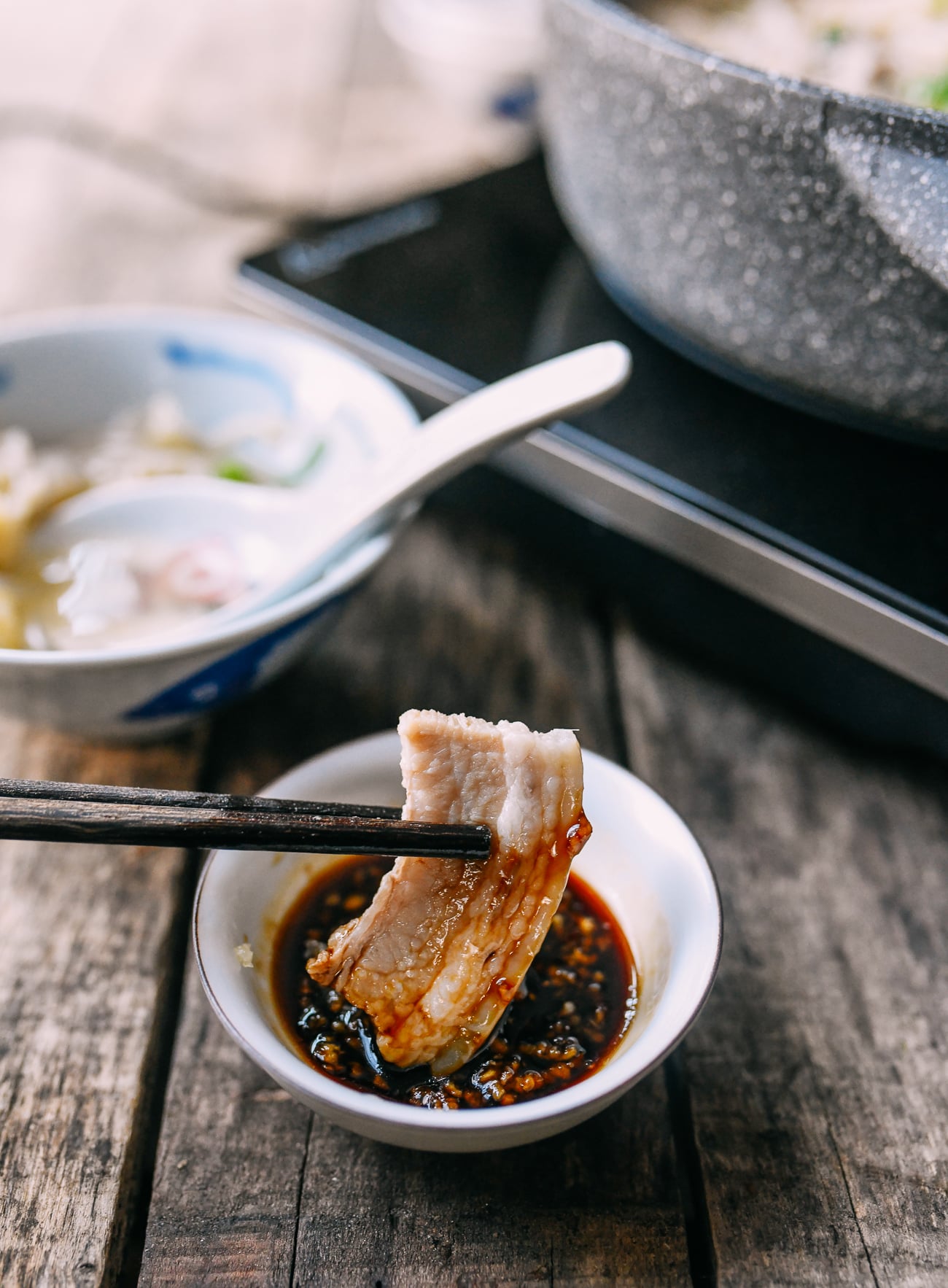
Be sure to try the dipping sauce—the raw garlic adds a delightful zip and signature flavor. Another interesting fact is that this noodle stew is almost always served with rice. Noodle on rice? You bet!
Northern Chinese Sour Cabbage Stew: Recipe Instructions
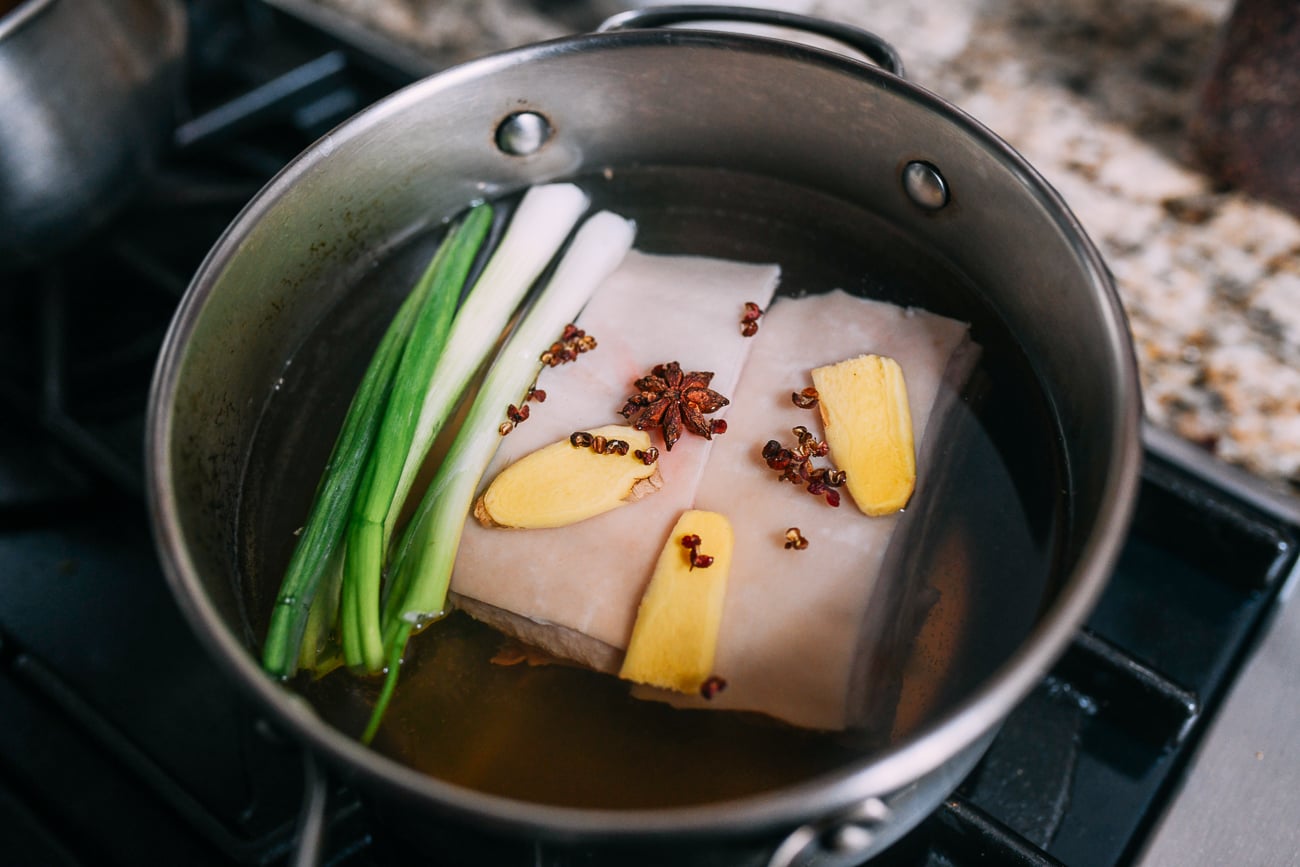
Start by prepping the pork. In a medium thick-bottomed pot, add the water, whole pork belly (or ribs), Shaoxing wine, ginger, scallions, Sichuan peppercorns, star anise, and salt. Cover and bring to a boil. Once boiling, reduce the heat to medium/low, and simmer for 15 minutes.
If using pork belly, remove it from the pot to let it cool, and save the stock.
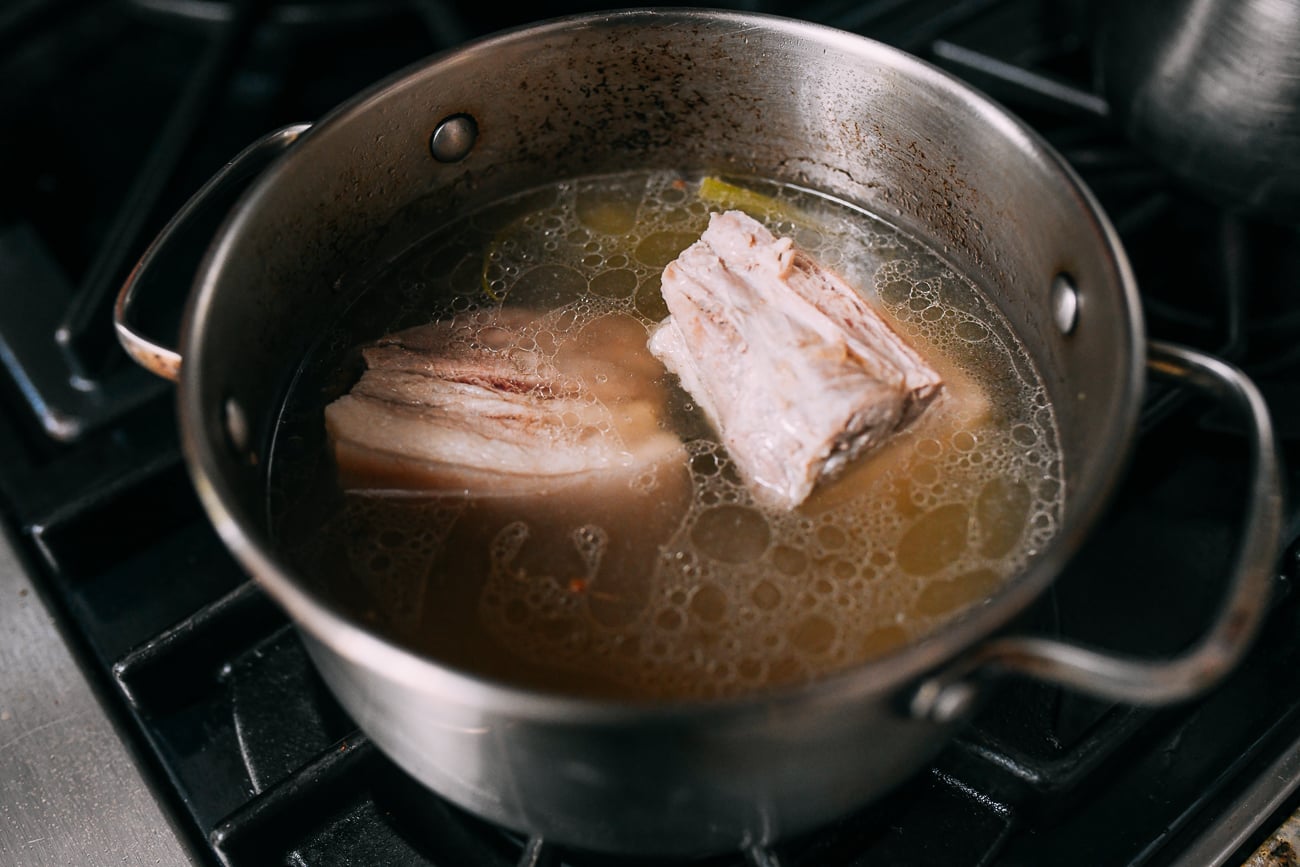
If substituting pork ribs, don’t remove them from the stock. Just turn off the heat and let them continue “cooking” in the hot broth while you prepare the rest of the dish.
Make the dipping sauce by combining the minced garlic, light soy sauce, sugar, and chili oil (if using) in a small bowl. Set aside.
Slice the sour cabbage about ¼” (0.6 cm) thick.
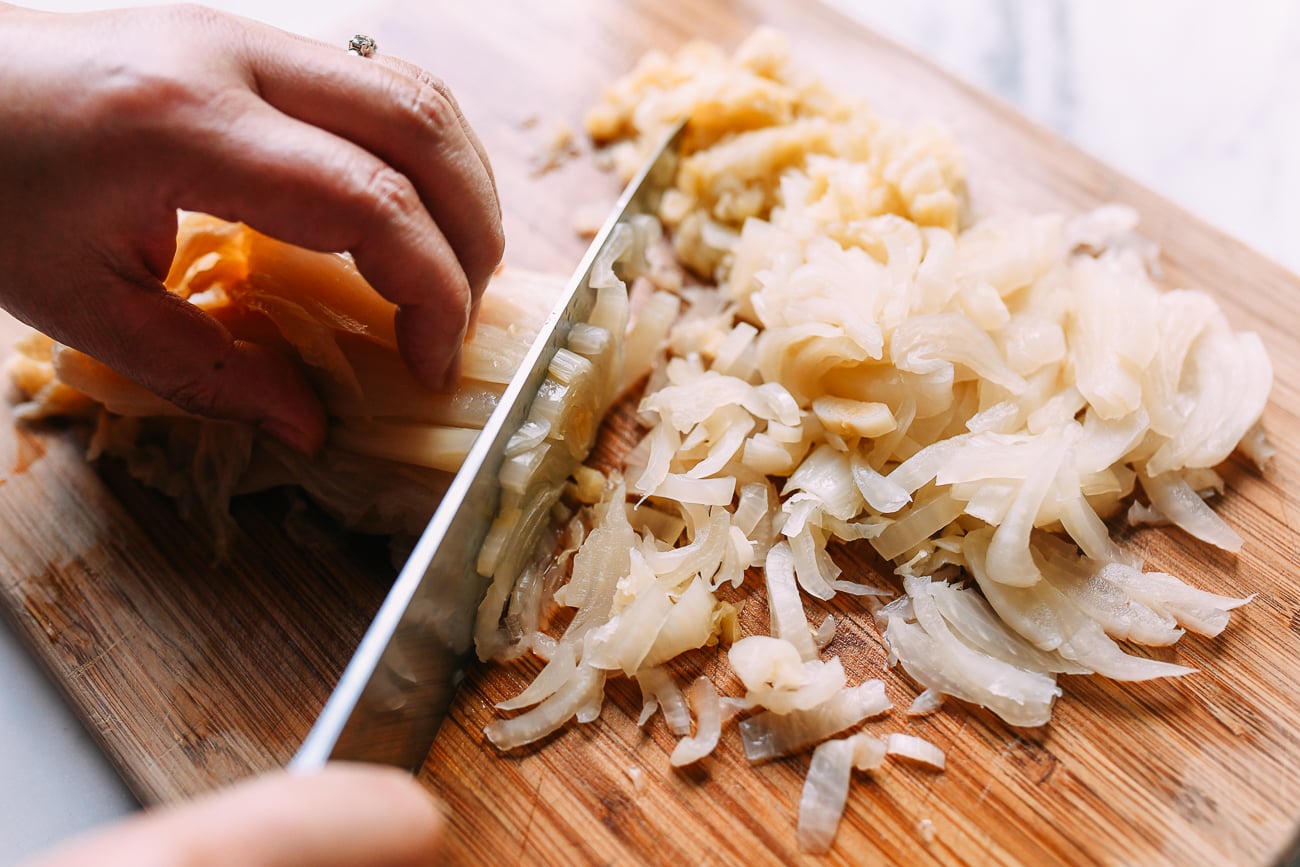
Transfer to a large metal bowl, and fill with fresh water.
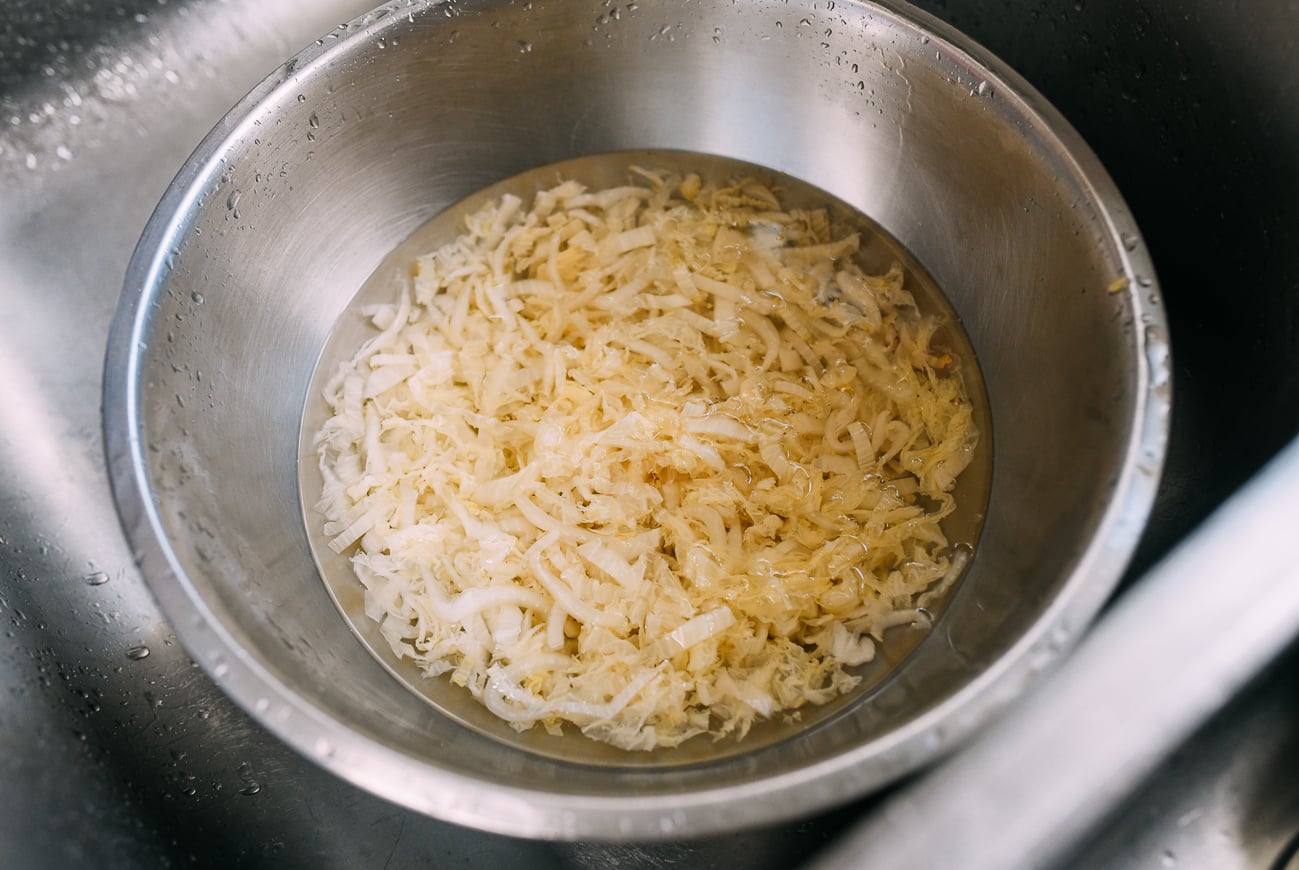
Agitate the vegetables in the water with your hands a bit, drain, and thoroughly squeeze out any remaining water from the cabbage.
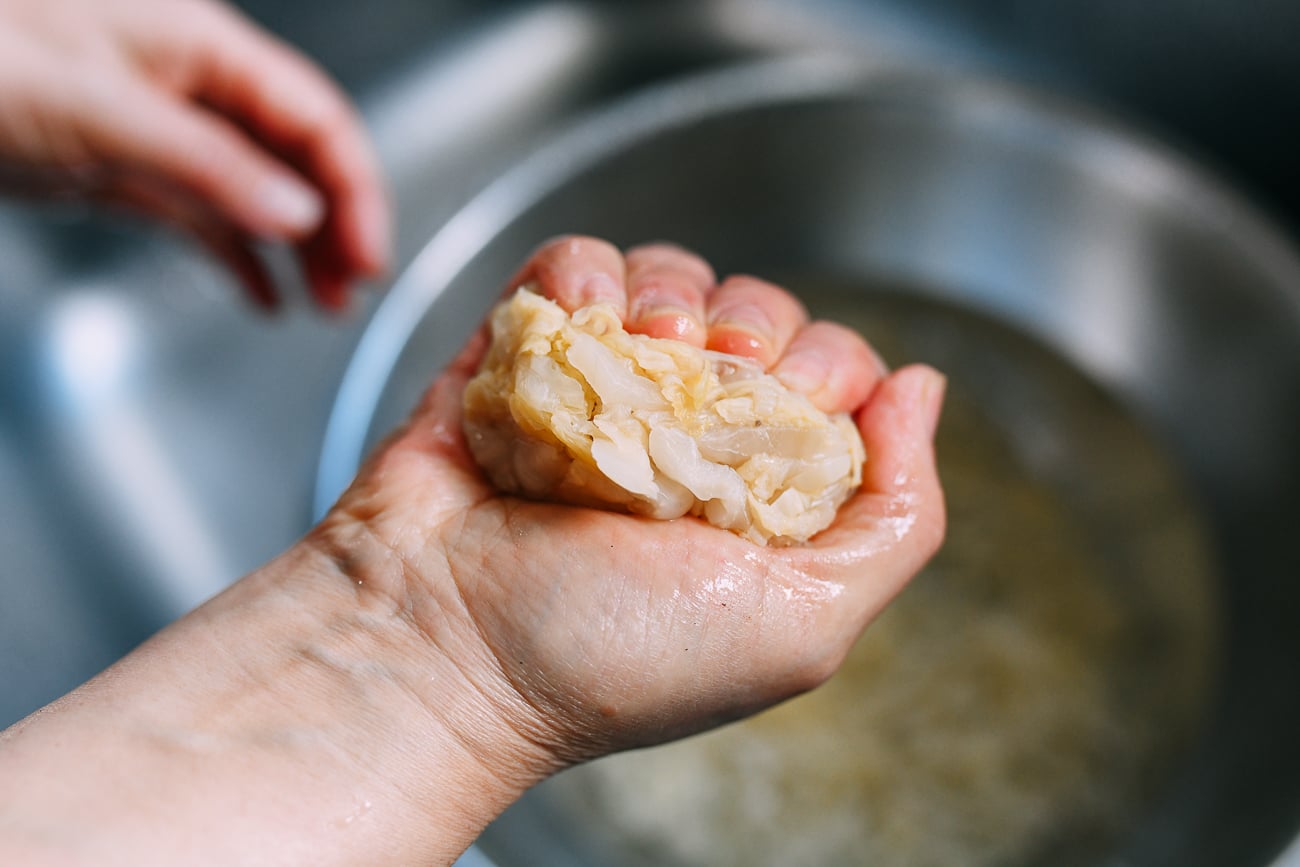
This quick rinse will soften the saltiness and sourness of the cabbage. Set aside.
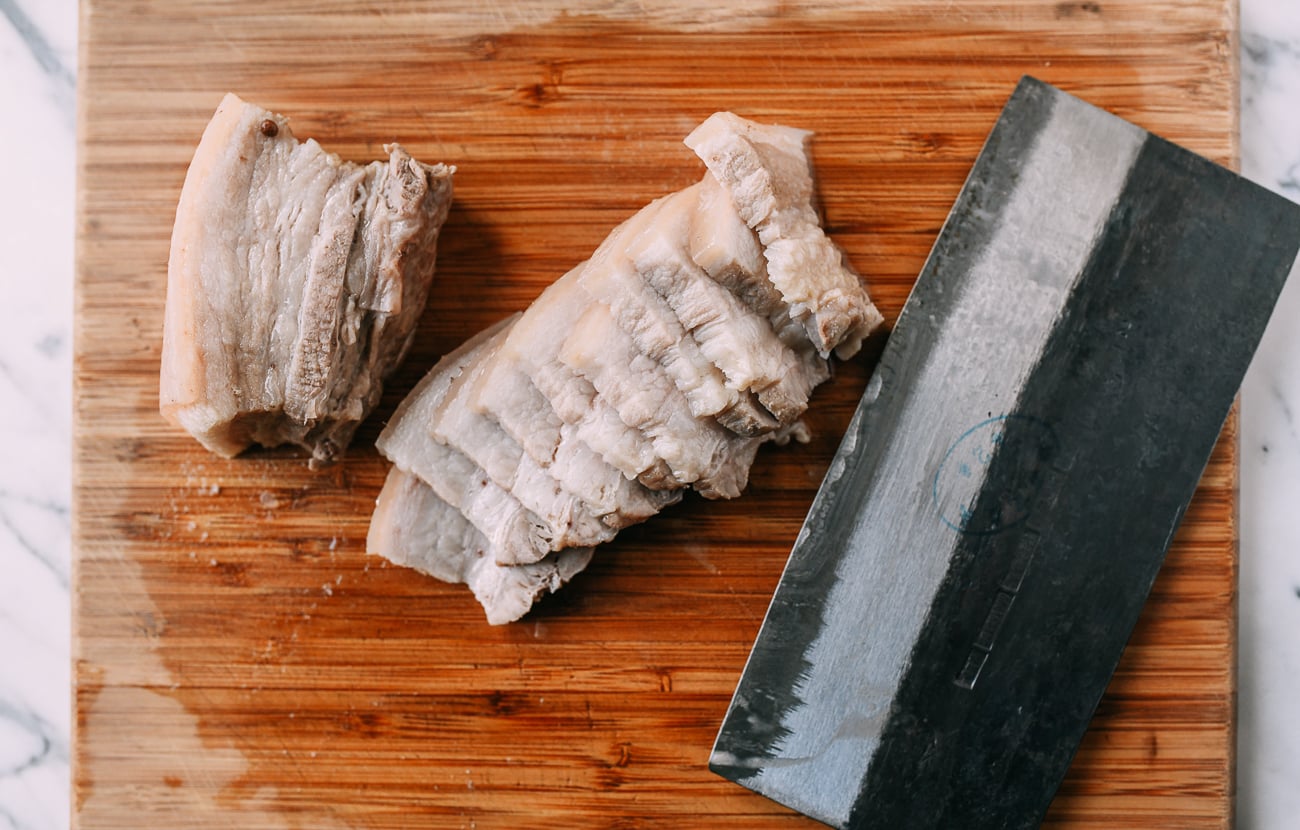
Once the pork belly is warm to the touch (not hot), slice it into 1/4″ (0.6 cm) slices. Set aside.
Here’s what your prepared ginger and scallions should look like:
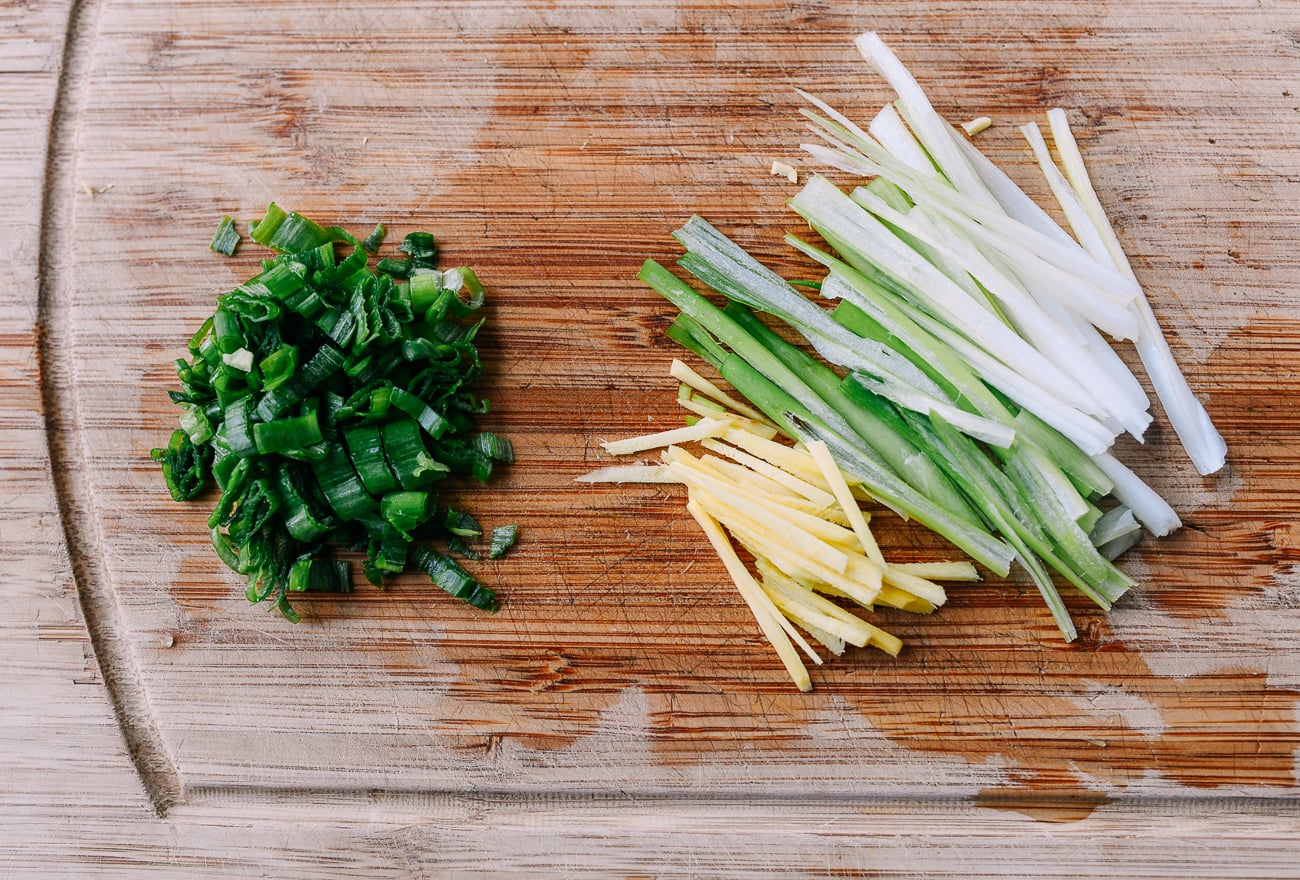
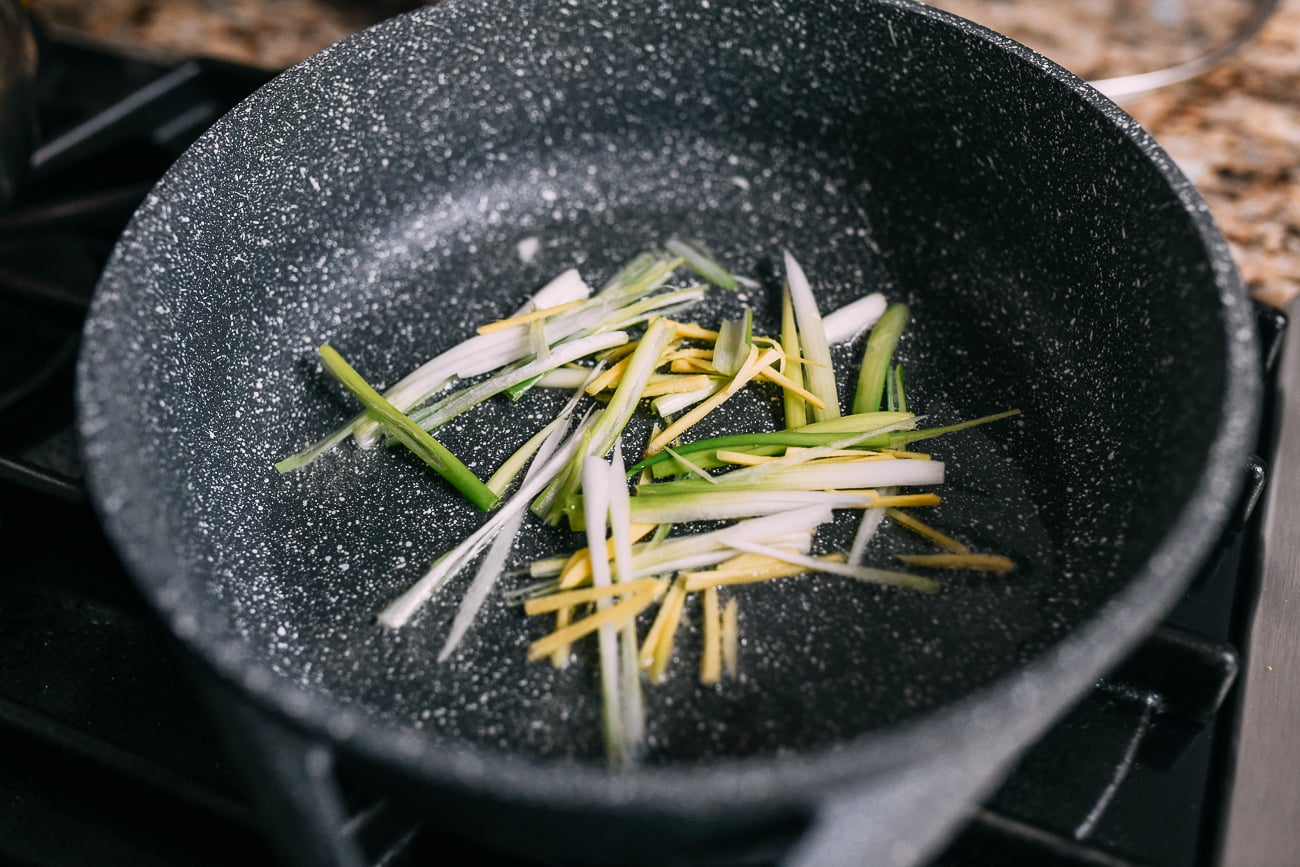
In a thick-bottomed, relatively shallow pot (a clay pot, stone pot, or cast iron dutch oven is ideal for retaining heat while eating), heat the vegetable oil, and add the ginger and julienned scallion whites.
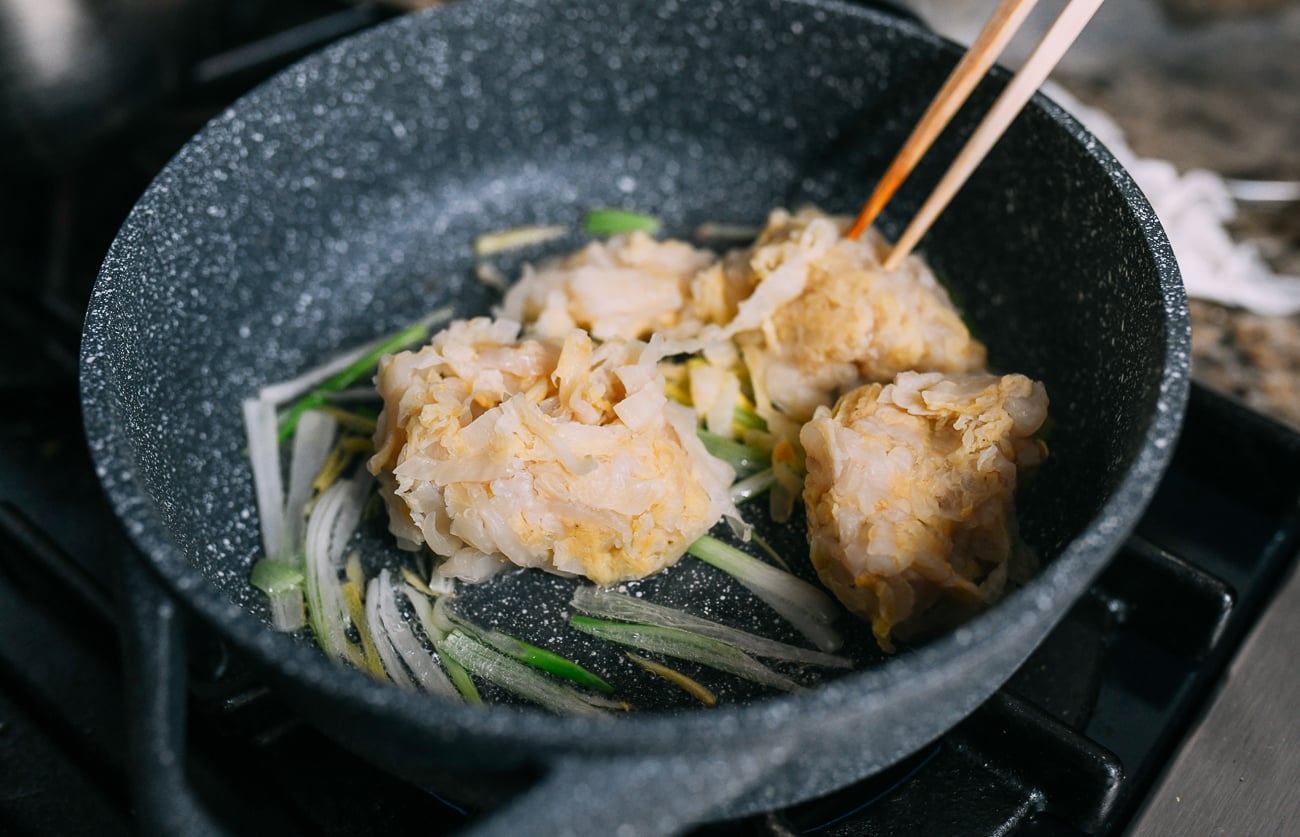
Add the sour cabbage.
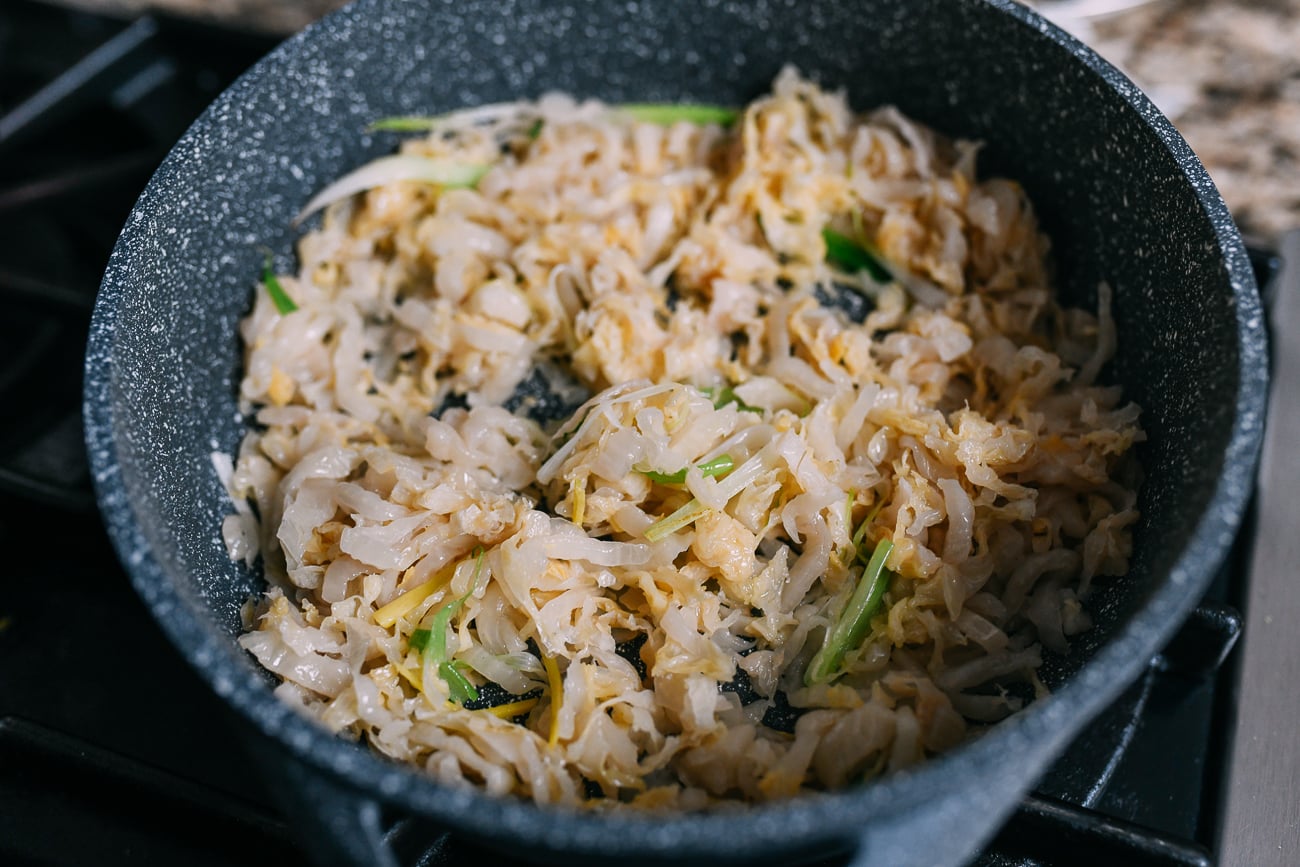
Stir-fry for 5-7 minutes, until any liquid has evaporated.
Strain the liquid used to boil the pork, and add to the pot…
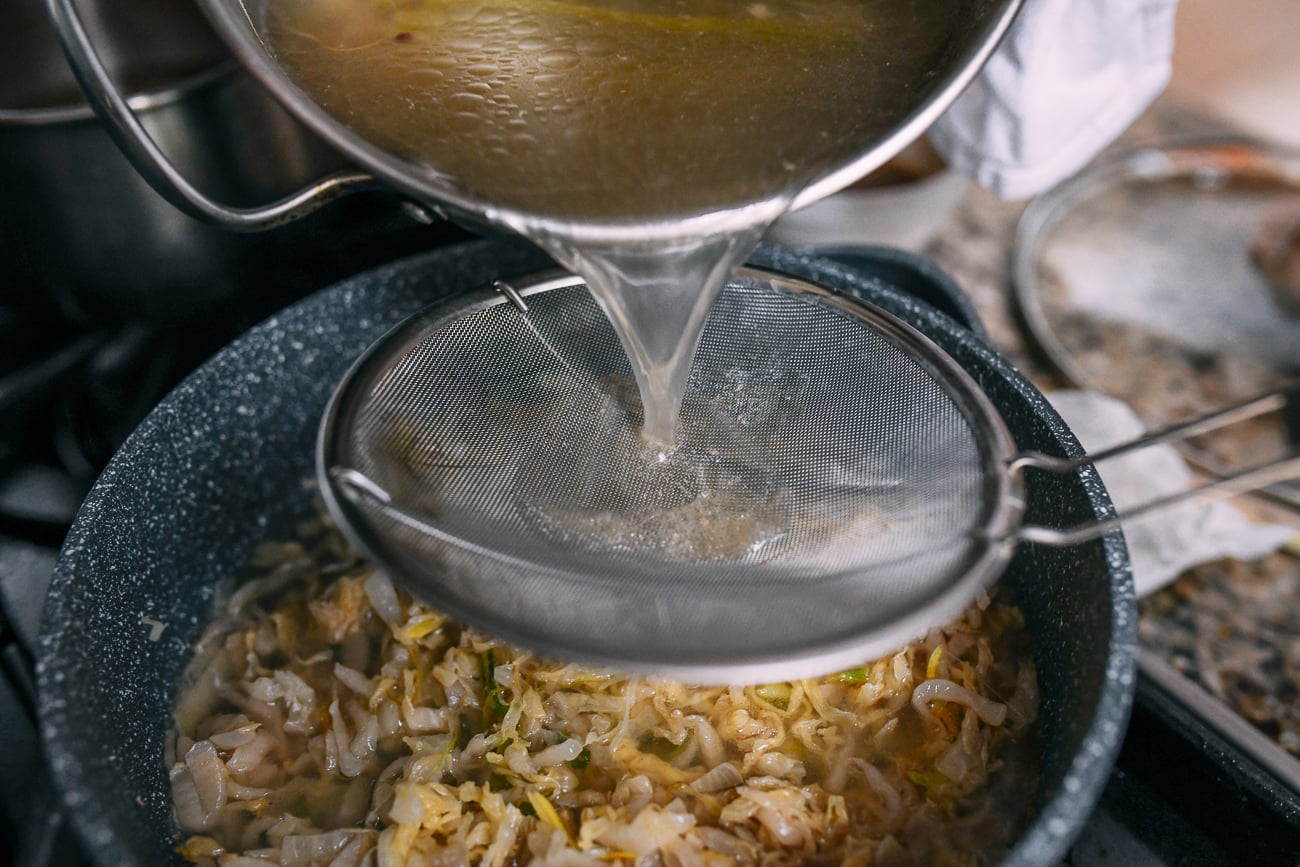
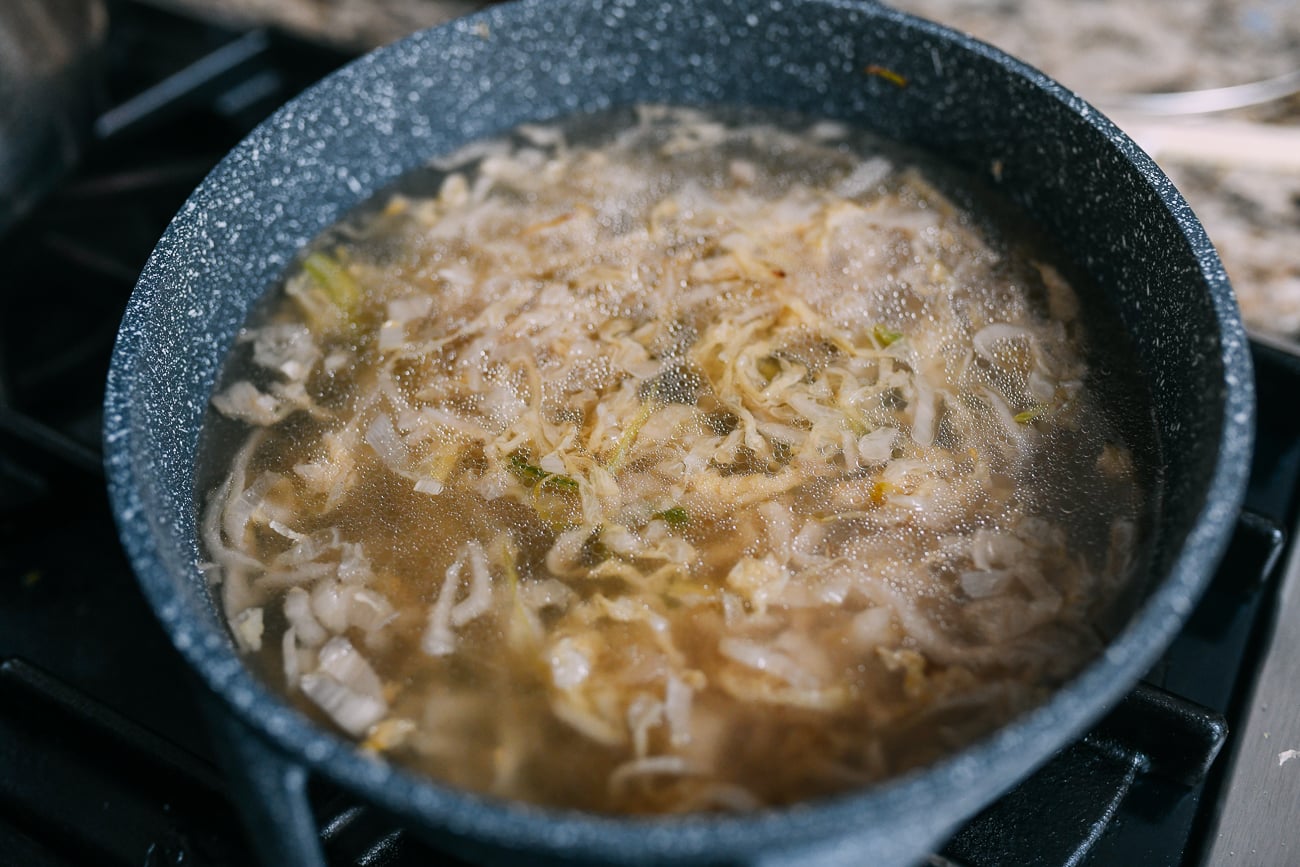
Stir in the oyster sauce and chicken stock (optional if you like a more broth-like consistency).
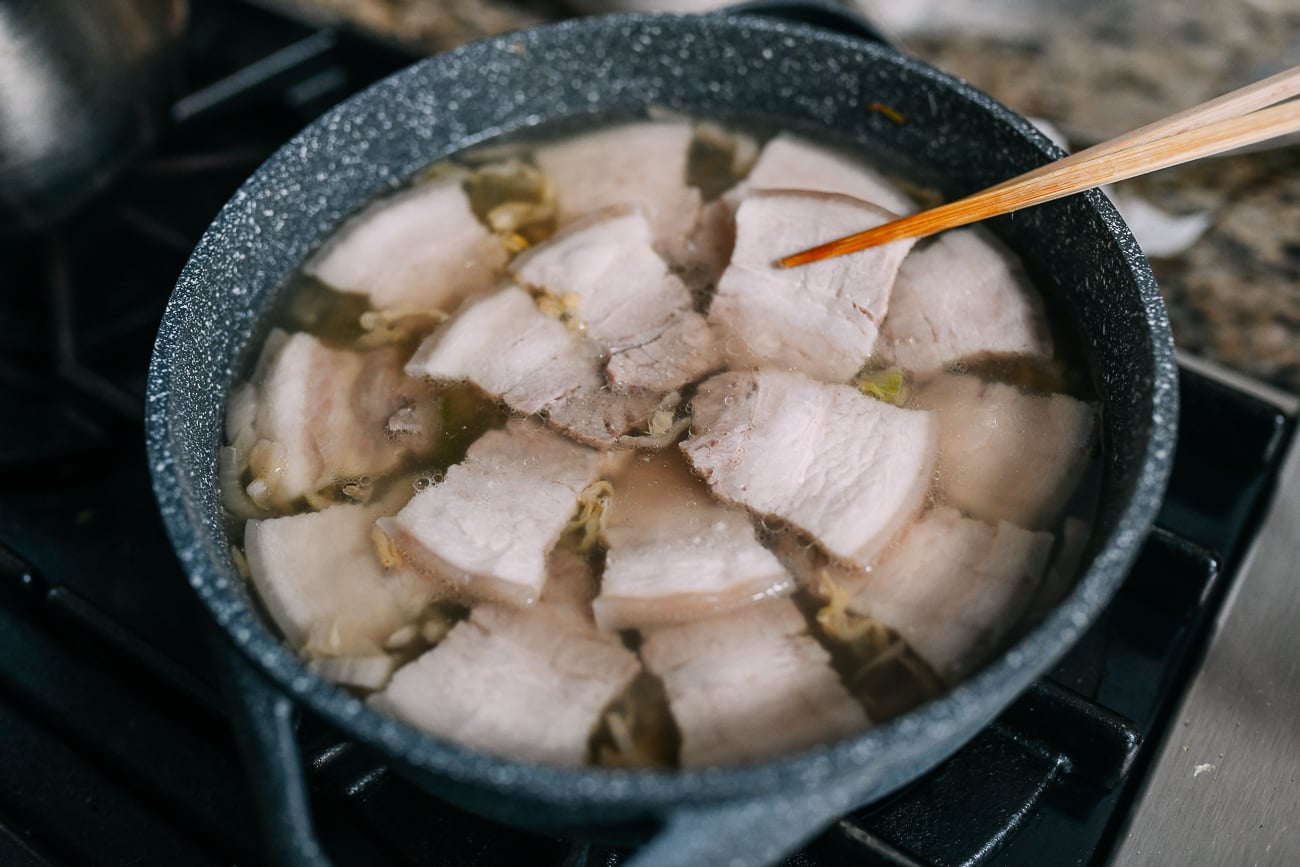
Also add the sliced pork belly (or ribs). I fanned out the pork belly evenly in a circular pattern like this:
Bring to a simmer, cover, and cook for 15 minutes over medium low heat.
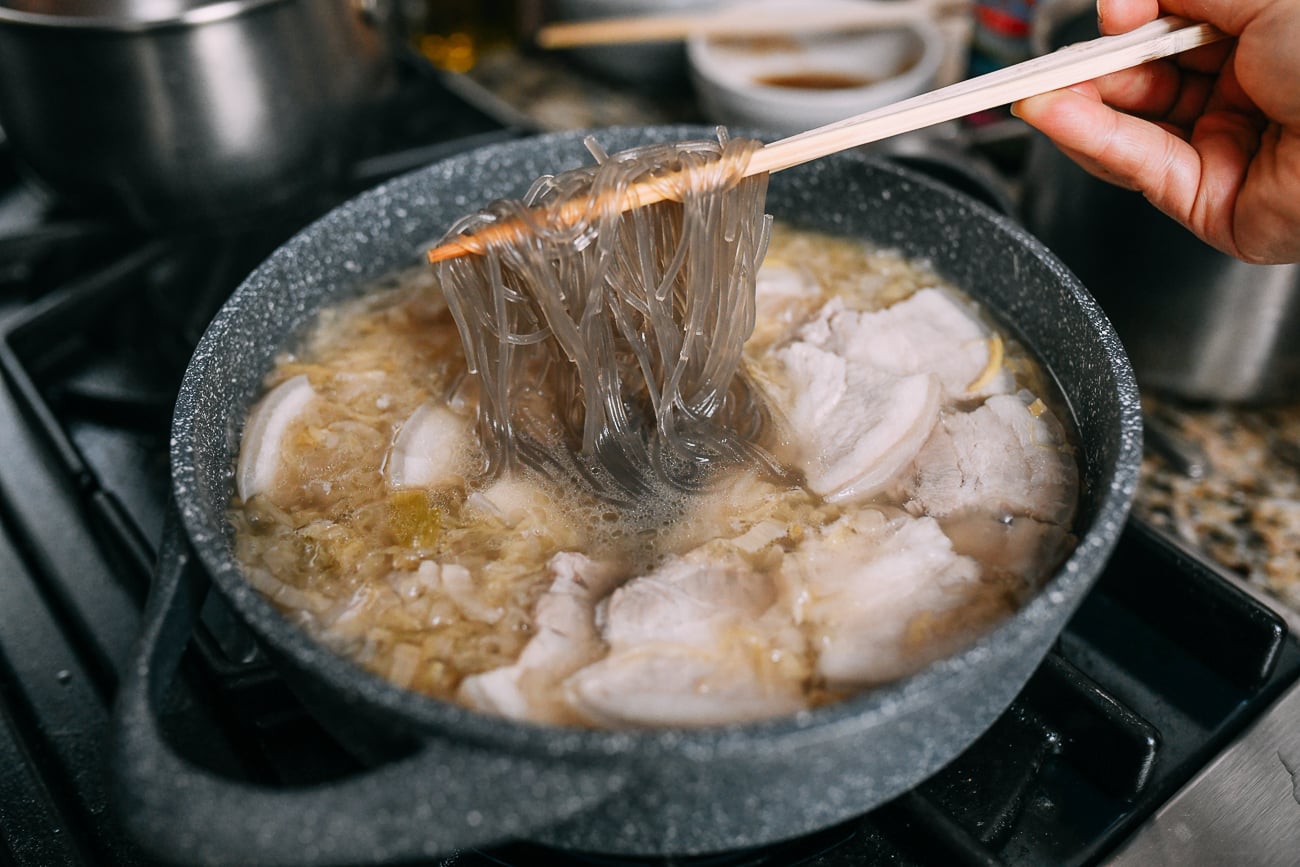
Add the glass noodles, stir, and cover again. Note that some glass noodles require pre-soaking before cooking. I soaked these noodles to soften them prior to cooking. Be sure to check the package instructions before you start.
Cook for 2-3 more minutes, or according to the package instructions.
Finally, stir in the white pepper and salt to taste. Top with the chopped green parts of the scallions, and serve immediately with the dipping sauce for the pork and the steamed rice!
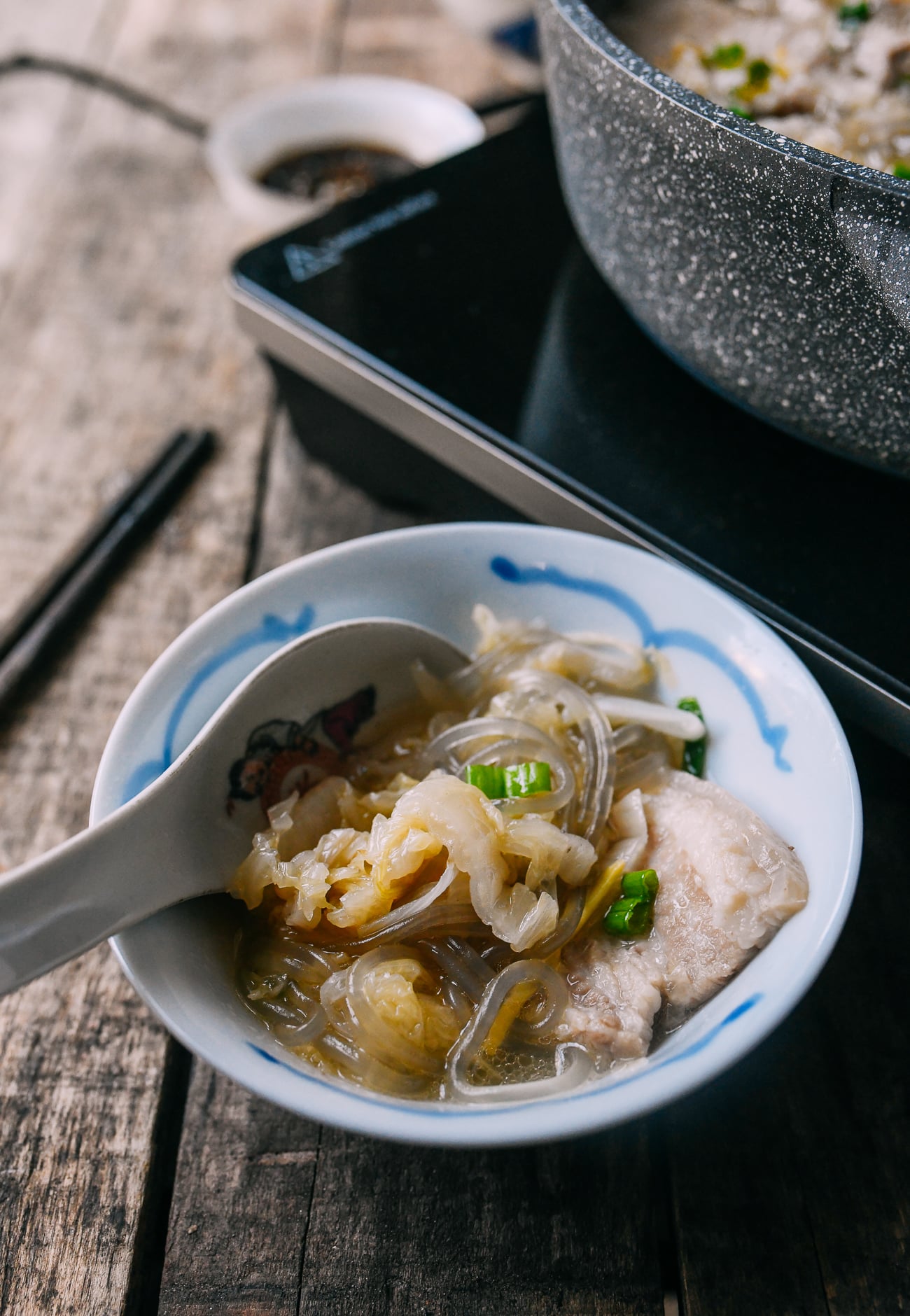
Be sure to try that dipping sauce. It’s crazy good!
Looking for more authentic recipes? Subscribe to our email list and be sure to follow us on Pinterest, Facebook, Instagram, and Youtube!
Recipe

Northern Chinese Sour Cabbage Stew with Glass Noodles
Ingredients
To prepare the pork belly:
- 4 cups water
- 1 pound pork belly (or double the amount of meaty pork ribs, i.e. 2 lbs/900g)
- 2 tablespoons Shaoxing wine
- 4 slices ginger
- 2 scallions
- 1 teaspoon Sichuan peppercorns
- 1 star anise
- 1/2 teaspoon salt
For the dipping sauce
- 3 cloves garlic (finely minced)
- 2 tablespoons light soy sauce
- 1/4 teaspoon sugar
- chili oil (optional, to taste)
For the rest of the dish:
- 1 pound Chinese sour cabbage (can substitute sour mustard or sauerkraut)
- 2 tablespoons vegetable oil
- 3 slices ginger (julienned)
- 2 scallions (white part julienned, green parts chopped)
- 1 tablespoon oyster sauce
- 1 cup chicken stock (optional)
- 3 ounces dried sweet potato starch noodles (or other dried glass noodles, soaked/prepared according to package instructions)
- 1/4 teaspoon white pepper
- salt (to taste)
Instructions
- Start by prepping the pork. In a medium thick-bottomed pot, add the water, whole pork belly (or ribs), Shaoxing wine, ginger, scallions, Sichuan peppercorns, star anise, and salt. Cover and bring to a boil. Once boiling, reduce the heat to medium/low, and simmer for 15 minutes.
- If using pork belly, remove it from the pot to let it cool, and save the stock. If substituting pork ribs, don’t remove them from the stock. Just turn off the heat and let them continue “cooking” in the hot broth while you prepare the rest of the dish.
- Make the dipping sauce by combining the minced garlic, light soy sauce, sugar, and chili oil (if using) in a small bowl. Set aside.
- Slice the sour cabbage about ¼” (0.6 cm) thick, transfer to a large metal bowl, and fill with fresh water. Agitate the vegetables in the water with your hands a bit, drain, and thoroughly squeeze out any remaining water from the cabbage. This quick rinse will soften the saltiness and sourness of the cabbage. Set aside.
- Once the pork belly is warm to the touch (not hot), slice it into 1/4" (0.6 cm) slices. Set aside.
- In a thick-bottomed, relatively shallow pot (a clay pot, stone pot, or cast iron dutch oven is ideal for retaining heat while eating), heat the vegetable oil, and add the ginger, julienned scallion whites, and the sour cabbage. Stir-fry for 5-7 minutes, until any liquid has evaporated.
- Strain the liquid used to boil the pork into the pot. Stir in the oyster sauce and chicken stock (optional if you like a more broth-like consistency), and then add the sliced pork belly (or ribs). Bring to a simmer, cover, and cook for 15 minutes over medium low heat.
- Add the glass noodles, stir, and cover again. Cook for 2-3 more minutes, or according to the package instructions.
- Finally, stir in the white pepper and salt to taste. Top with the chopped green parts of the scallions, and serve immediately with the dipping sauce for the pork and the steamed rice.