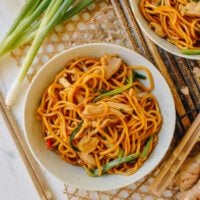

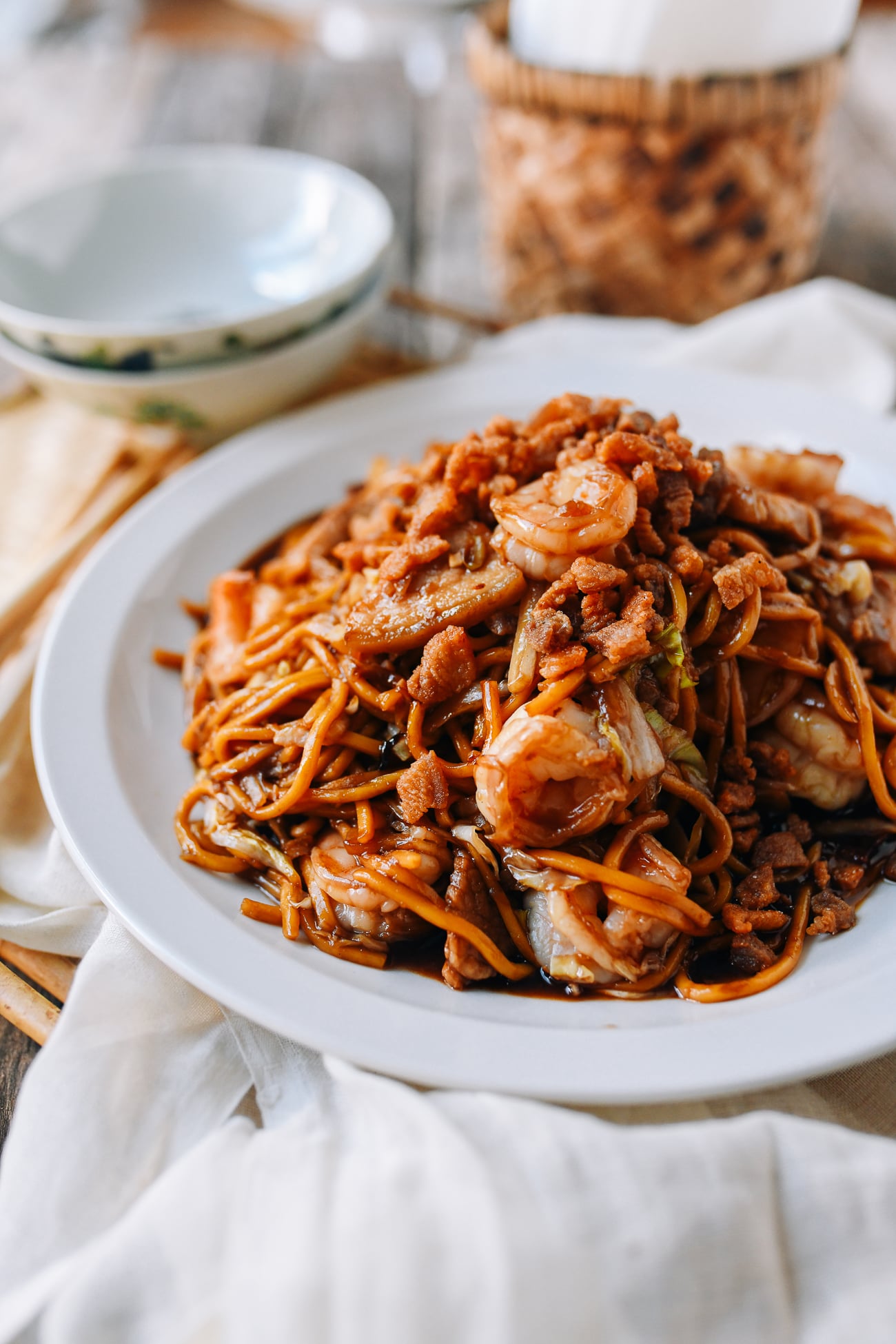
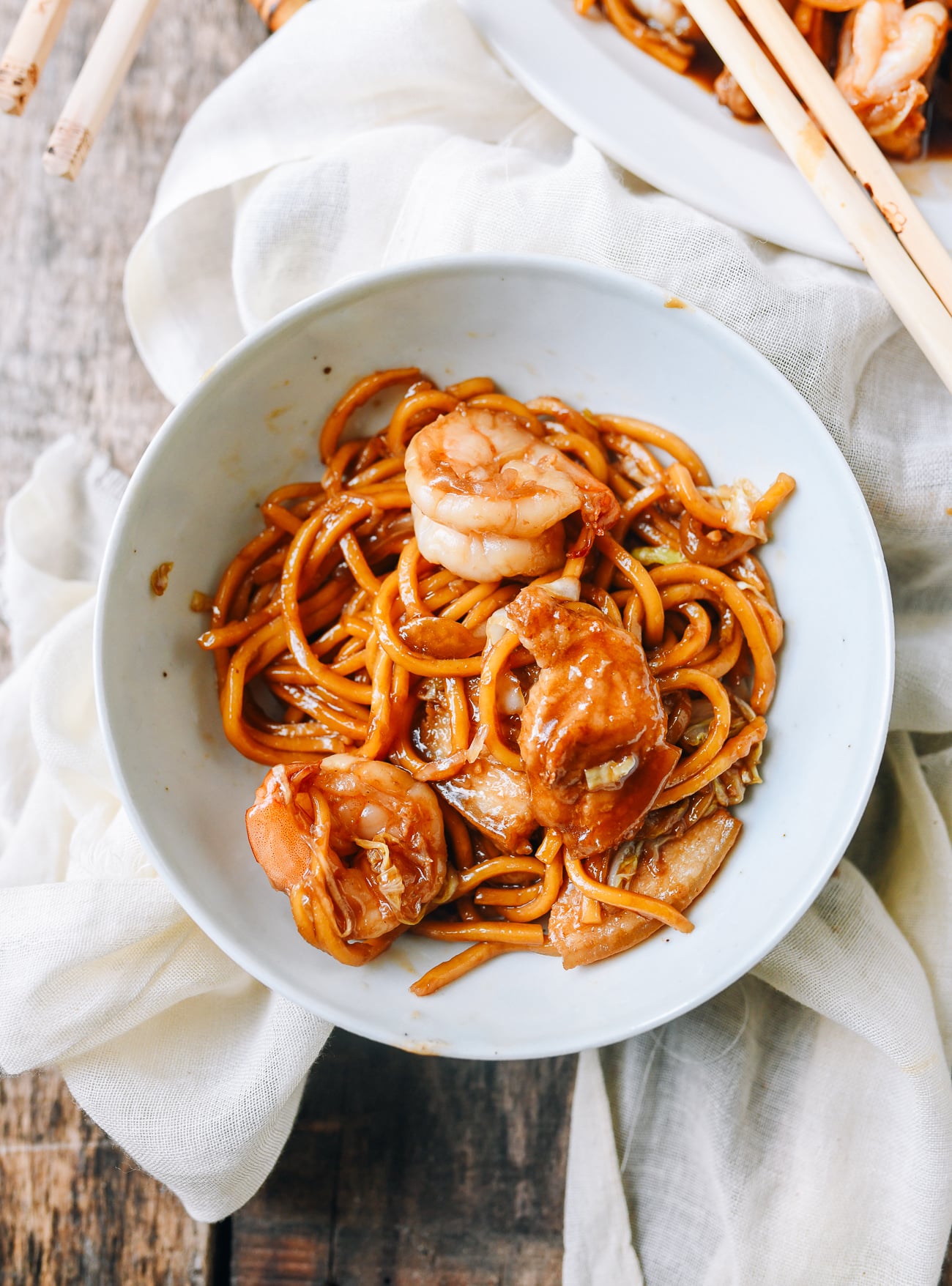
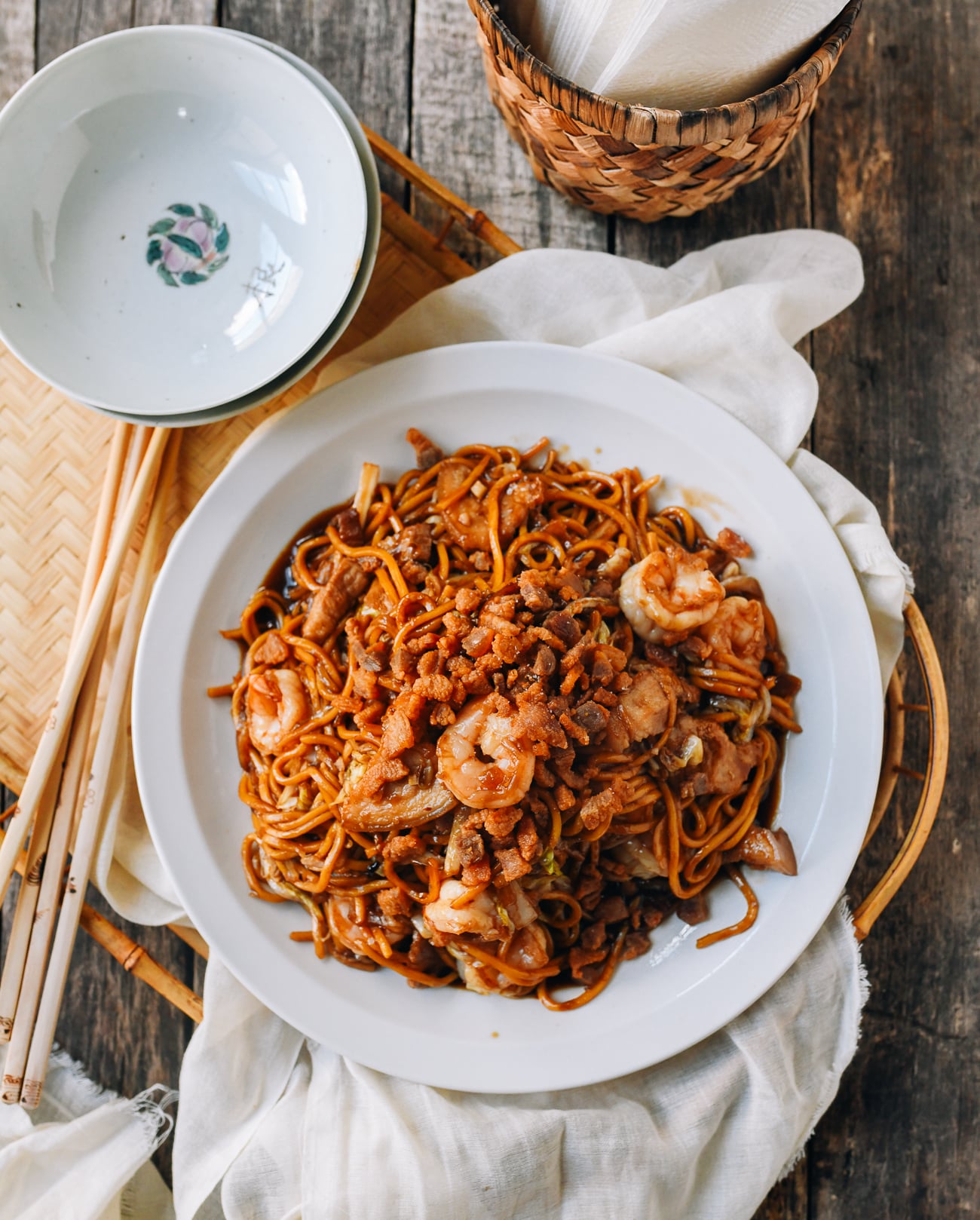
Hokkien Mee is a stir-fried noodle dish popular throughout Southeast Asia. With origins in China’s Fujian province, it may also be referred to as Hokkien Char Mee or Hokkien Fried Noodles.
While there are several variations, this recipe is based on the Malaysian version you can find in Kuala Lumpur, with a sweet dark soy sauce, pork, pork crackling and shrimp.
What is Hokkien Mee?
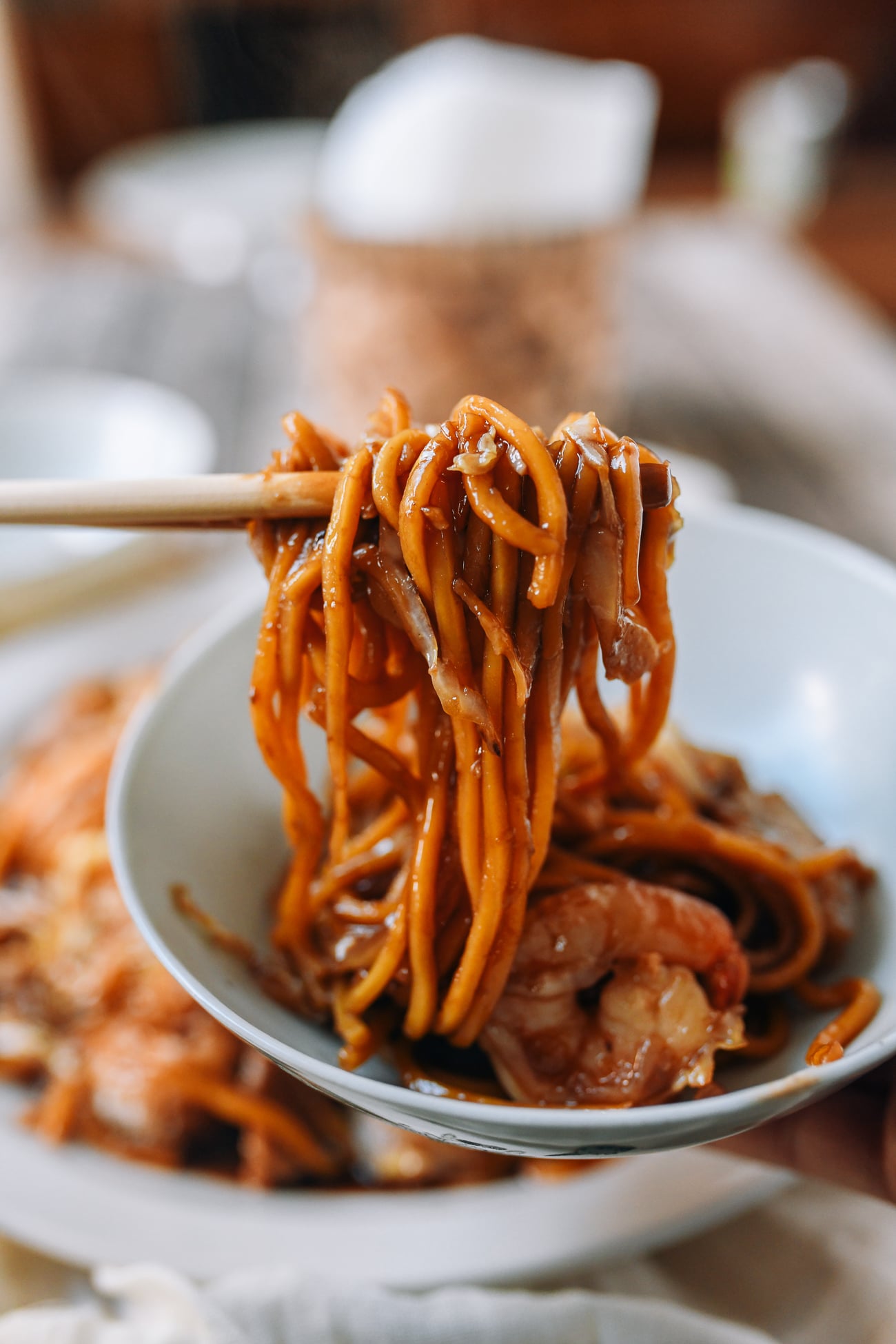
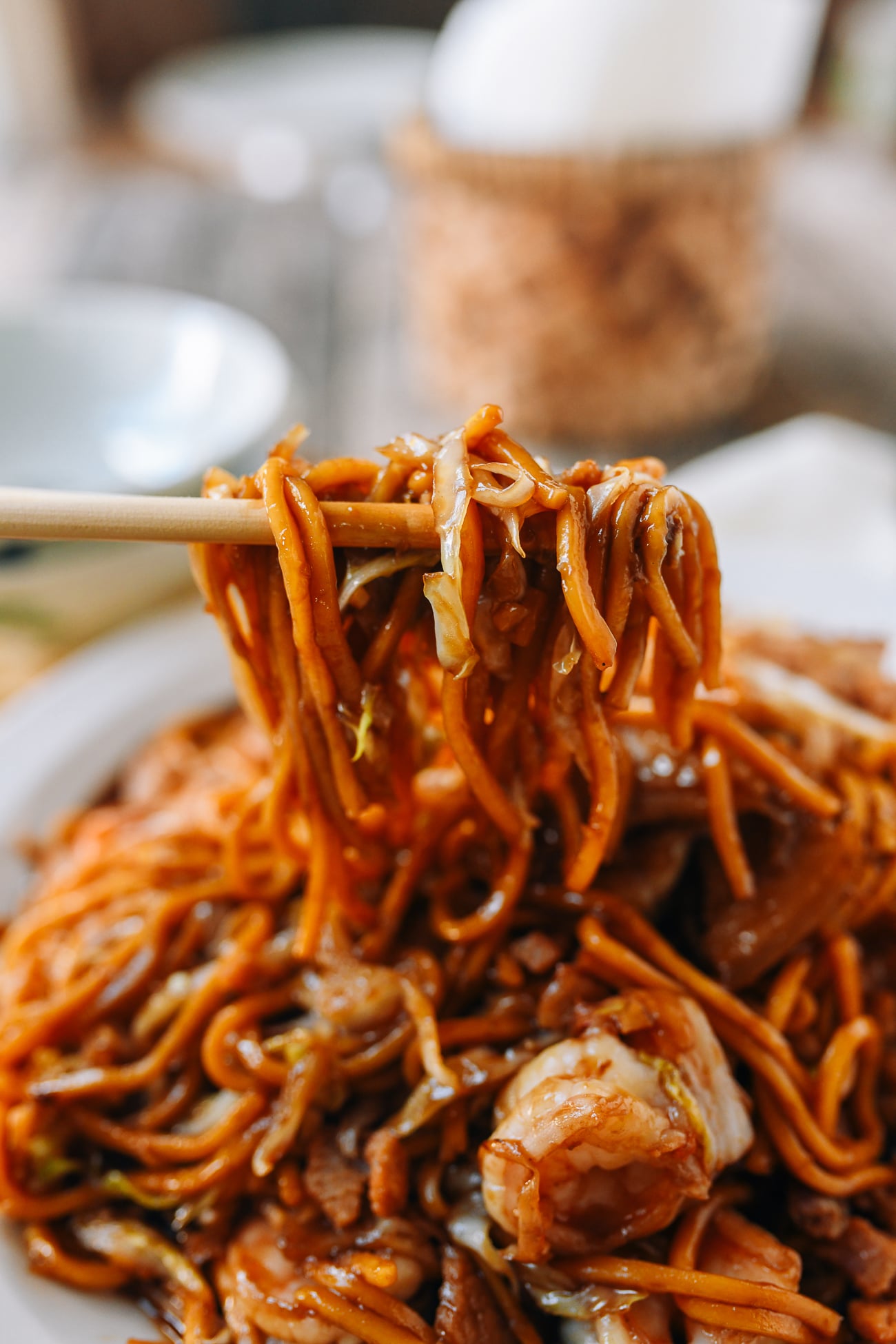
Hokkien Mee is popular in Malaysia, Indonesia, and Singapore. Some versions are broth-based noodle soups, while others are stir-fried. The common thread, however, is the soft, chewy yellow egg noodles.
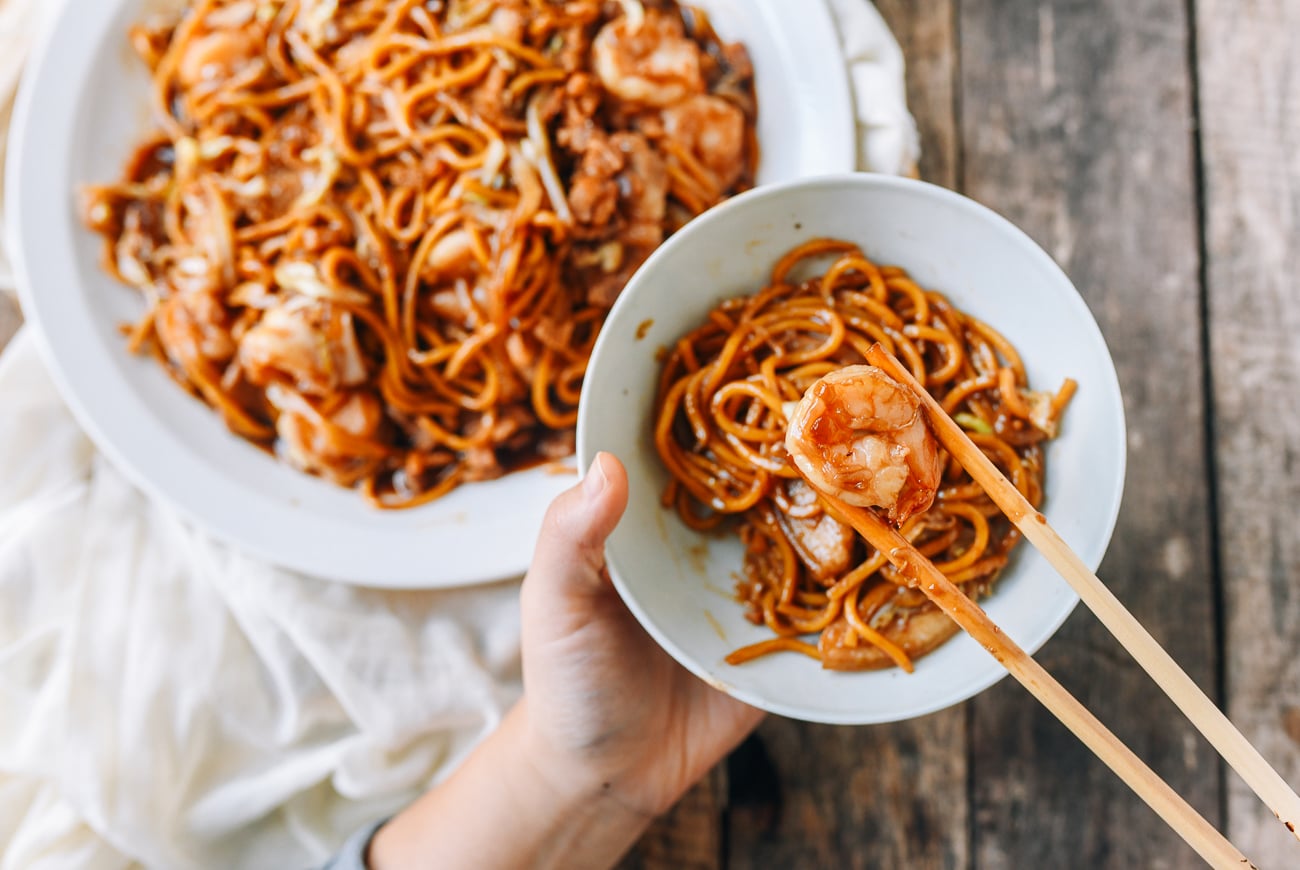
While they are very similar to classic lo mein noodles, they can be cooked in many different ways. In Penang (northwest Malaysia), you may find a hae mee noodle soup with shrimp.
Sarah’s Ginger Scallion Hokkien Noodles recipe features them in a dry stir-fry. You can also try them in her Laksa recipe.
What is “KL” Hokkien Mee?
“KL” stands for Kuala Lumpur—as in their version of Hokkien Mee. It uses a dark, rich, sweet sauce, with an emphasis on pork fat! If you don’t like sweet dishes, I would skip this recipe!
The dish is quite saucy, but it’s ultimately still a stir-fry. Plus, if you love salted pork crackling like I do, you’re in for a treat.
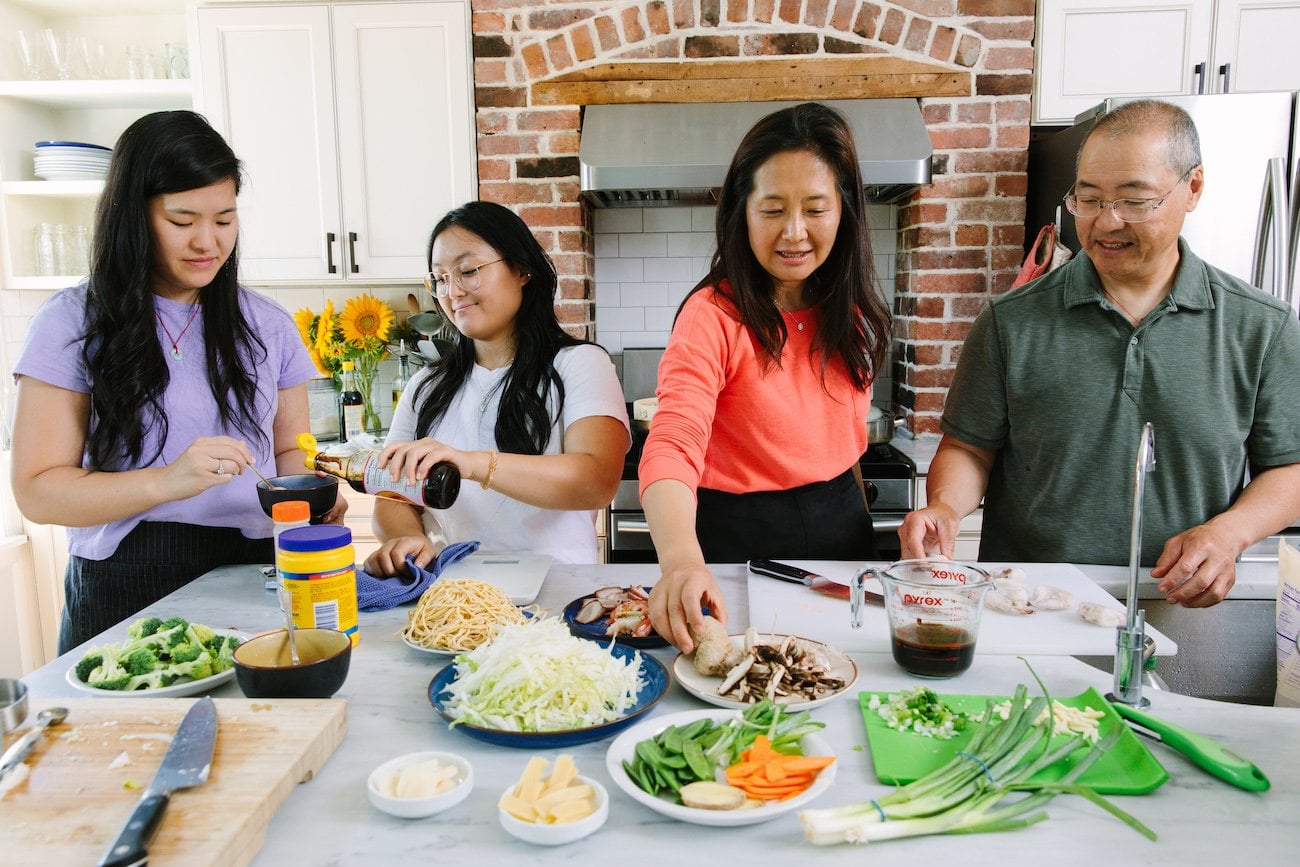
This recipe requires a fair amount of prep, and it’s best to have everything ready to go before starting the cooking process.
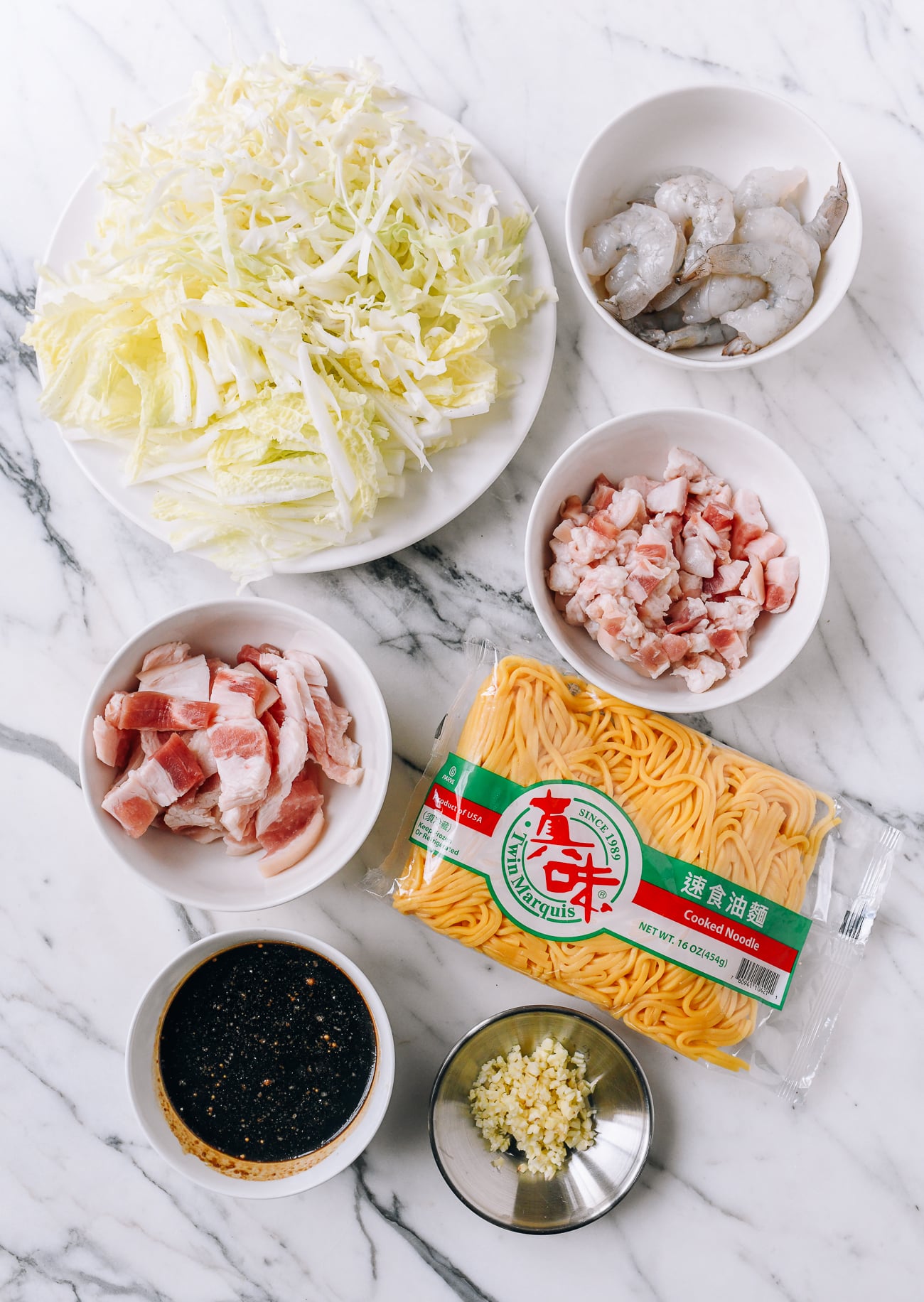
One particularly important preparation step is pre-mixing the sauce so that A) you don’t forget anything and B) you don’t need to measure multiple ingredients while also dealing with a screaming hot wok. Trust me on this one.

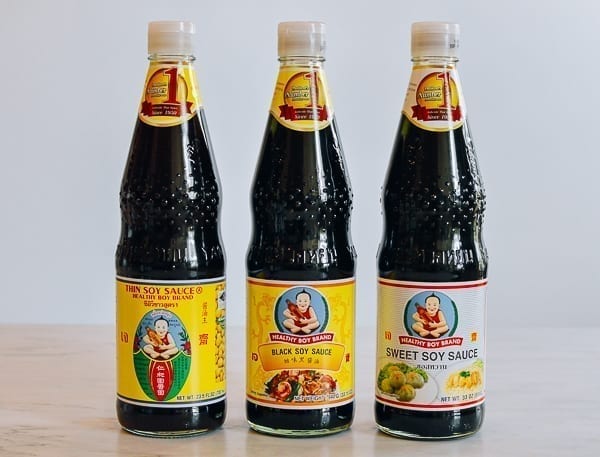
A Note on Thai Soy Sauce
This dish calls for three different types of Thai soy sauce. The KL version of the dish is quite sweet, and you need a balance of both sweet and salty flavors. Read our Thai Soy Sauce Ingredients Glossary article for more info. In particular, make sure you can get Thai sweet soy sauce (or the Indonesian equivalent, kecap manis). They are both thick, syrupy, and very sweet.
Hokkien Mee: Recipe Instructions
1. Prepare the pork belly & make crackling (chu yau char)
Cut the pork belly in half lengthwise, dividing the lean part from the fattier part attached to the skin.
Slice the lean (non-skin) part of the pork belly into ⅛-inch (3mm) slices. You should end up with about 6 ounces/170g.
Take the fatty length of the pork belly and trim off the skin, which can turn tough in the cracklings. Slice into ¼-inch (6mm) slices and then in half into small chunks.
To a cast iron pan, add the fatty pork belly chunks, ½ teaspoon salt, and ½ cup of water.
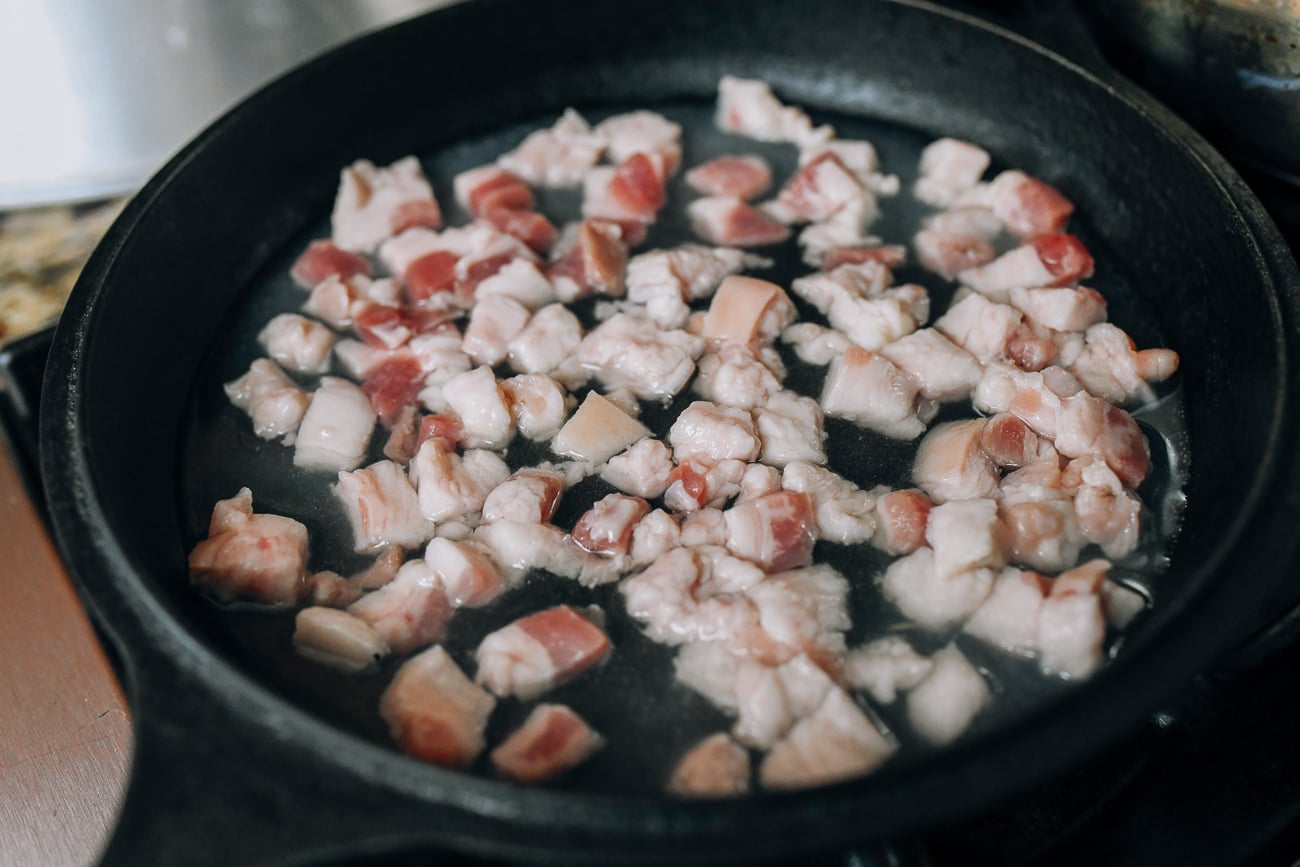
Simmer for 10 minutes, until the water evaporates and the pork fat begins to render.
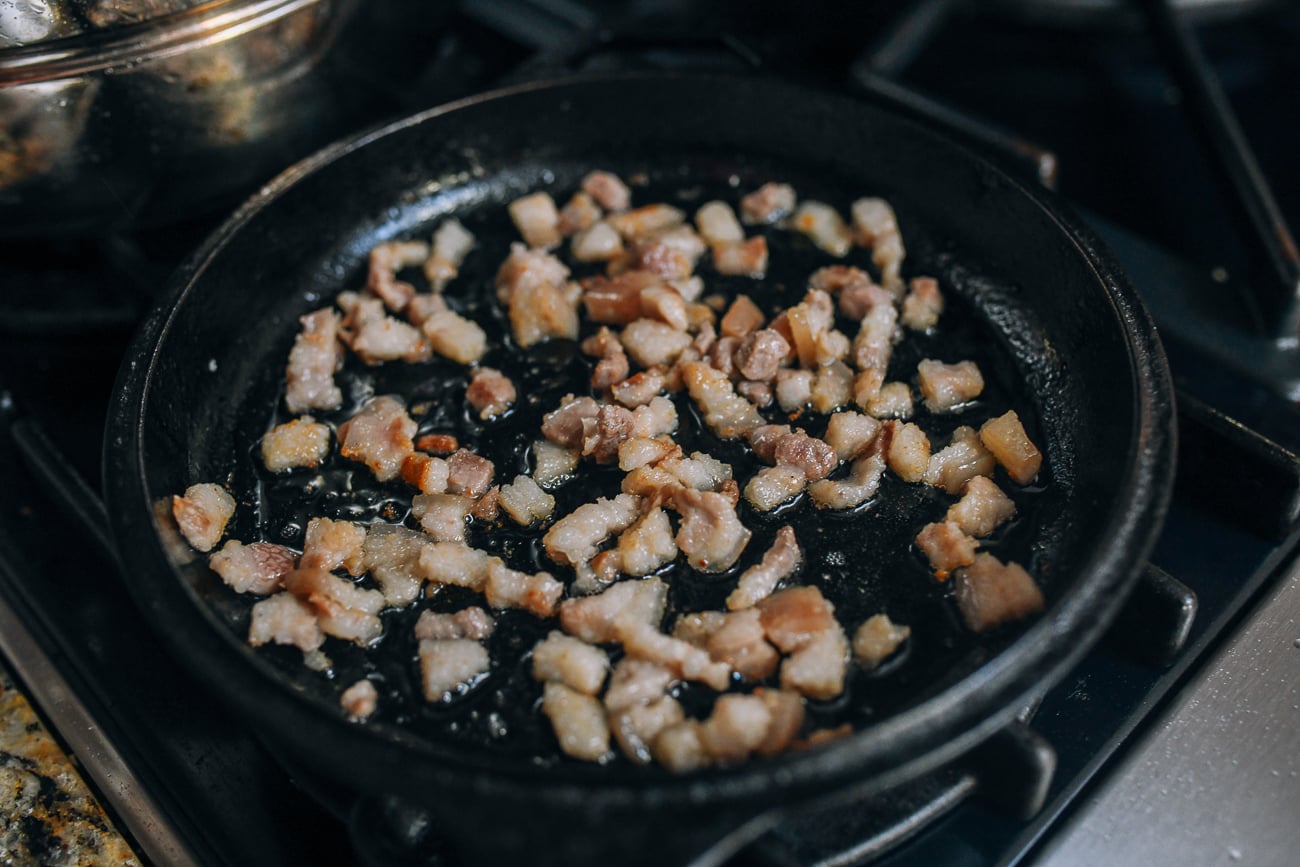
Turn the heat down and simmer on low for 15 minutes, stirring the pork belly occasionally, until the chunks are golden brown and crisp.
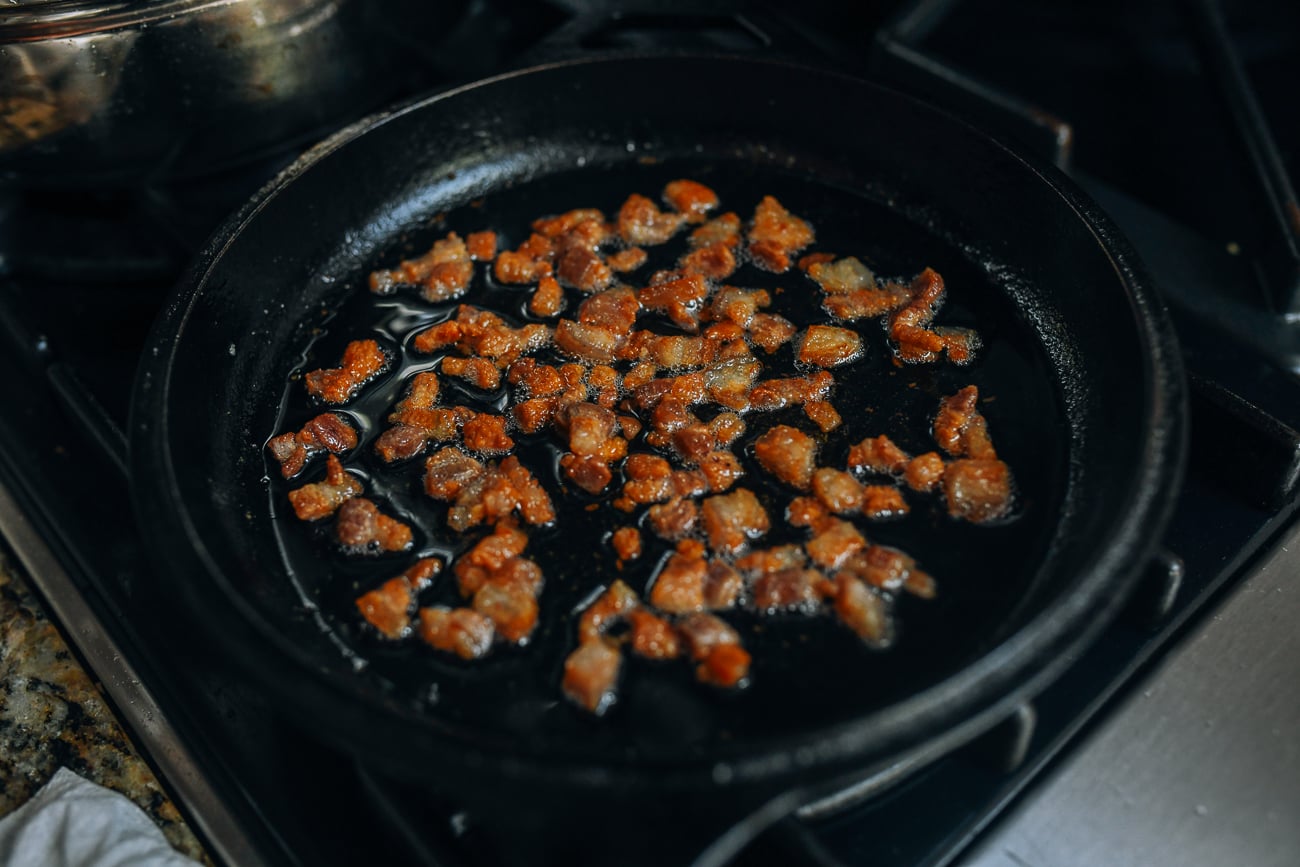
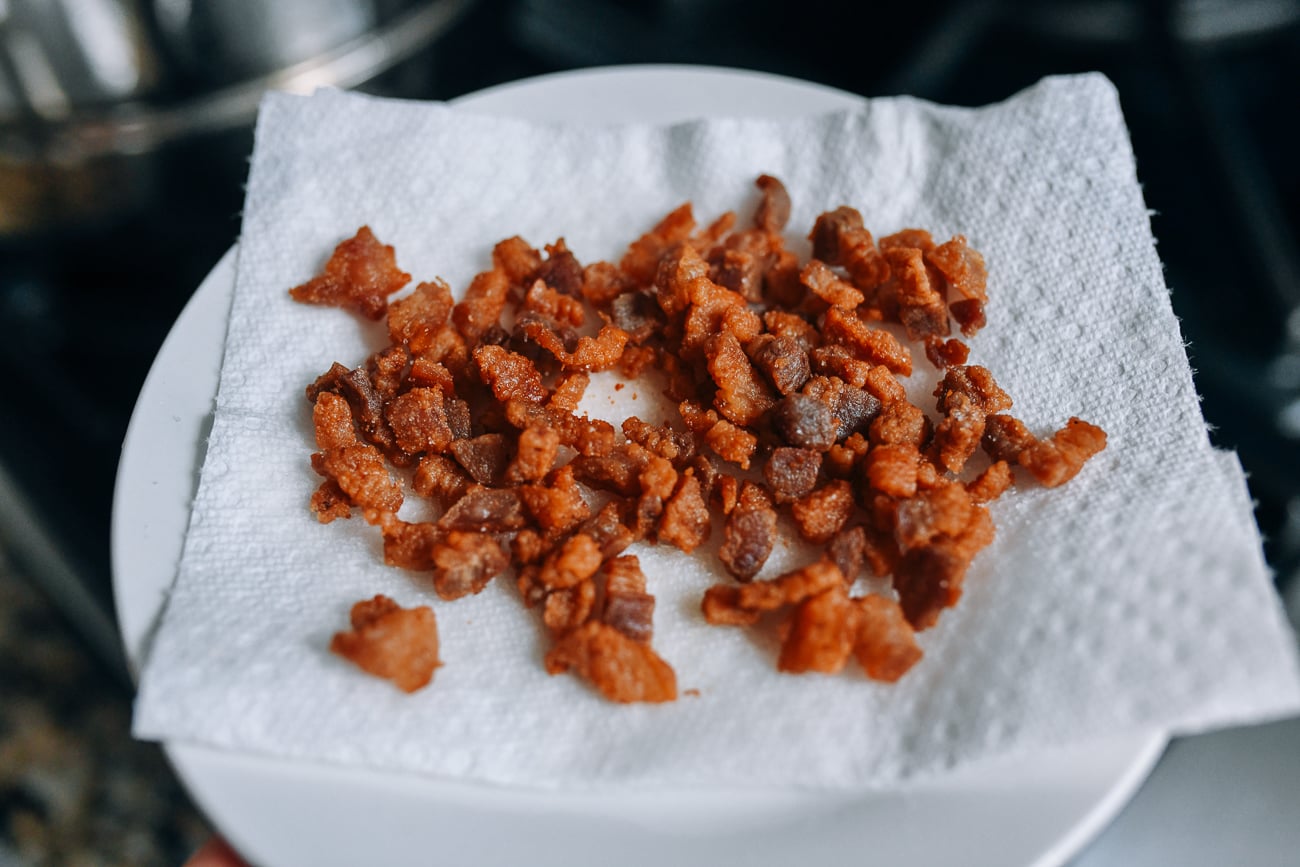
Set aside on a paper towel, and reserve the pork lard for the rest of the dish and for future uses (you’ll have extra).
Tip!
I’ve found that sometimes the pork cracklings don’t stay crispy by the time I’ve worked through the rest of the dish. They may require one more frying in the lard, so check this right before you start cooking, and refry for a few minutes until crispy once again.
2. Prepare the shrimp:
Raw, peeled, deveined medium to large shrimp (16-21 size) work well for this recipe. Rinse them and pat dry. Optionally, you can also velvet the shrimp using our shrimp velveting technique, but it’s totally optional.
3. Make the sauce:
Combine the oyster sauce, sesame oil, white pepper, Thai sweet soy sauce, Thai black soy sauce, Thai thin soy sauce, and low sodium stock (or water). Set aside.
If you want to adjust the sweetness, start with 1 tablespoon of sweet soy. You can always add more later.
4. Assemble the dish
Set a wok over medium-high heat. Add 2 teaspoons of rendered pork lard (or vegetable oil).
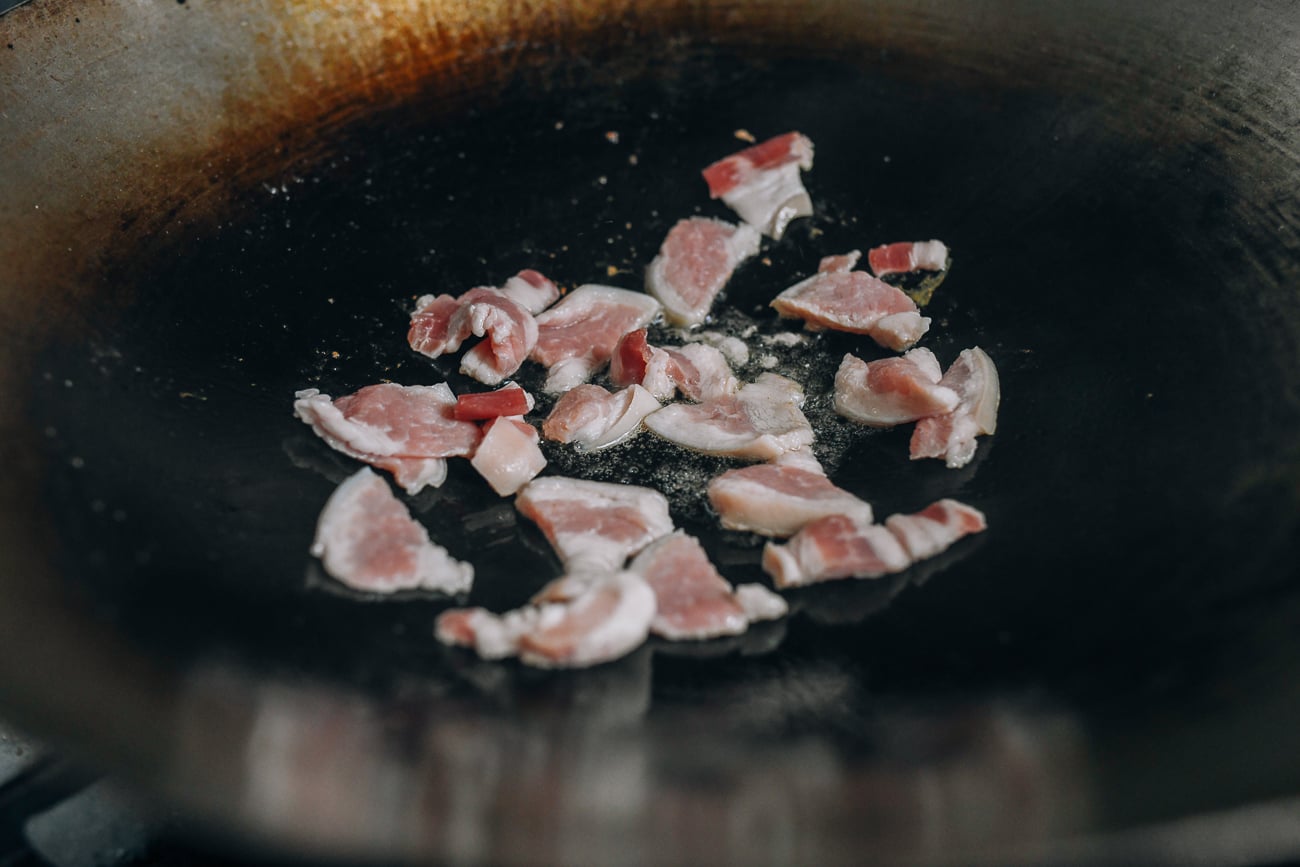
Sear the pork belly until browned, remove from the wok, and set aside.
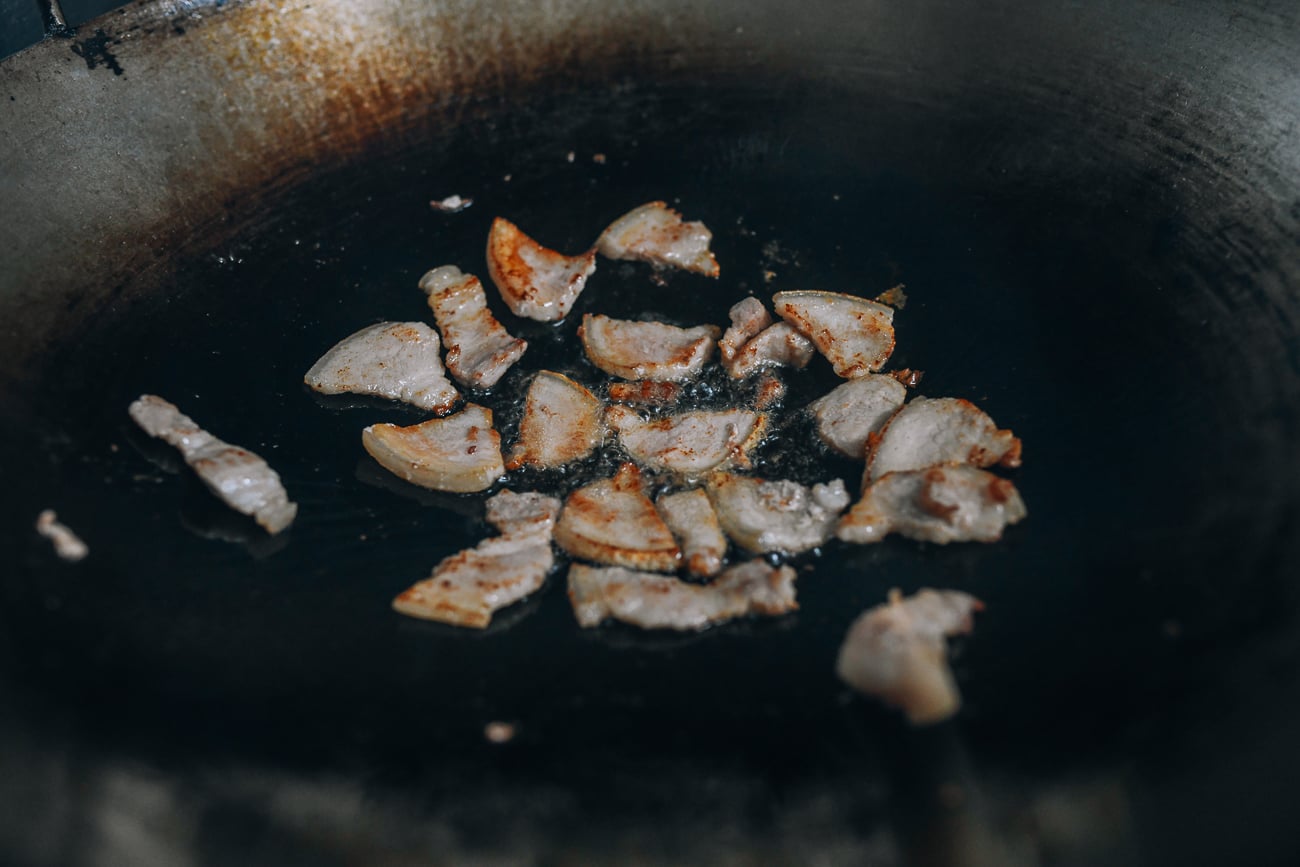
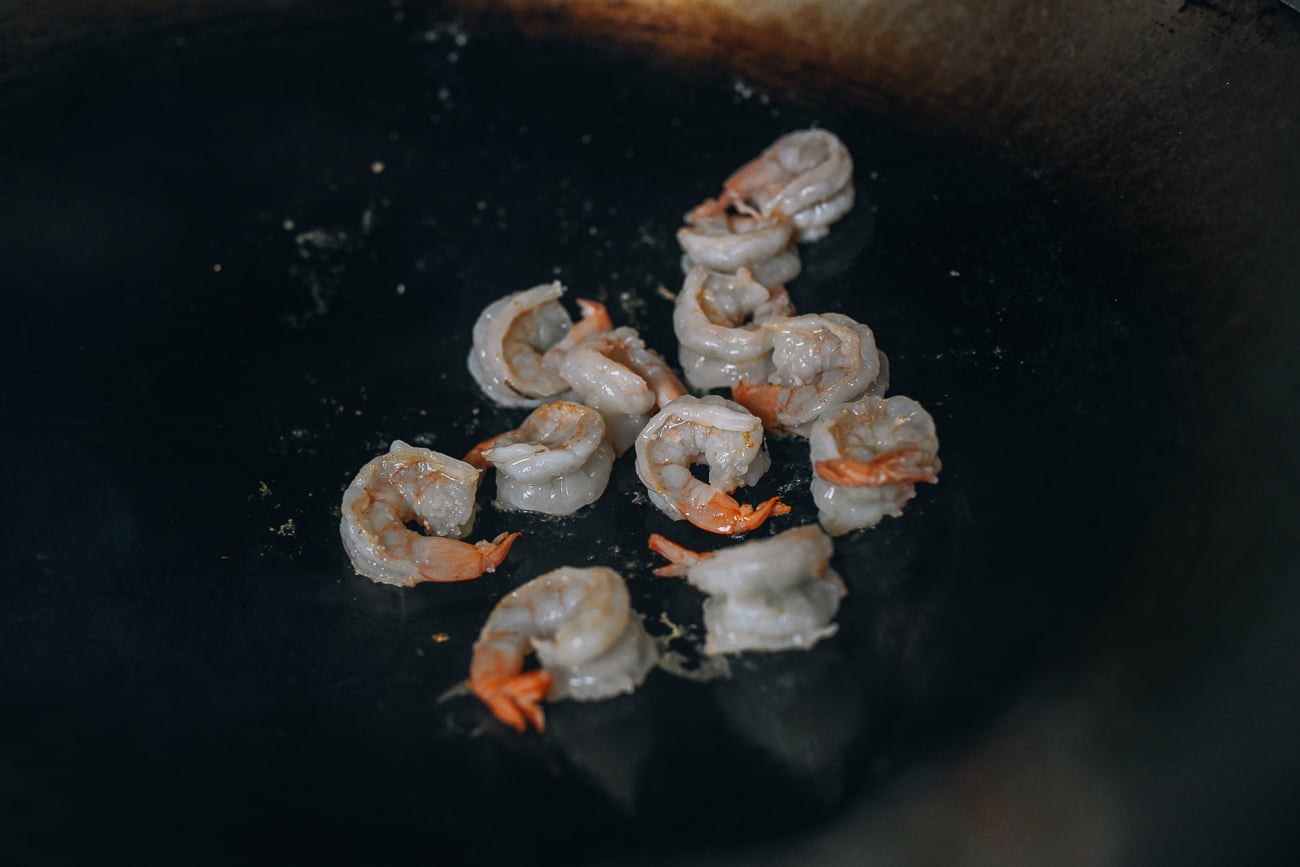
Next, add another 2 teaspoons of lard/oil, followed by the shrimp. Toss for 30-45 seconds, just until it turns pink. Remove from the wok and set aside.
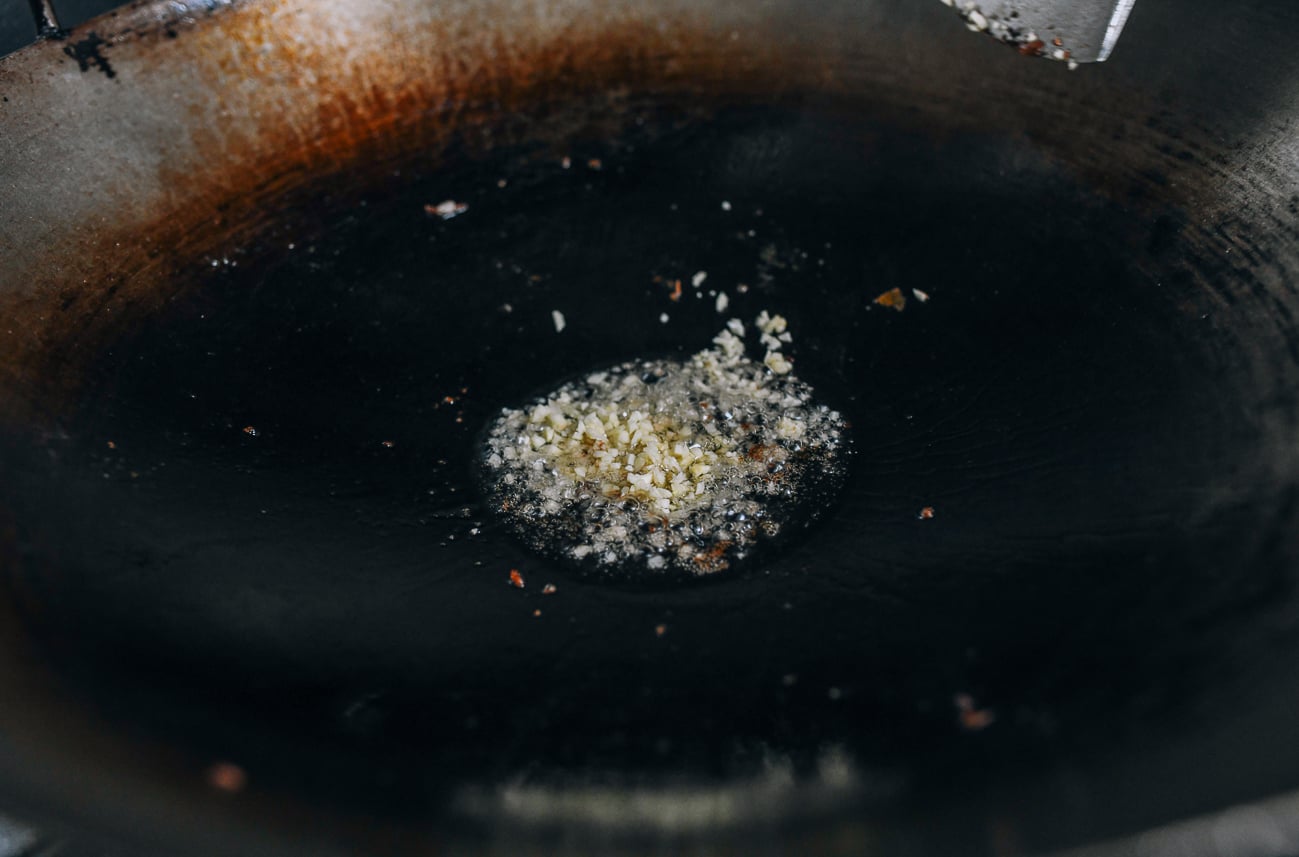
Add another tablespoon of lard/oil to the wok, followed by the chopped garlic.
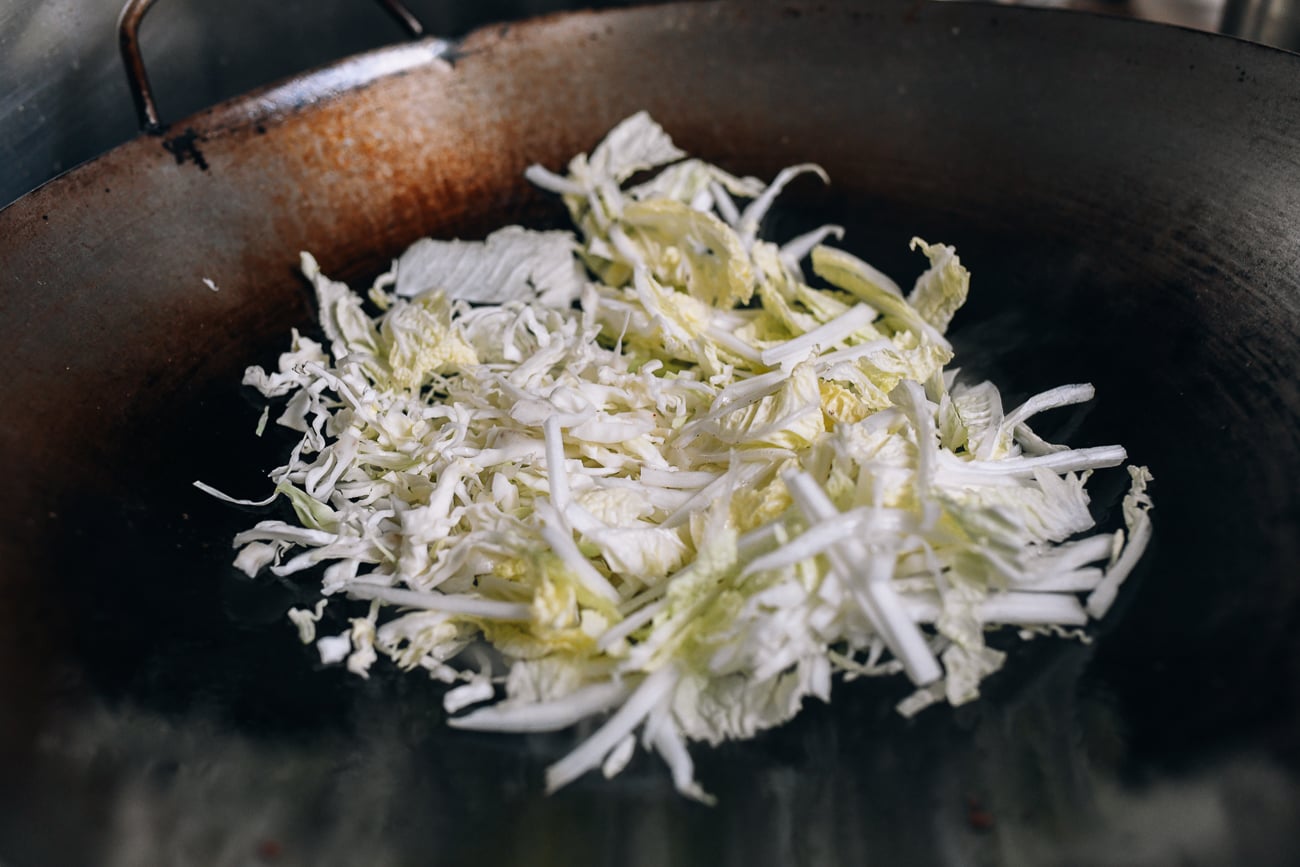
After 10 seconds, add both kinds of shredded cabbage. Stir fry for about 30-60 seconds. Add the Shaoxing wine.
Next, add the noodles.
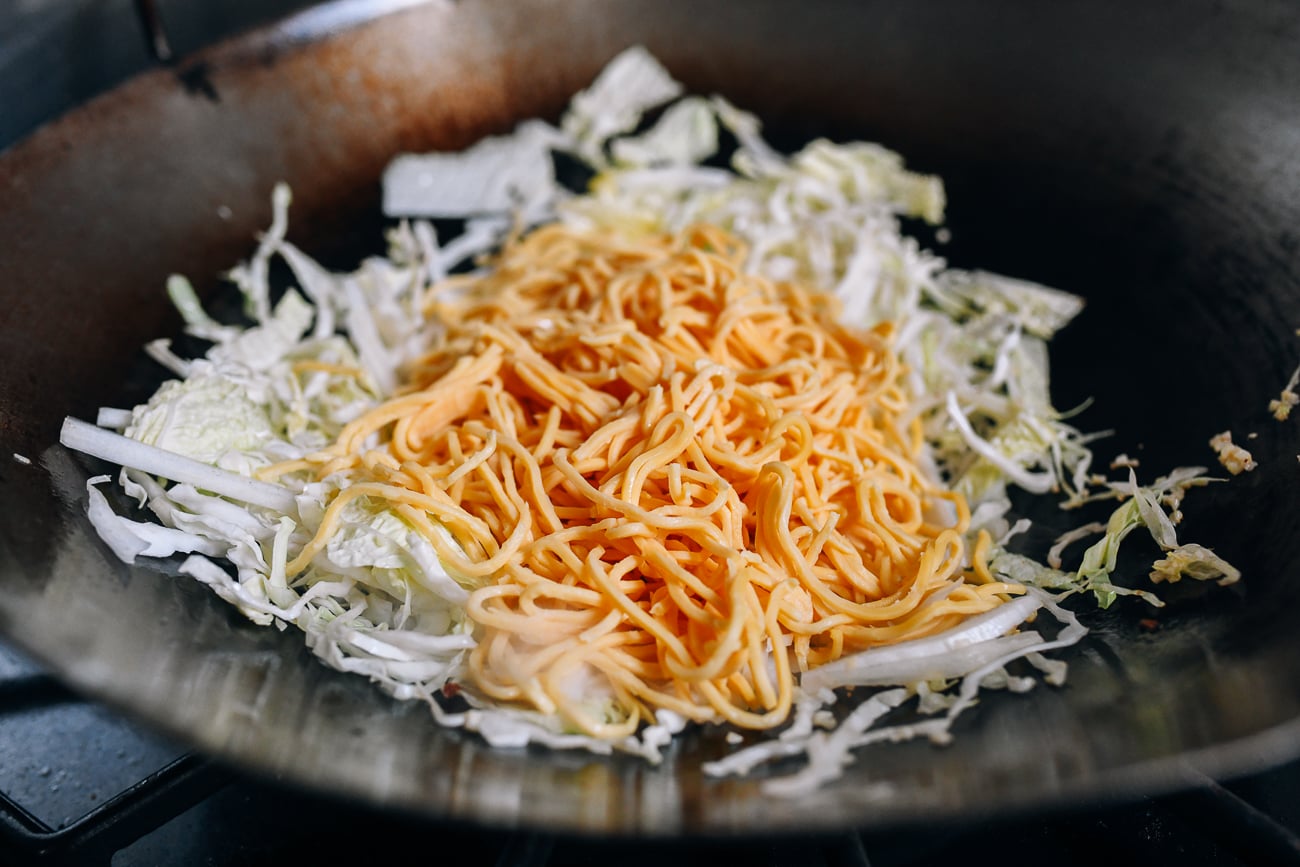
Give everything a quick toss, and pour in the sauce mixture.
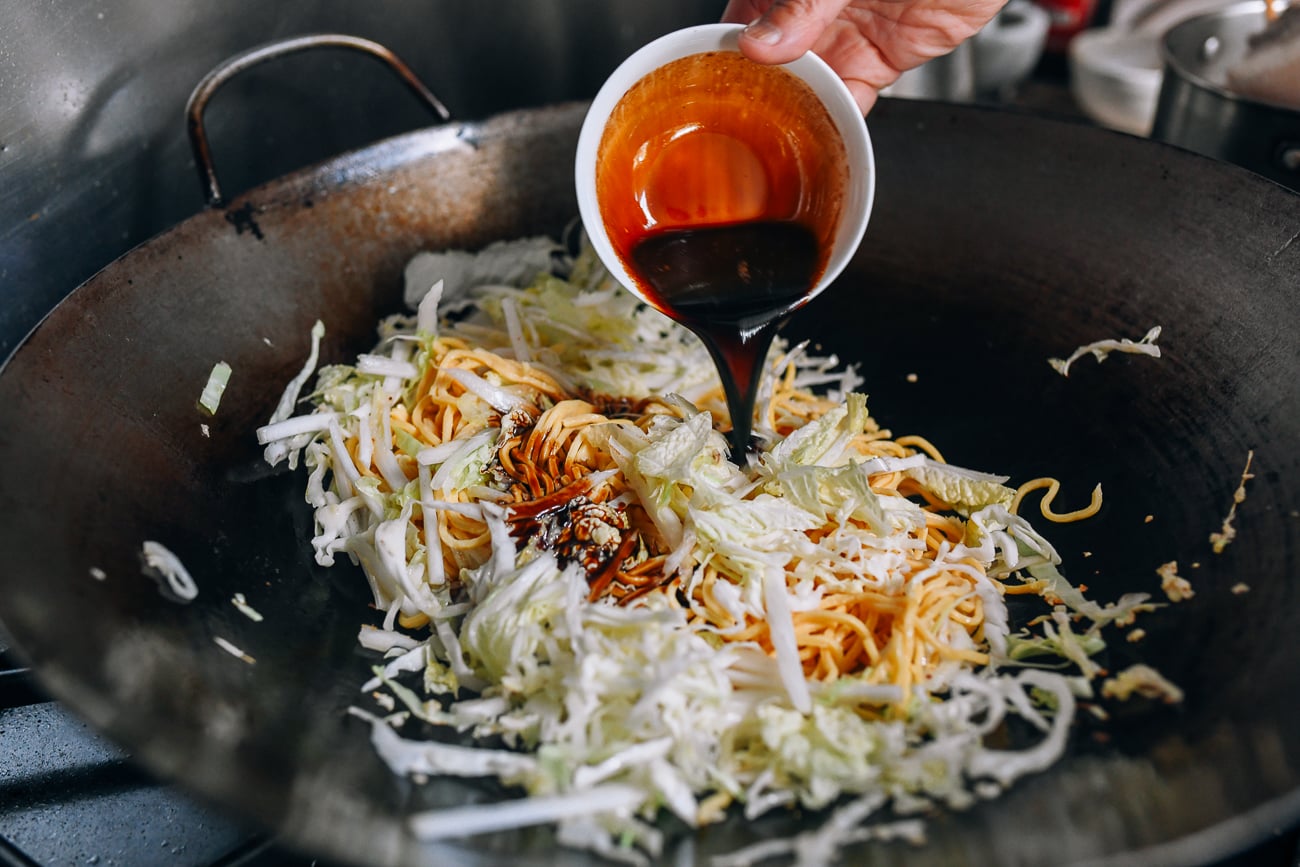
Stir-fry to combine, and push everything together to the center of your wok.
Let the sauce and noodles come up to a simmer, stirring occasionally as it heats. Continue to cook for another minute or two until the sauce has reduced slightly. Meanwhile, prepare your cornstarch and water mixture.
Add the pork belly and the shrimp back into the wok. Stir until combined.
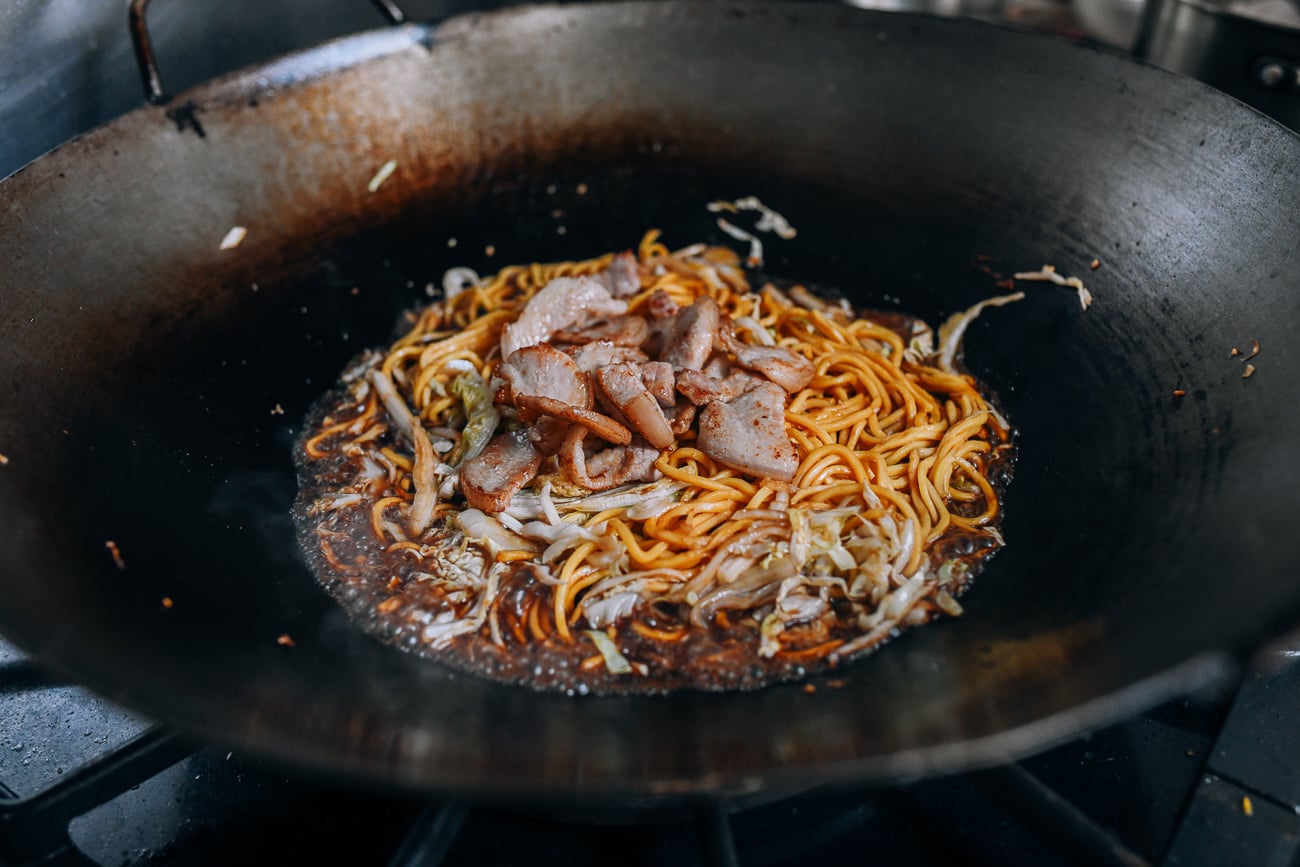
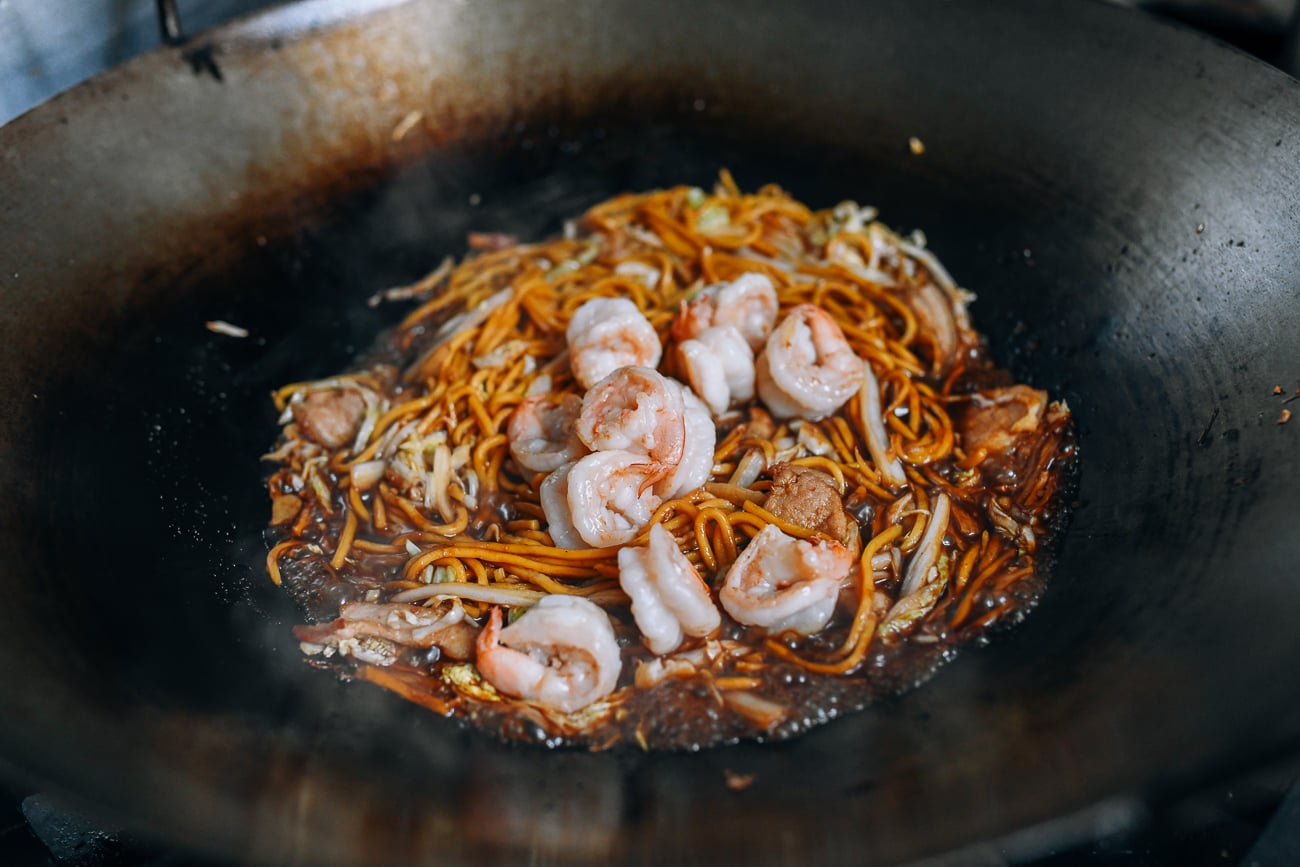
Stir in half of the cornstarch mixture.
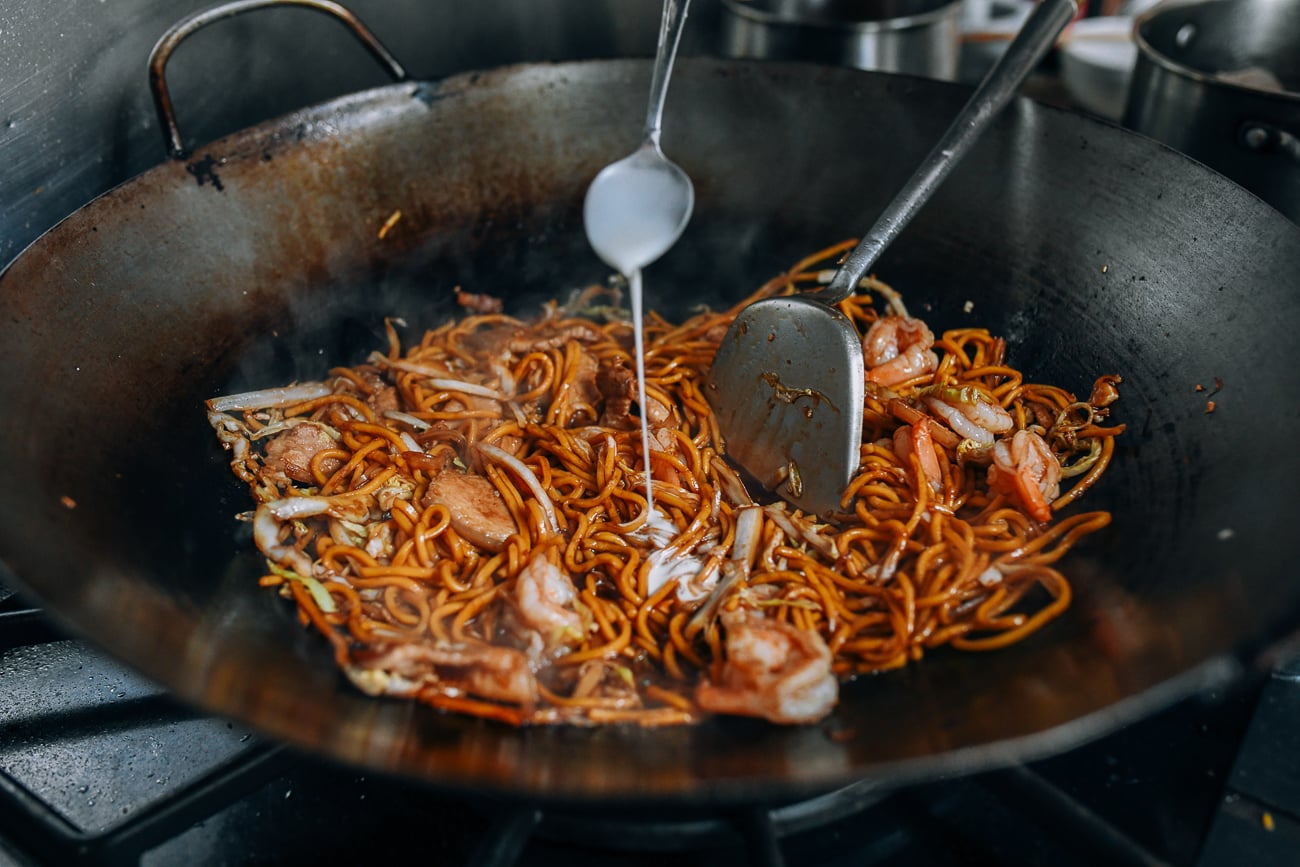
If you like your sauce a little thicker, add more cornstarch slurry.
If you end up adding too much slurry and the sauce is too thick for your liking, simply add a splash of water, and stir until the sauce has an even consistency.
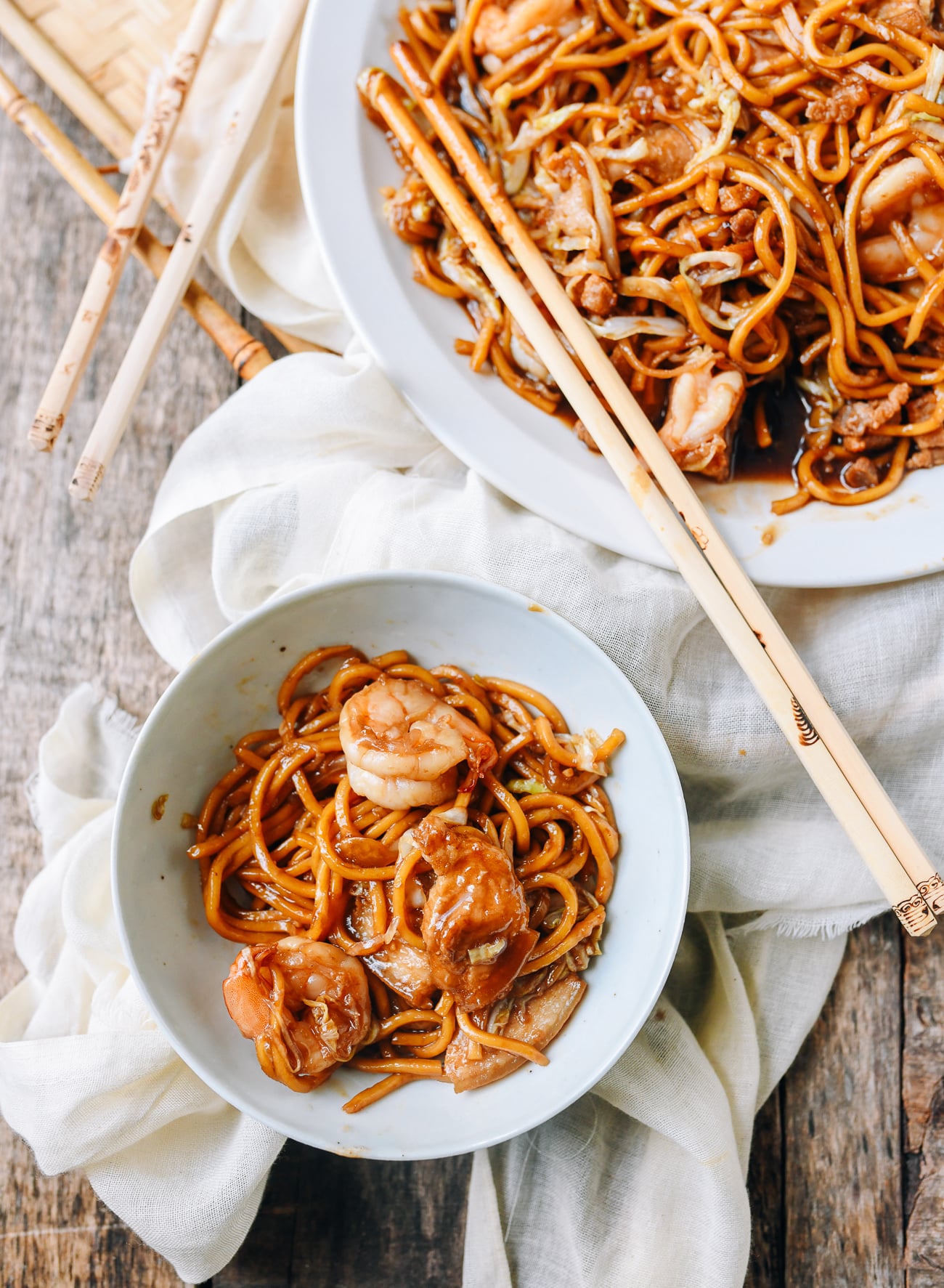
Transfer to a serving dish, sprinkle the crispy pork cracklings on top, and serve!
Looking for more authentic recipes? Subscribe to our email list and be sure to follow us on Pinterest, Facebook, Instagram, and Youtube!
Recipe
Malaysian Hokkien Mee (KL Version)
Ingredients
- 12 ounces skin-on lean pork belly (divided)
- 1/2 teaspoon salt
- 8 ounces shrimp (16 to 21 size, peeled and deveined)
- 2 tablespoons oyster sauce
- 1/2 teaspoon sesame oil
- 1/4 teaspoon ground white pepper
- 2 tablespoons Thai sweet soy sauce
- 3 tablespoons Thai black soy sauce
- 1 tablespoon Thai thin soy sauce
- 2/3 cup low sodium chicken stock or pork stock (or water)
- 3 cloves garlic (finely chopped)
- 2 cups Taiwanese cabbage (shredded; can substitute green cabbage)
- 2 1/2 cups napa cabbage (shredded)
- 1 tablespoon Shaoxing wine
- 1 pound hokkien noodles (or cooked lo mein noodles)
- 2 tablespoons cornstarch (mixed with 2 tablespoons water)
Instructions
- Cut the pork belly in half lengthwise, dividing the lean part from the fattier part attached to the skin.
- Slice the lean (non-skin) part of the pork belly into ⅛-inch (3mm) slices. You should end up with about 6 ounces/170g.
- Take the fatty length of the pork belly and trim off the skin, which can turn tough in the cracklings. Slice into ¼-inch (6mm) slices and then in half into small chunks.
- To a cast iron pan, add the fatty pork belly chunks, ½ teaspoon salt, and ½ cup of water. Simmer for 10 minutes, until the water evaporates and the pork fat begins to render.
- Turn the heat down and simmer on low for 15 minutes, stirring the pork belly occasionally, until the chunks are golden brown and crisp. Set aside on a paper towel, and reserve the pork lard for the rest of the dish and for future uses (you’ll have extra).
- Rinse them and pat dry. Optionally, you can also velvet the shrimp using our shrimp velveting technique, but it’s totally optional.
- Combine the oyster sauce, sesame oil, white pepper, Thai sweet soy sauce, Thai black soy sauce, Thai thin soy sauce, and low sodium stock (or water). Set aside. (If you want to adjust the sweetness, start with 1 tablespoon of sweet soy. You can always add more later.)
- Set a wok over medium-high heat. Add 2 teaspoons of rendered pork lard (or vegetable oil). Sear the pork belly until browned, remove from the wok, and set aside. Next, add another 2 teaspoons of lard/oil, followed by the shrimp. Toss for 30-45 seconds, just until it turns pink. Remove from the wok and set aside.
- Add another tablespoon of lard/oil to the wok, followed by the chopped garlic. After 10 seconds, add both kinds of shredded cabbage. Stir fry for about 30-60 seconds. Add the Shaoxing wine.
- Next, add the noodles. Give everything a quick toss, and pour in the sauce mixture. Stir-fry to combine, and push everything together to the center of your wok. Let the sauce and noodles come up to a simmer, stirring occasionally as it heats. Continue to cook for another minute or two until the sauce has reduced slightly. Meanwhile, prepare your cornstarch and water mixture.
- Add the pork belly and the shrimp back into the wok. Stir until combined.
- Stir in half of the cornstarch mixture. If you like your sauce a little thicker, add more cornstarch slurry. If you end up adding too much slurry and the sauce is too thick for your liking, simply add a splash of water, and stir until the sauce has an even consistency.
- Transfer to a serving dish, sprinkle the crispy pork cracklings on top, and serve!