
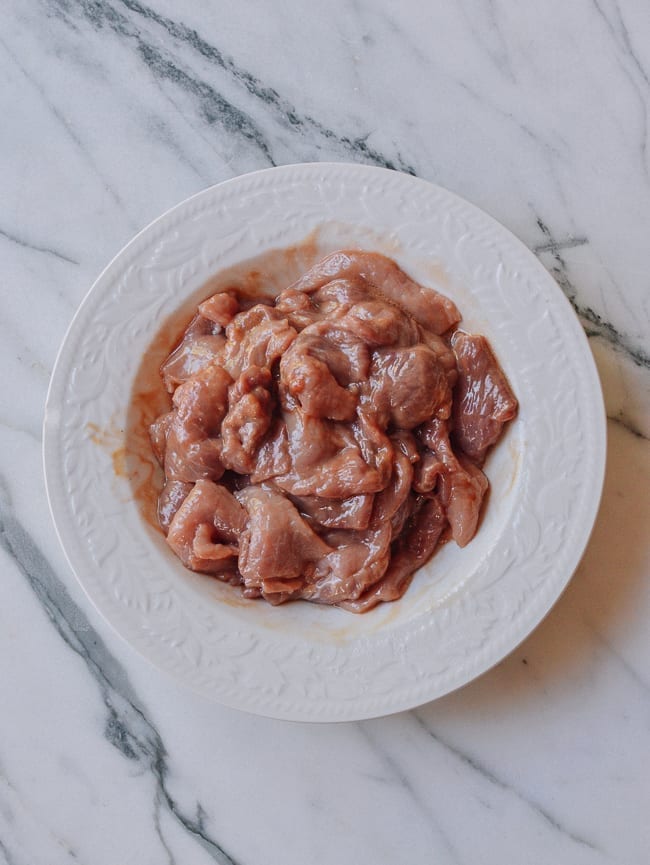
Velveting is a common Chinese cooking technique. Meat or seafood is marinated and then pre-cooked in oil or water before stir-frying with other ingredients. Today, we’re talking about how to velvet pork for stir-fry.
Velveting Different Meats
The velveting process ensures tender, silky pieces of meat in your stir-fry. I’ve already covered how to velvet beef and how to velvet chicken on the blog, so how is velveting pork different?
Well, the fundamentals of velveting meat are generally the same, with some subtle differences. Here’s a quick overview of the major points:
- The addition of starch to any velveting marinade creates a silky texture. Cornstarch and tapioca starch are favorites for velveting, whether it’s pork, chicken, or beef. See our post on How to Use Corn Starch for Chinese cooking
- Other marinade ingredients may include soy sauce, Shaoxing wine, oyster sauce, white pepper, and vegetable oil. This will depend on the dish you’re cooking.
- Some meats require tenderizing, while others do not. I generally tenderize my beef with baking soda, while I don’t think it’s necessary for chicken. With pork, it could go either way, but we generally do not use baking soda in pork marinades (more on this later).
What’s the Best Cut of Pork for Stir-fry?
Pork shoulder (picnic shoulder), pork butt (Boston butt), pork loin, tenderloin, and boneless country ribs are all suitable for stir-fries, whether you’re cutting the pork into bite-sized chunks, thin slices, or julienned strips.
Here are my thoughts on each option:
- Pork Shoulder/Pork Butt: I generally prefer pork shoulder and butt for stir-fries, since it has more fat content, and, in my opinion, better flavor. They’re also the most versatile and economic cuts (see my post on how to break down a whole pork shoulder).
- Pork Loin: Pork loin is tender, but very lean. It can dry out easier. We often cut off the end of the pork loin where the blade roast starts, which is quite tasty.
- Pork Tenderloin: Also quite lean, but more tender than loin. It’s a bit luxurious for stir-fry, but go for it if you want to splurge.
- Boneless Country Ribs: This is a very tasty option if you don’t mind some streaky fat in your pork slices.
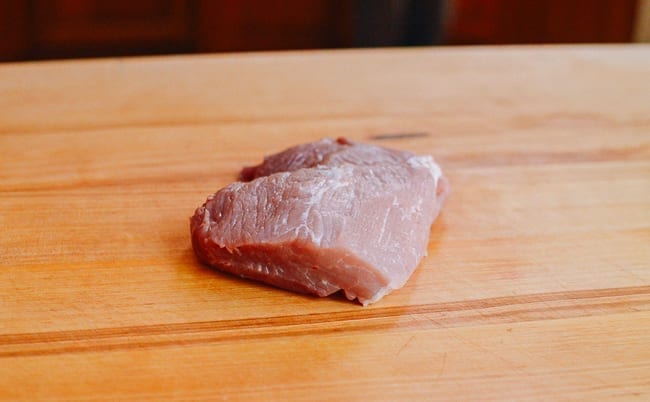
The piece below is from a large pork shoulder, and it is perfect for stir-frying:
How to Slice Pork for Stir-fry
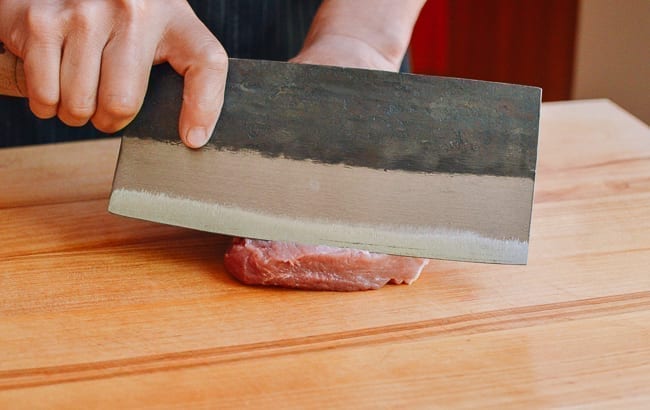
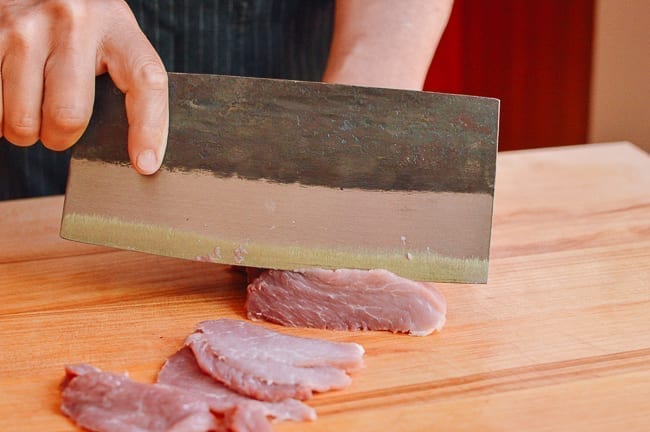
Our recipes will direct you on how to cut/slice the meat. Pork stir-fry recipes can involve bite-sized chunks, julienned thin strips, thin slices, or even ground pork.
You don’t have to pay as much attention to cut across the grain as you would with beef. One useful tip for slicing (any meat, not just pork) is to freeze it slightly. When it’s firmed up a bit, it’s much easier to slice thinly.
Should I Use Baking Soda to Tenderize Pork?
All Chinese restaurants velvet meats for stir-fries, but they don’t all use the same method. One of the biggest variations is the question of whether or not to use baking soda (a tenderizer).
In my experience, the decision to use baking soda depends on the type of meat, and the texture you’re trying to achieve.
I don’t like using baking soda to prepare chicken (you can read more about it in our post on How to Velvet Chicken). For beef, we describe two options for velveting beef in our post on How to Prepare Beef for Stir-fries. Velveting Shrimp is also sometimes done depending upon the dish but you can read more about it on our post on How to Prepare Shrimp.
When it comes to how to velvet pork, we don’t generally use baking soda, since I think pork is more similar to chicken in texture. However, if you’re using pork loin or shoulder and feel that the meat is a little tough, you can feel free to add it.
Marinade Ingredients
As I outlined earlier in this post, there are many ingredients you could add to a pork velveting marinade. We do recommend adding Shaoxing wine to most pork marinades, as it can balance out the stronger flavor of the pork.
Here’s a list of other key marinade ingredients and the role they play:
- Water: Adds moisture to pork for a juicier texture.
- Vegetable oil: Adds some additional fat to prevent the pork for drying out, especially for leaner cuts like loin and tenderloin.
- Cornstarch: Creates a coating around the pork to seal in juices and protect the pork from drying out. Tapioca starch is also a good substitute
- Oyster sauce: Adds more flavor and umami.
- Soy sauce: Additional flavor and umami.
- Sesame Oil: Optional nutty flavoring, depending upon the dish.
- Ground White Pepper: Optional flavoring, depending upon the dish.
- Shaoxing Wine: Balances the strong flavor of some pork cuts (“the porkiness”).
One final note…some velveting recipes call for egg white, a naturally alkaline ingredient that can help tenderize meats. However, baking soda has widely replaced egg white as a tenderizing agent in velveting marinades.
Blanch, Sear or Oil Velvet?
Oil velveting (zǒu yóu (走油) in Mandarin or “jau yau” in Cantonese) is the process of deep frying meats before stir-frying. However, for the home cook, we recommend searing pork for stir-fry dishes. It’s very flavorful, and requires less oil. For tips on searing meat in your wok, see Judy’s post on How to Keep Food from Sticking to the Wok.
For those of you who want to reduce fat in your diet or simply want that delicate taste of Cantonese cooking, you can blanch marinated pork quickly in boiling water. Blanching also has the benefit of a cleaner sauce in the final dish, especially when it comes to white sauce dishes.
Whether wok searing or blanching, cook the pork until it just turns opaque, plus another 10 seconds. It should be 80% cooked through. Set it aside, and it will continue to cook. Remember, you’ll be cooking it again in your stir-fry.
In the recipe below, we have measurements for velveting 12 ounces of pork, which is a typical amount for one stir-fry dish. Adjust the amounts proportionally if making more or less. Feel free to velvet pork ahead of time (the night before) for convenience.
How to Velvet Pork: Instructions
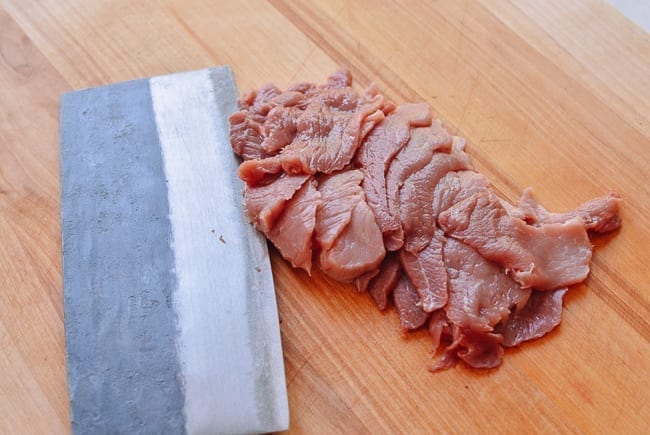
Slice pork as required for your recipe.
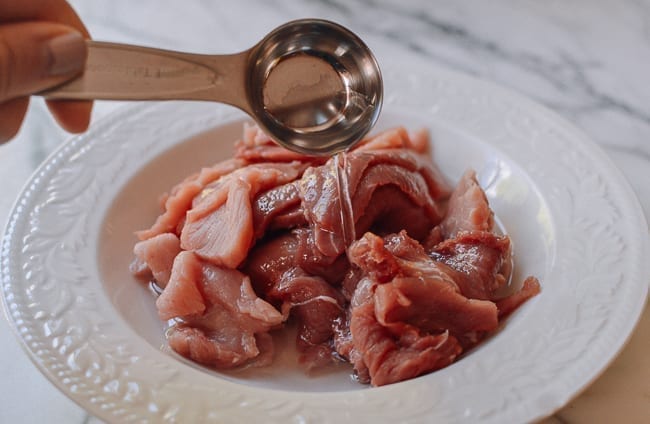
In a medium bowl, add the pork, water, Shaoxing wine, oyster sauce, and baking soda (if using).
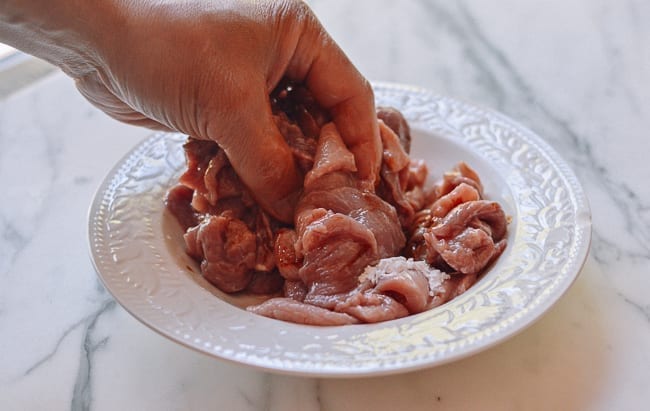
Mix with your hands until the pork is well coated and the liquid is absorbed into the meat. Add the cornstarch, vegetable oil, and optional sesame oil and white pepper (if using). Mix again until everything’s well incorporated.
Set aside and let the pork marinate for at least 30 minutes or overnight (if marinating overnight, let the pork come up to room temperature before starting your dish.
To sear the pork, place your wok over high heat. When it starts to smoke lightly, add 2 tablespoons oil around the perimeter of the wok to coat the surface. Add the pork in one layer, allowing it to sear for 30 seconds.
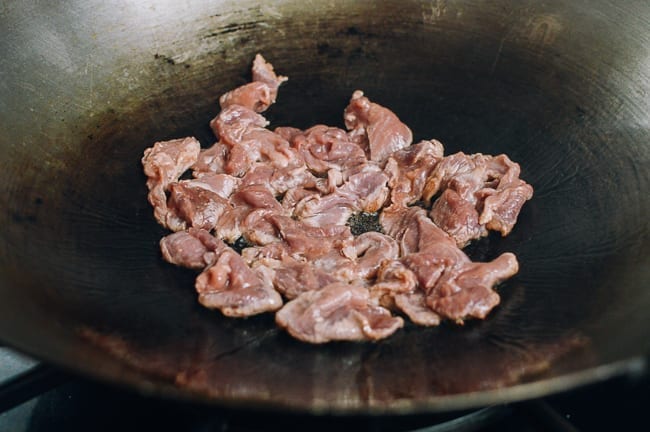
Stir-fry until it has turned opaque, remove from the wok, and set aside.
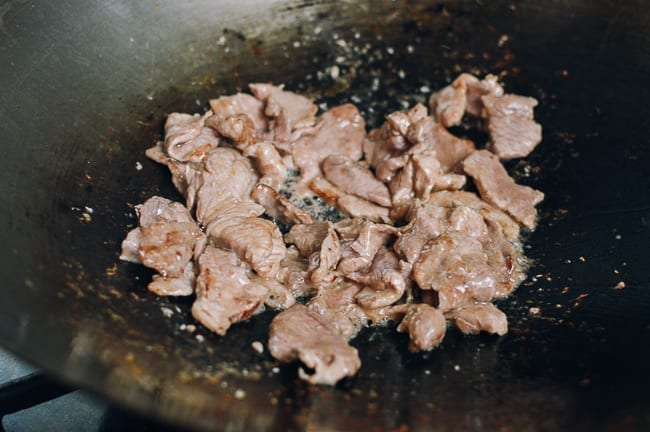
To blanch, bring water to a boil in your wok. Stir in the pork. Once it turns opaque, blanch for an additional 10 second, and remove from the wok using a spider or strainer. Set aside.
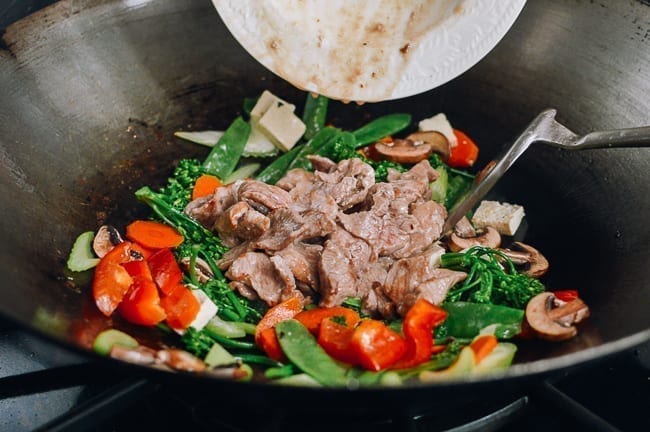
Now your pork is ready to be added to your stir-fry. Remember, whether searing or blanching, you will cook the pork again in your stir-fry, so avoid overcooking it during the pre-cook step.
(The photo below is from our white stir-fry sauce post!)
Looking for more authentic recipes? Subscribe to our email list and be sure to follow us on Pinterest, Facebook, Instagram, and Youtube!
Recipe
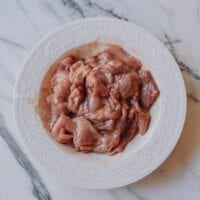
How to Velvet Pork for Stir-fry
Ingredients
- 12 ounces boneless pork (340g; use pork butt, shoulder, loin, tenderloin, or boneless country ribs)
- 1 tablespoon water
- 1 1/2 teaspoons Shaoxing wine
- 1 1/2 teaspoons oyster sauce
- 3/8 teaspoon baking soda (optional)
- 1 1/2 teaspoons cornstarch
- 1 teaspoon vegetable oil (plus more for stir-frying)
- 1/4 teaspoon sesame oil (optional)
- 1/8 teaspoon white pepper (optional)
Instructions
- Slice pork as required for your recipe. In a medium bowl, add the pork, water, Shaoxing wine, oyster sauce, and baking soda (if using).
- Mix with your hands until the pork is well coated and the liquid is absorbed into the meat. Add the cornstarch, vegetable oil, and optional sesame oil and white pepper (if using). Mix again until everything’s well incorporated. Set aside and let the pork marinate for at least 30 minutes or overnight (if marinating overnight, let the pork come up to room temperature before starting your dish.
- To sear the pork, place your wok over high heat. When it starts to smoke lightly, add 2 tablespoons oil around the perimeter of the wok to coat the surface. Add the pork in one layer, allowing it to sear for 30 seconds. Stir-fry until it has turned opaque, remove from the wok, and set aside.
- To blanch, bring water to a boil in your wok. Stir in the pork. Once it turns opaque, blanch for an additional 10 second, and remove from the wok using a spider or strainer. Set aside.
- Now your pork is ready to be added to your stir-fry. Remember, whether searing or blanching, you will cook the pork again in your stir-fry, so avoid overcooking it during the pre-cook step.