
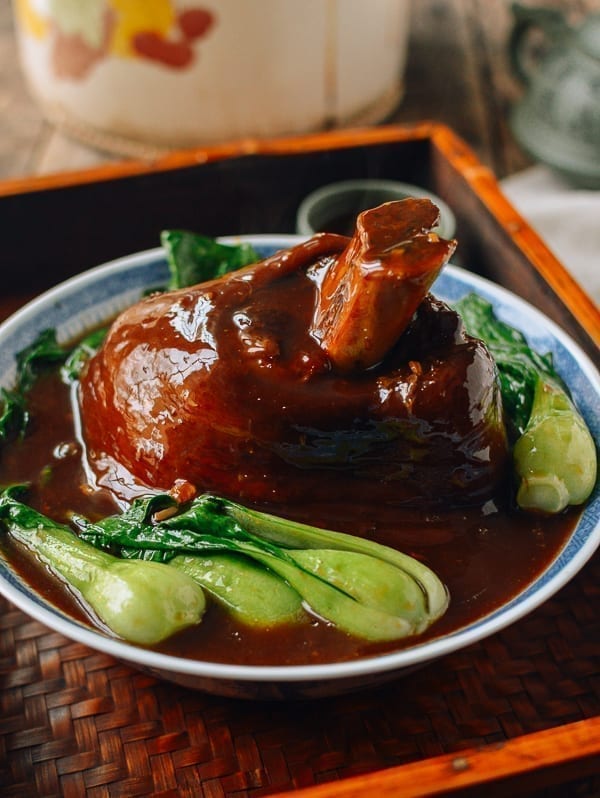
In some parts of China, Braised Ti Pang is a must-have dish for Chinese New Year feasts. It’s said that it brings luck and stability! Just look at the dish’s presentation––it’s a masterpiece and a heavy hitter (硬菜, yìngcài). Even if it doesn’t bring you luck, it will surely bring you admiration from friends and family.
This dish has three Chinese names. Its official name is 炖圆蹄 (dùn yuán tí), but Northerners simply call it 肘子 (zhǒuzi). We Southerners know it as 红烧蹄膀 (hóngshāo tí páng). Every region cooks it differently when it comes to spices, but the thing they all have in common is the long braising time. I think that’s why it’s reserved for Chinese New Year and other big holidays.
What Is Ti Pang?
Braised Ti Pang is made with the pork front hock, also known as the shank. The pork shank is blanched, seared, and braised for several hours in soy sauce, wine, and spices. The flavorful sauce is then reduced into a gravy and poured over the finished dish.
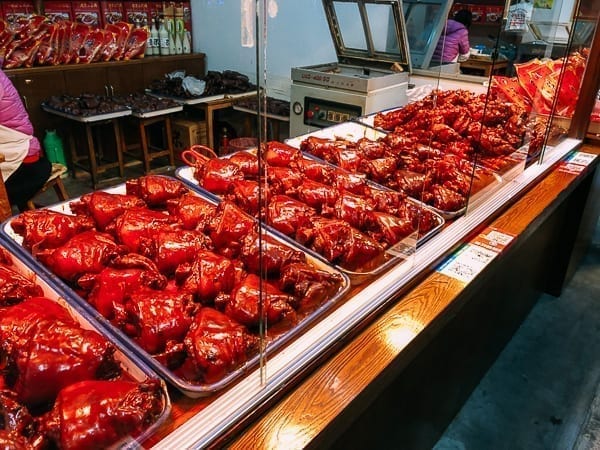
This cut of meat is very meaty, and it usually weighs in at three to four pounds. You can order it from your butcher, as it’s not a common cut in most grocery stores. The cut is generally more readily available from Asian grocery stores.
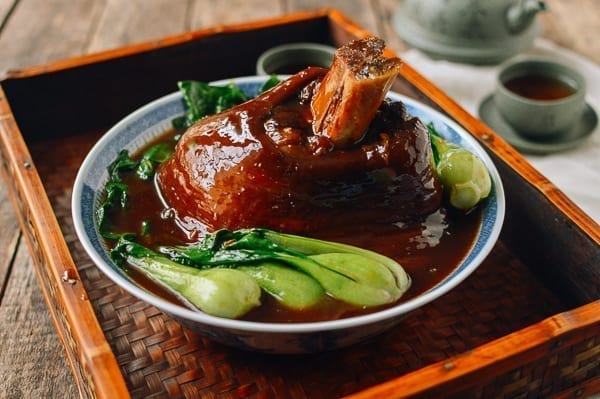
Cooking Chinese Braised Ti Pang
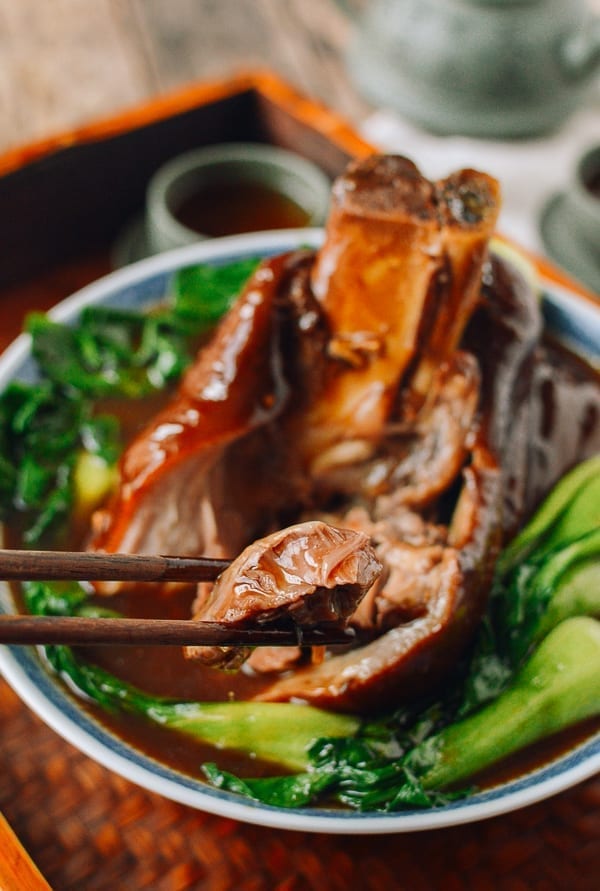
Everyone loves Ti Pang for the pork skin, the prize of this dish. It melts in your mouth. This is also a forgiving recipe, since you really can’t overcook pork when roasting or braising.
So how do you know when the ti pang is done? There are two indications:
- The center bone can be pulled out without too much resistance.
- The hock barely holds its shape and is pull-apart tender.
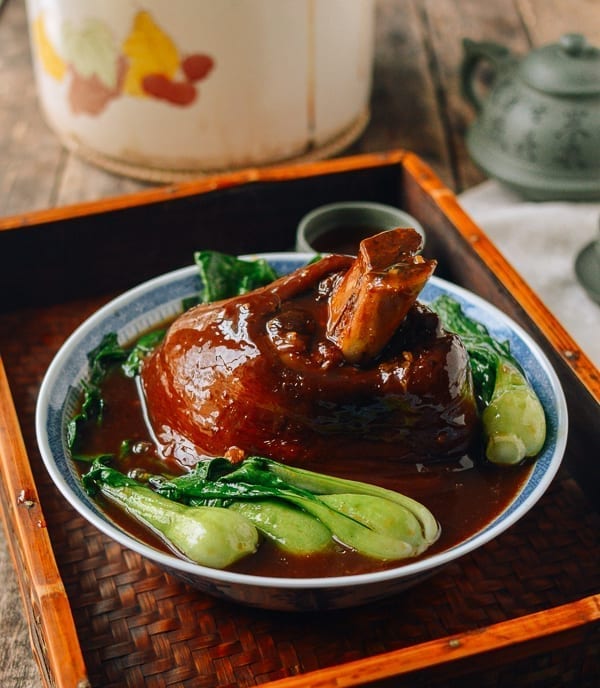
I served this Ti Pang with some blanched baby bok choy. You can do the same or serve it on a bed of stir-fried lettuce, which also has symbolic significance (luck and good fortune). I say double down on the symbolism! I’m not a gambler, but I’d like to double down on some luck and happiness!
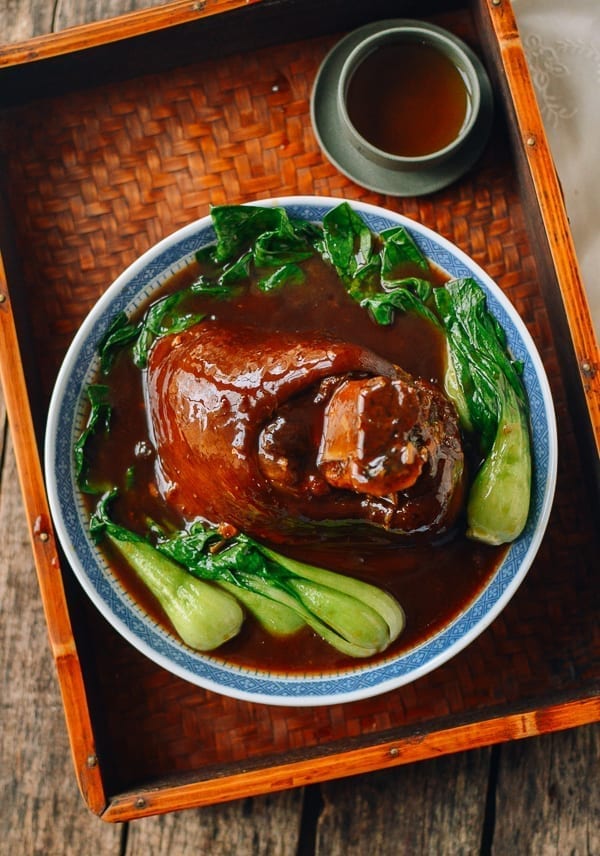
Have a happy and healthy new year, everyone!
Chinese Braised Ti Pang Recipe Instructions
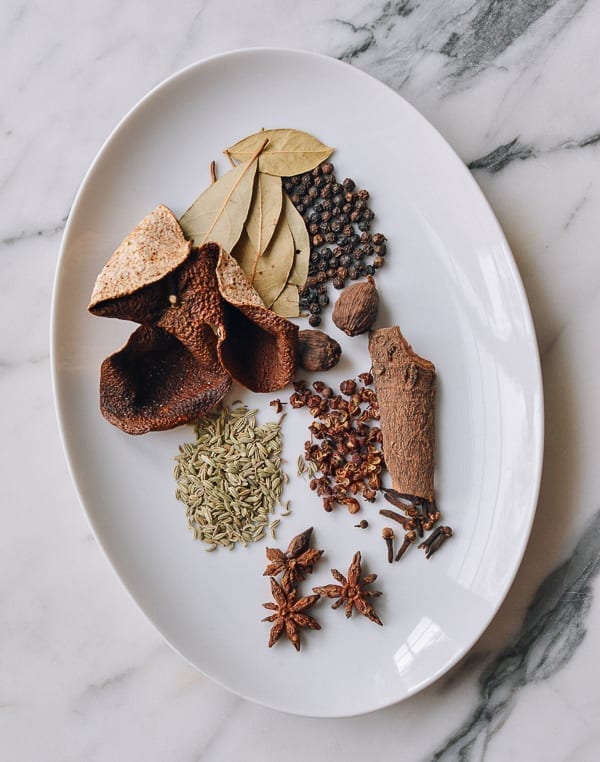
Start by gathering all the aromatics for the spice pouch. Wrap everything in cheesecloth and tie securely with kitchen string. Set aside.
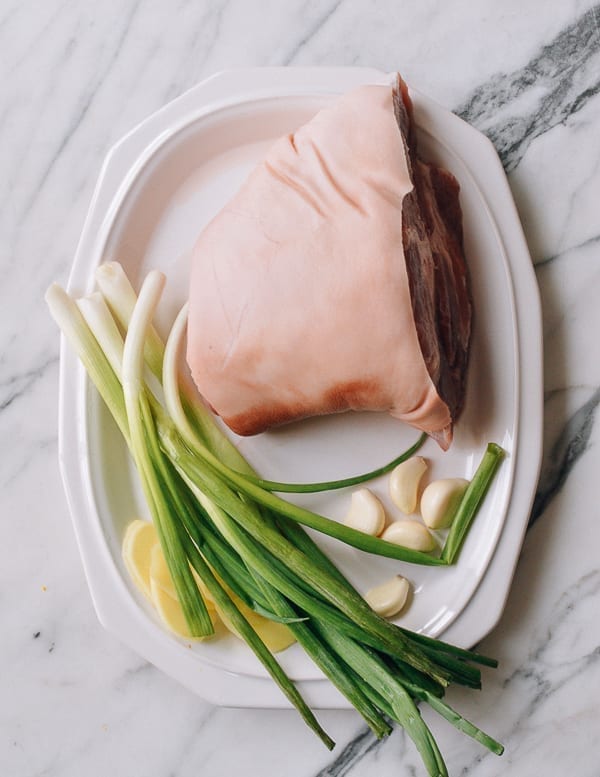
Rinse the pork. Don’t worry if there are any bristles remaining in the skin––we’ll take care of them after the blanching step.
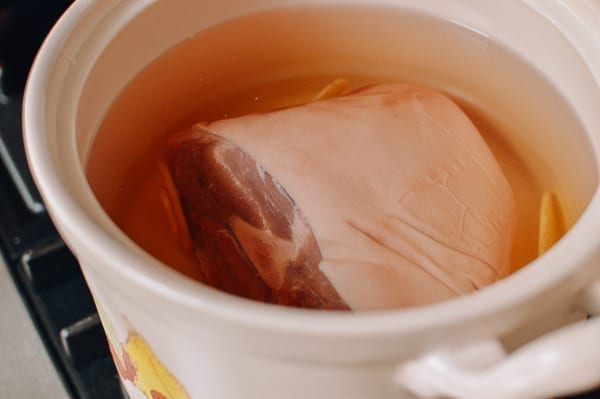
Place the pork in a medium to large pot along with 5 slices of ginger and 2 tablespoons of Shaoxing wine. Fill the pot with enough water to just cover the pork. Bring to a boil. Once boiling, cook for 1 final minute and turn off the heat.
Carefully drain the pork and ginger slices, and wash both the pot and the pork clean. If there are still visible bristles on the skin, now is a good time to remove them with tweezers. After the ti pang is clean, pat it very dry with a paper towel.
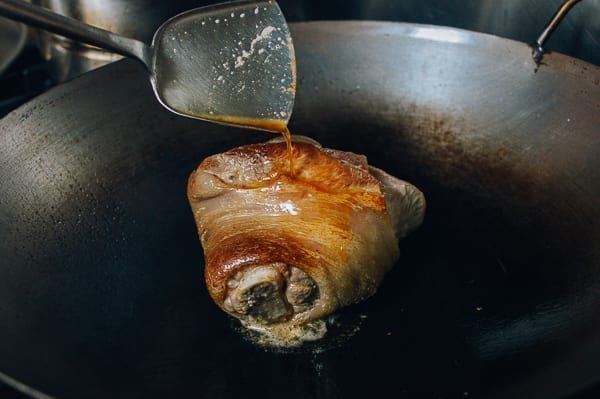
Heat 3 tablespoons of oil in a wok over medium heat. Brown the ti pang on all sides until the skin is lightly crisp and brown. This process takes 10-15 minutes.
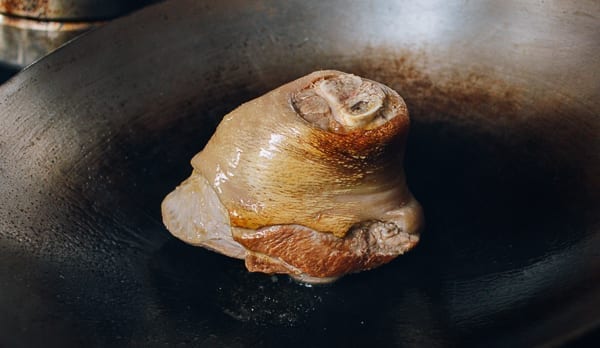
Use your spatula to scoop hot oil over any area that can’t touch the wok’s surface. Turn off the heat, remove the ti pang, and set aside.
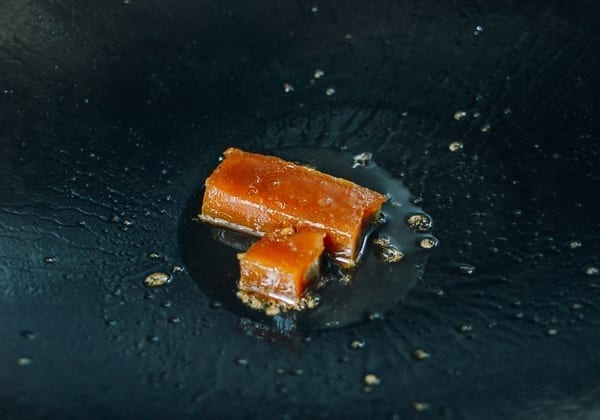
Reduce the heat to low, and add the rock sugar to the remaining oil in the wok.
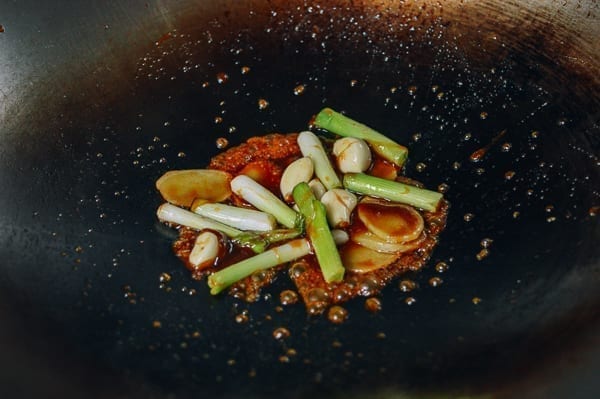
Once the sugar has melted, add the 5 reserved slices of ginger, garlic, and scallion whites. Stir and cook for 2 minutes.
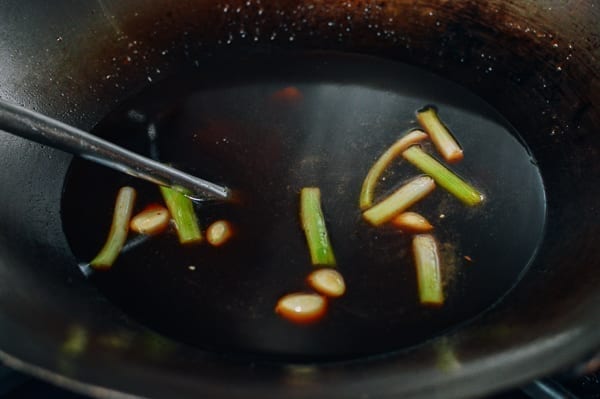
Add the Shaoxing wine, light soy sauce, dark soy sauce, and water. Turn up the heat and bring to a boil. Turn off the heat.
Place the ti pang in a deep pot with just enough room to hold it and eventually flip it over. Transfer the sauce from the wok to this pot. There should be enough liquid to submerge the ti pang about 75%. If not, add a little more water. Lastly, add the spice pouch.
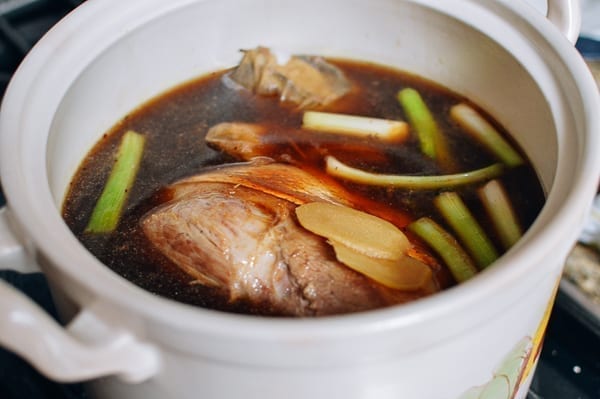
Cover the pot, turn up the heat, and bring to a boil. Once boiling, reduce the heat to medium low and cook the ti pang for 3 hours with the lid on (the liquid in the pot should have small bubbles). Flip the ti pang every half hour to cook evenly.
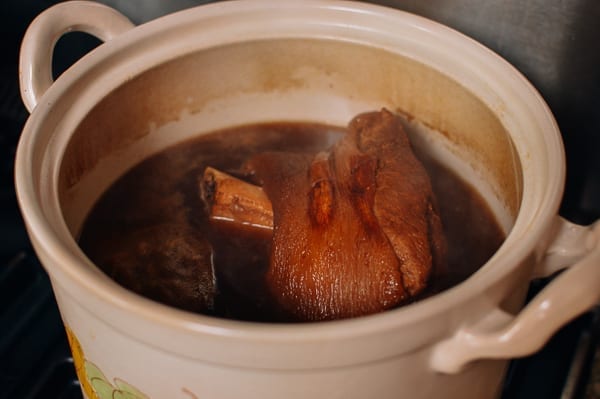
Once the ti pang is so tender that it can barely hold its shape and you can easily pull out the center bone, transfer to a serving bowl.
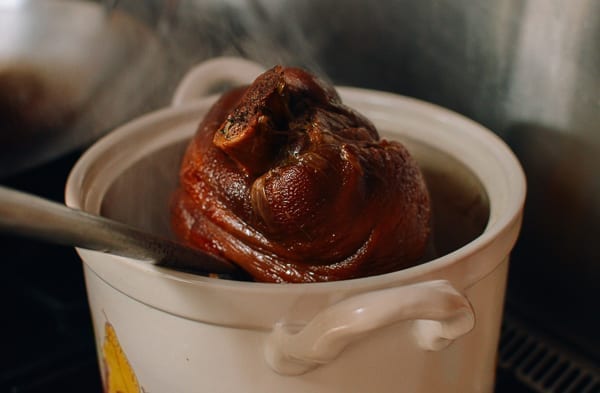
Skim the fat from the sauce. Turn up the heat to reduce the sauce until it becomes a thin gravy (you can also thicken it with some cornstarch slurry). Add salt to taste and ¼ teaspoon sesame oil right before serving.
Pour the sauce over the ti pang in the serving bowl. Serve!
Looking for more authentic recipes? Subscribe to our email list and be sure to follow us on Pinterest, Facebook, Instagram, and Youtube!
Recipe
Braised Ti Pang (红烧蹄膀)
Ingredients
For the spice pouch:
- 3 star anise
- 10 cloves
- 2 g cinnamon stick
- 1 g Sichuan peppercorns (1 teaspoon)
- 3 g fennel seeds (1 teaspoon)
- 2 black cardamom pods
- 5 dried bay leaves
- 5 g dried orange peel
- 4 g black or white peppercorns (1 teaspoon)
- 1-2 dried red chilies (optional, if you like some heat)
For the rest of the dish:
- 3 pound pork front hock/shank (ti pang – 蹄膀, bone-in with skin)
- 5 slices ginger (25g)
- 2 tablespoons Shaoxing wine
- 3 tablespoons vegetable oil
- 40 g rock sugar
- 5 cloves garlic
- 5 scallion whites (i.e. the white base part of the scallion, cut in half)
- 1/2 cup Shaoxing wine
- 1/4 cup light soy sauce
- 1 teaspoon dark soy sauce
- 7-8 cups water (more if needed)
- 1 tablespoon cornstarch (mixed into a slurry with 3 tablespoons water; more if needed)
- salt (to taste)
- 1/4 teaspoon sesame oil
Instructions
- Start by gathering all the aromatics for the spice pouch. Wrap everything in cheesecloth and tie securely with kitchen string. Set aside.
- Rinse the pork. Don’t worry if there are any bristles remaining in the skin––we’ll take care of them after the blanching step.
- Place the pork in a medium to large pot along with 5 slices of ginger and 2 tablespoons of Shaoxing wine. Fill the pot with enough water to just cover the pork. Bring to a boil. Once boiling, cook for 1 final minute and turn off the heat.
- Carefully drain the pork and ginger slices, and wash both the pot and the pork clean. If there are still visible bristles on the skin, now is a good time to remove them with tweezers. After the ti pang is clean, pat it very dry with a paper towel.
- Heat 3 tablespoons of oil in a wok over medium heat. Brown the ti pang on all sides until the skin is lightly crisp and brown. This process takes 10-15 minutes. Use your spatula to scoop hot oil over any area that can’t touch the wok’s surface. Turn off the heat, remove the ti pang, and set aside.
- Reduce the heat to low, and add the rock sugar to the remaining oil in the wok. Once the sugar has melted, add the 5 reserved slices of ginger, garlic, and scallion whites. Stir and cook for 2 minutes. Add the Shaoxing wine, light soy sauce, dark soy sauce, and water. Turn up the heat and bring to a boil. Turn off the heat.
- Place the ti pang in a deep pot with just enough room to hold it and eventually flip it over. Transfer the sauce from the wok to this pot. There should be enough liquid to submerge the ti pang about 75%. If not, add a little more water. Lastly, add the spice pouch.
- Cover the pot, turn up the heat, and bring to a boil. Once boiling, reduce the heat to medium low and cook the ti pang for 3 hours with the lid on (the liquid in the pot should have small bubbles). Flip the ti pang every half hour to ensure it’s cooked evenly.
- Once the ti pang is so tender that it can barely hold its shape and you can easily pull out the center bone, transfer to a serving bowl. Skim the fat from the sauce. Turn up the heat to reduce the sauce until it becomes a thin gravy (you can also thicken it with some cornstarch slurry). Add salt to taste and ¼ teaspoon sesame oil right before serving.
- Pour the sauce over the ti pang in the serving bowl. Serve!