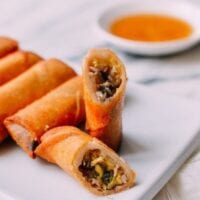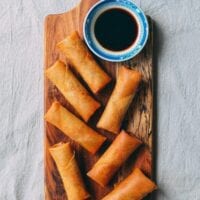

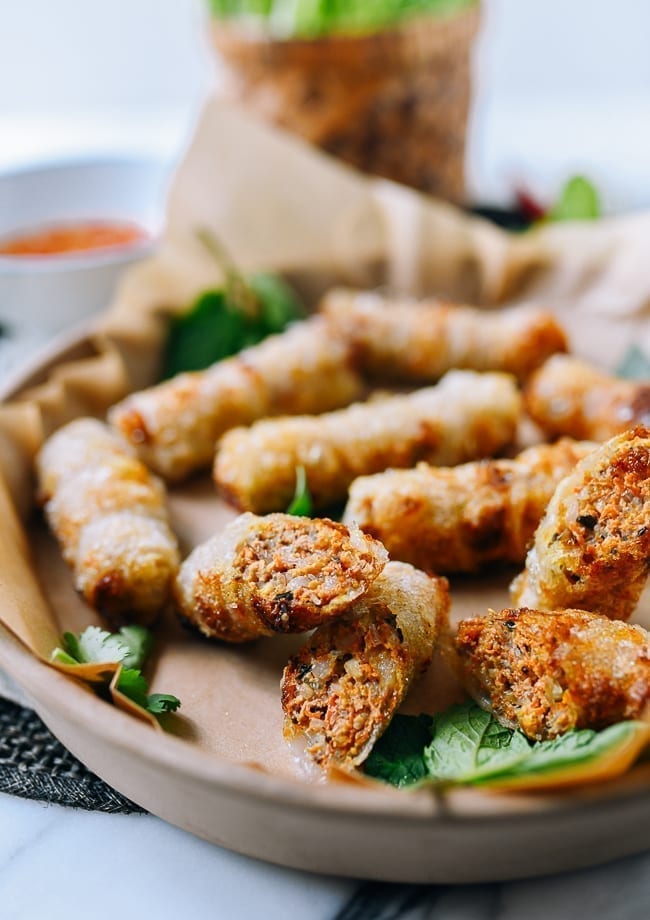
Vietnamese Fried Spring Rolls, or cha gio, are a popular and tasty appetizer. If you eat out at Vietnamese restaurants, you’ve probably tried these tasty morsels. Now you can make them at home!
The first time I had good cha gio was in Austin, Texas while visiting friends. It was a great meal. I had grilled pork chops and fried spring rolls in my salad—a heavenly combination of textures and flavors.
That night, I also tried Vietnamese coffee for the first time, which also blew my mind. Needless to say, that meal really inspired me to do a lot of research to develop these recipes.
What Are Cha Gio?
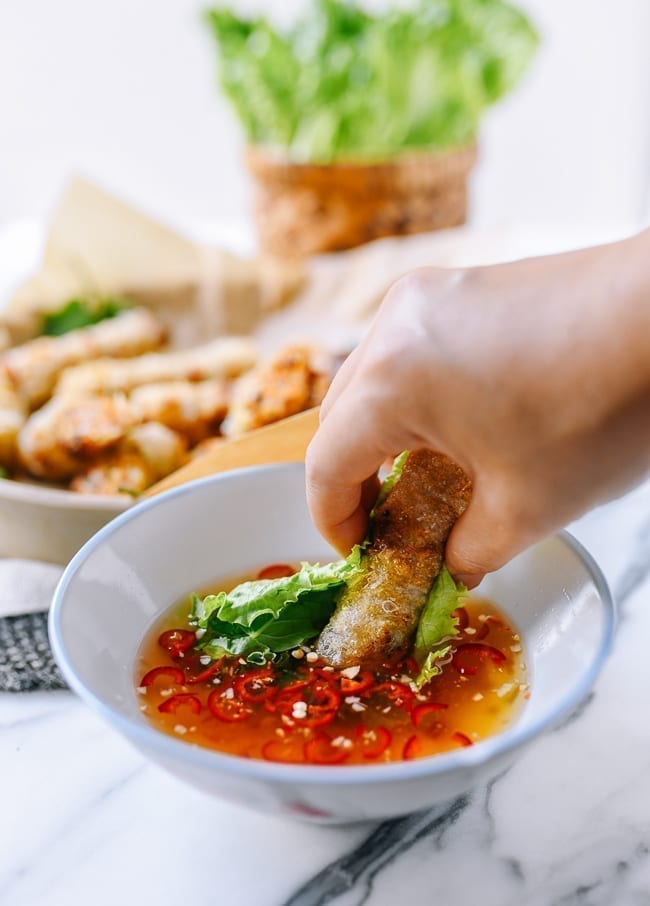
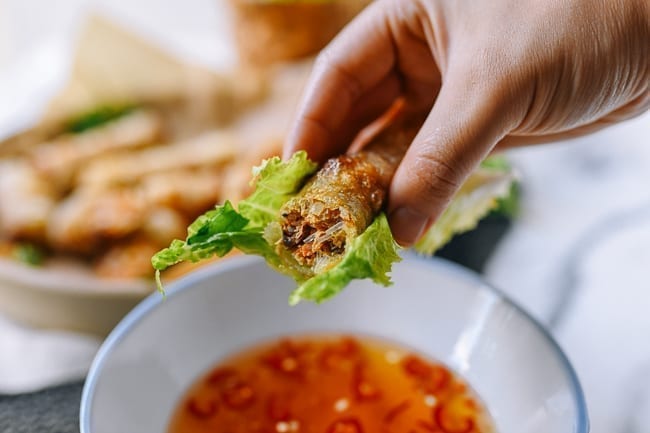
Cha Gio are spring rolls made by wrapping filling in clear rice paper wrappers (bánh tráng) and then frying them. The filling usually consists of ground pork, vegetables, wood ear mushrooms, and glass noodles. They’re often served wrapped with lettuce and herbs, with nuoc cham as a dipping sauce.
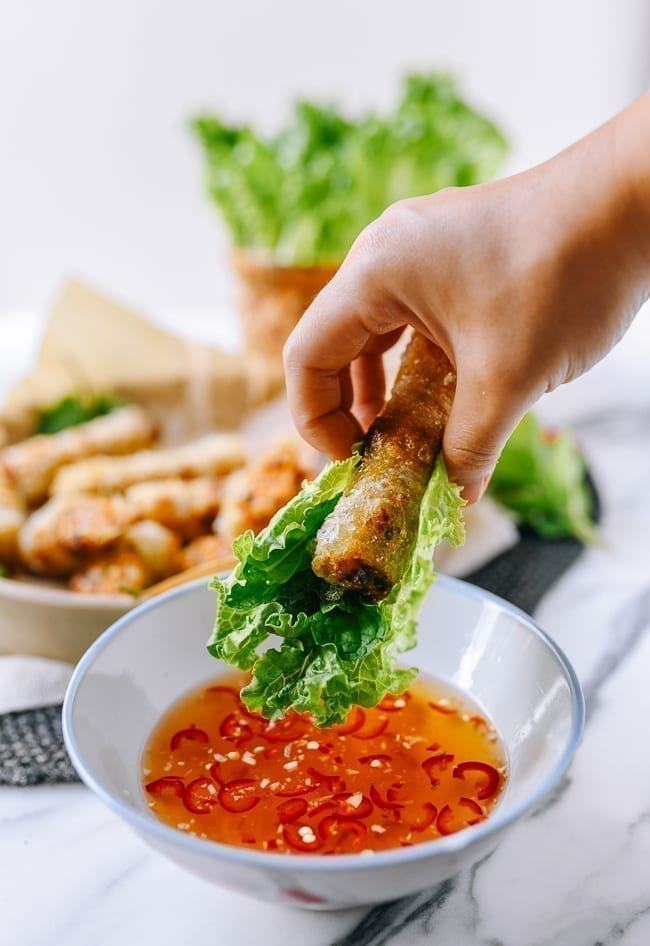
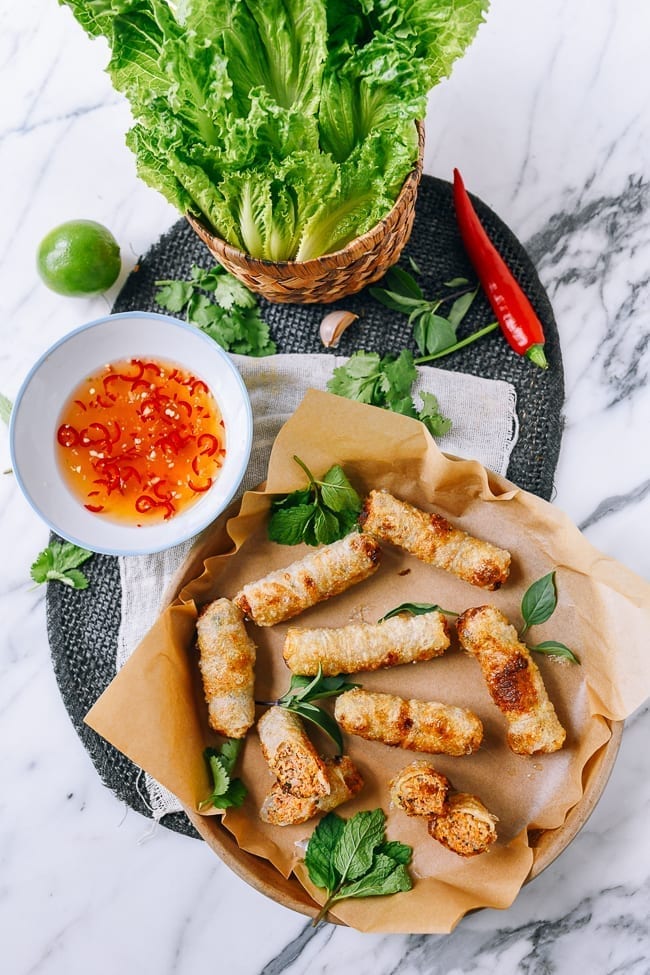
We recommend mint, Thai basil, and cilantro, but feel free to experiment. Enjoying them this way really provides a nice contrast between the salty, fried cha gio and the refreshing, crunchy herbs and lettuce.
The salty, sweet, and tangy nuoc cham sets the whole thing off! (Read more about it in our Nuoc Cham recipe post.) In my opinion, it’s the ultimate Vietnamese yin-yang culinary experience.
Another way to serve cha gio is to cut each one into bite-sized chunks and put them into a Vietnamese noodle salad with nuoc cham as a dressing. It’s one of my favorite summer meals.
Vietnamese Fried Spring Rolls vs. Fresh Rice Paper Rolls
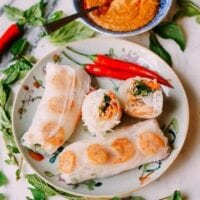
Cha gio are Vietnamese fried spring rolls. You may also be familiar with goi cuon, which are wrapped in fresh uncooked rice paper, with room temperature ingredients like cooked shrimp and herbs.
Goi cuon are also referred to commonly as “summer rolls,” so if you would rather have those, check out our Vietnamese Shrimp Summer Rolls recipe.
However, it’s important to note that the wrappers are the same for both types of rolls! Though some people use Chinese spring roll wrappers to make their cha gio, we’re using traditional Vietnamese dried rice paper wrappers (bánh tráng).
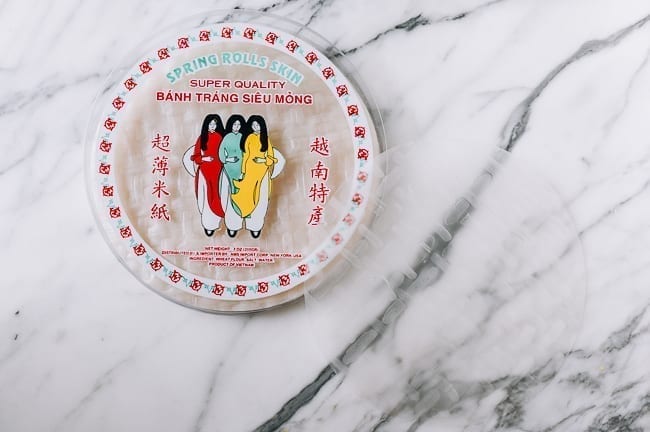
Bánh tráng are primarily made with rice flour, but some brands also add tapioca starch. They are pretty easy to work with. You don’t need any additional cornstarch or egg to seal them!
Cha Gio (Vietnamese Fried Spring Rolls): Recipe Instructions
Make the filling:
Soak the dried mung bean noodles in warm water (submerge them completely) for 30 minutes. Drain thoroughly, and cut into ¼ inch pieces.
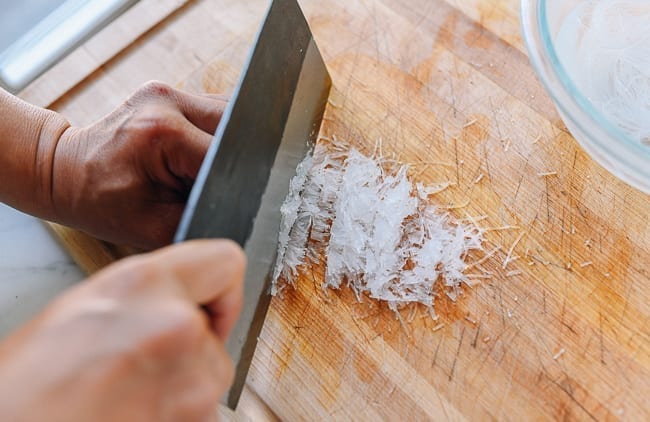
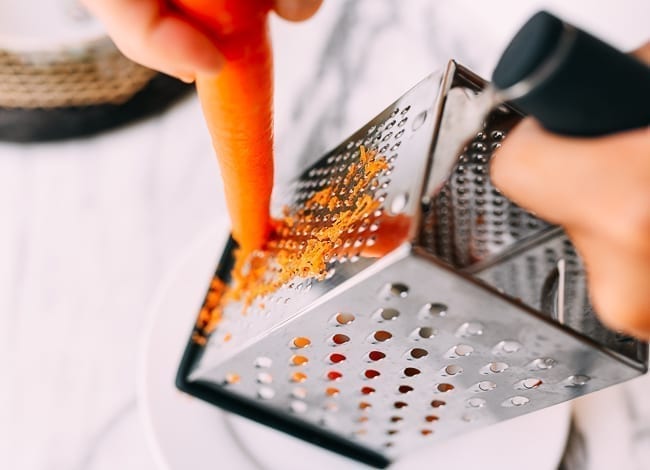
In a large bowl, combine the noodles, ground pork, grated carrot, chopped wood ear mushrooms, shallots, garlic, ginger, egg white, fish sauce, vegetable oil, salt, white pepper, and 1 teaspoon sugar.
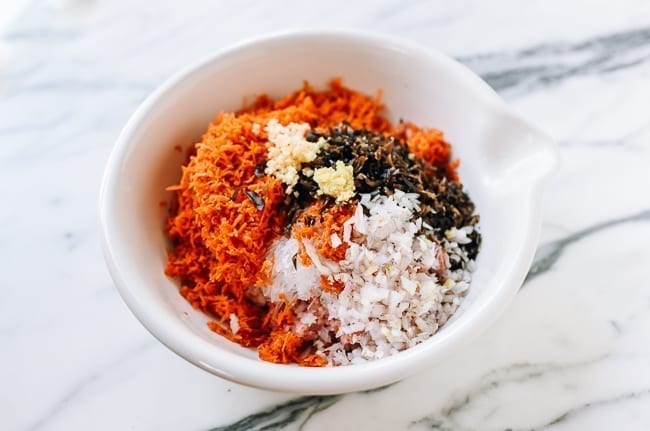
Mix until everything is uniformly combined.
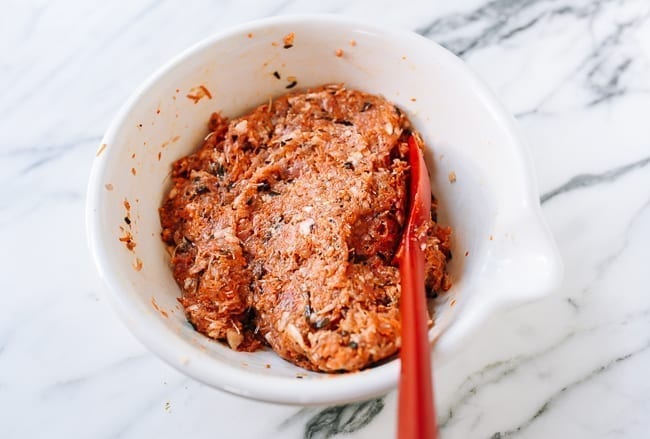
Wrap the spring rolls:
In a large, shallow bowl or deep plate, dissolve the remaining 2 teaspoons sugar in 1 cup warm water. Sugar is optional but does help the spring rolls to brown when frying.
To wrap each roll, place a rice paper wrapper into the sugar water for about 5-10 seconds, submerging it completely. Remove it from the water. It will still be quite firm, but it will soften quickly!
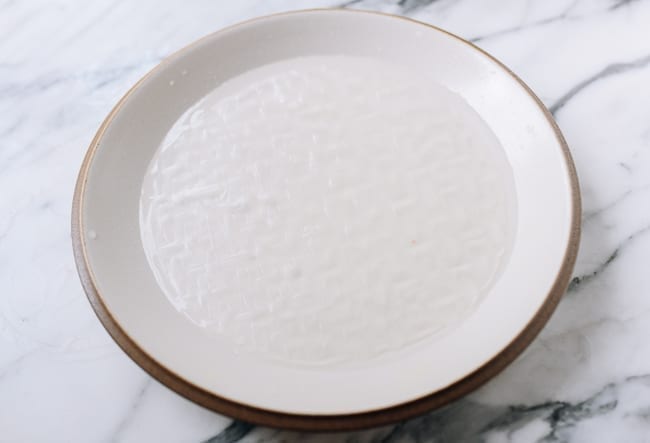
Place about 40g of filling in a log shape on one side of the wrapper.
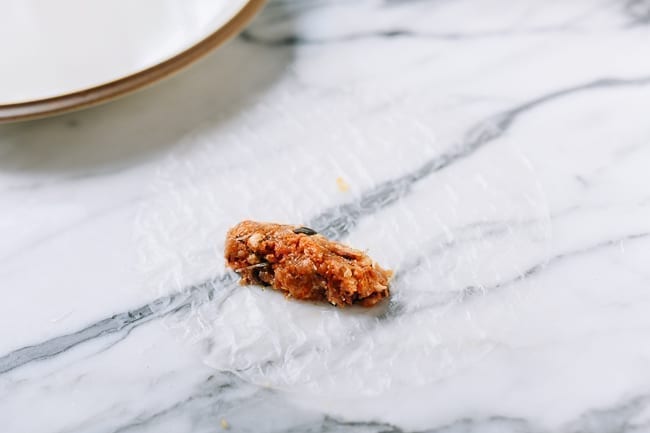
Begin tightly folding the wrapper over the filling (no air bubbles!), and roll the spring roll forward 1 complete revolution.
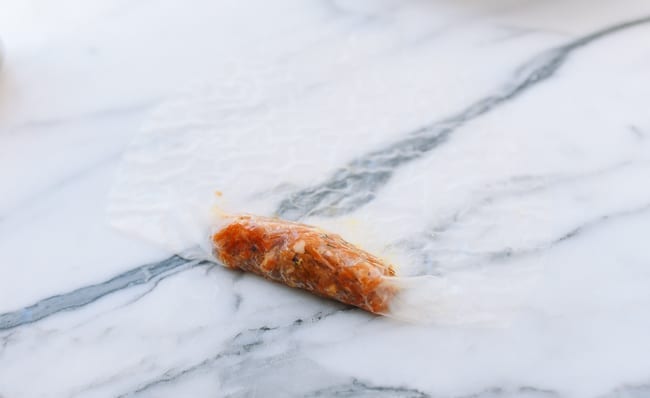
Lightly press down on each end of the filling to flatten the rice paper and push the filling together to eliminate any air bubbles.
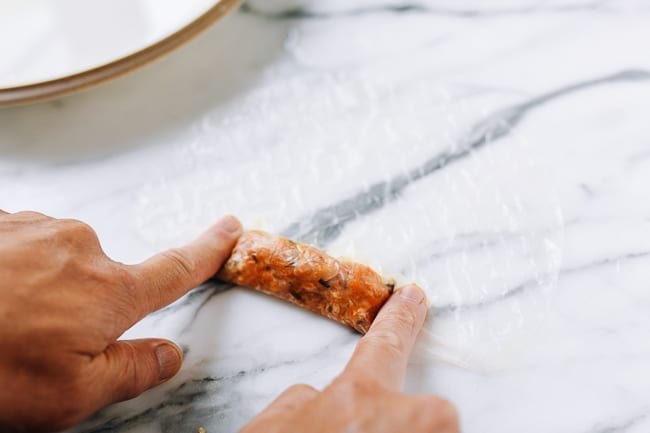
Fold one side of the wrapper towards the middle of the spring roll. Repeat with the other side.
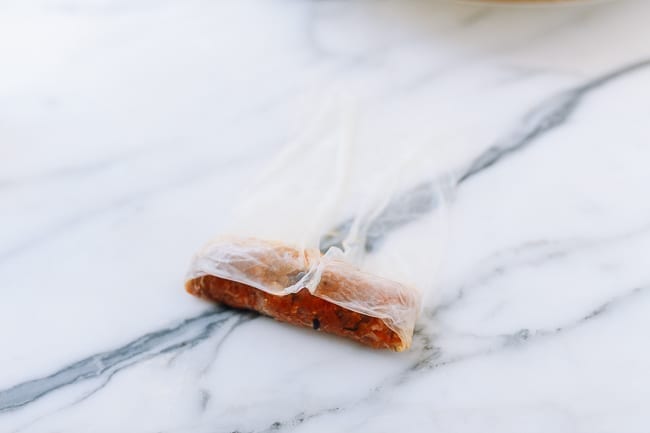
Roll the spring roll forward while tucking in the front to prevent air pockets. The rice paper wrapper will stick to itself. It doesn’t require anything additional to seal.
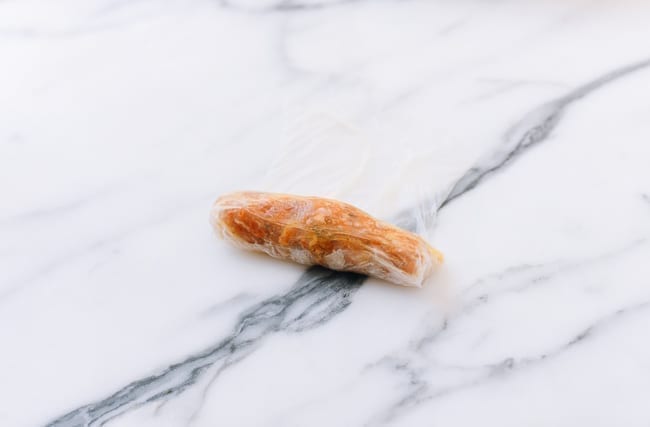
After wrapping one spring roll, you could test-fry it to check for your personal seasoning preferences. You can also fry a small meatball filling as well.
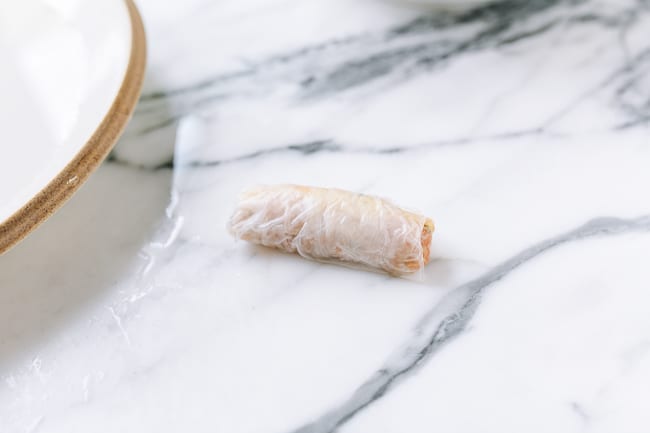
Place the rolls on a plate or sheet pan lined with a clean, dry kitchen towel or parchment paper.
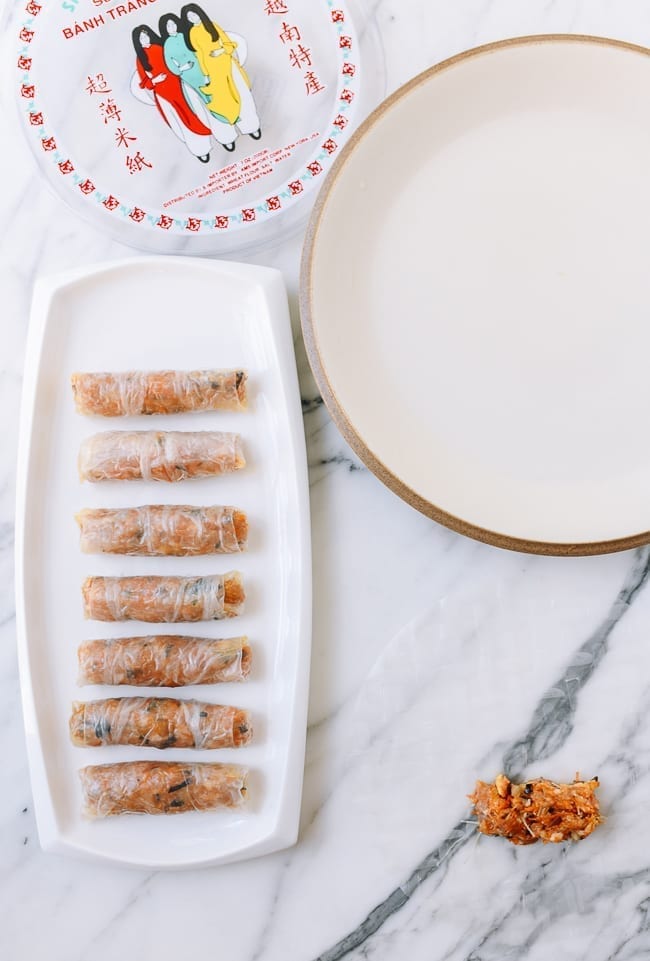
Additional tips for wrapping:
- As you’re folding, ensure there’s no air between the wrapper and the filling.
- Use just enough water to wet the rice paper, as water will quickly absorb into it and soften it.
- Work quickly, since the rice paper will become sticky and harder to work with once they are rehydrated.
For more details on wrapping different types of spring rolls, check out our How to Wrap Spring Rolls post!
Once wrapped, transfer the spring rolls to the refrigerator and chill for at least 1 hour, so they can dry out and firm up. This step helps minimize the wrapper bubbling when frying (though bubbling is normal).
Take them out of the refrigerator 15 minutes before frying.
How to Wrap Cha Gio: Watch Video!

Double-fry the spring rolls:
Heat about 3 cups of canola or vegetable oil in a medium pot to 335°F/170°C (the oil level should be a little over halfway up the sides). Fry the spring rolls in small batches—about three at a time. Make sure they do not touch just after they are placed in the oil as the skins will be sticky until a crust forms. Cook each batch for 5 to 6 minutes, or until light golden brown. (Frying them in small batches prevents them from sticking to each other.)
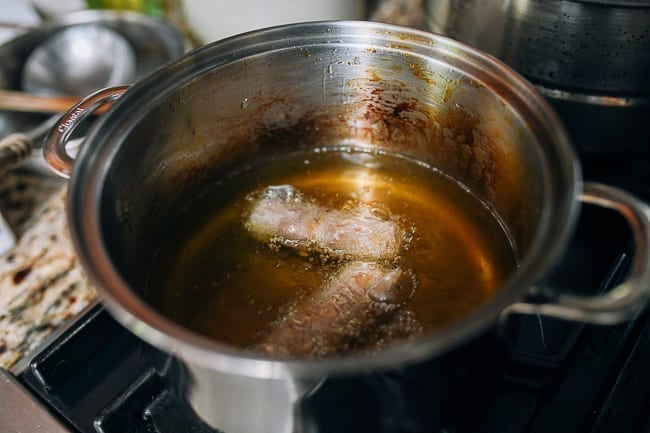
Use a metal slotted spoon to pull them out of the oil. Drain on a rack, and continue frying. Maintain the correct oil temperature by periodically adjusting your heat.
When ready to serve, refry the spring rolls (yes, you need to fry them twice) at 350°F/175°C for 1 ½ to 2 minutes to make them nice and crispy. Double-frying is important!
Serve with fresh lettuce, cilantro, Thai basil, mint and nuoc cham for dipping.
Looking for more authentic recipes? Subscribe to our email list and be sure to follow us on Pinterest, Facebook, Instagram, and Youtube!
Recipe
Cha Gio (Vietnamese Fried Spring Rolls)
Ingredients
For the spring rolls:
- 50 g dried mung bean noodles (1 package)
- 1 pound ground pork (70-80% lean; 450g)
- 2 medium carrots (grated, about 190g)
- 1/3 cup rehydrated wood ear mushrooms (finely chopped, 30g)
- 1/4 cup shallots (finely chopped, 30g)
- 1 clove garlic (minced)
- 1 teaspoon ginger (grated)
- 1 egg white
- 1 tablespoon fish sauce
- 1 tablespoon vegetable oil
- 1/2 teaspoon salt
- 1/4 teaspoon ground white pepper
- 3 teaspoons sugar (12g – divided)
- 1 cup warm water – for soaking rice wrappers (250 ml)
- 20 dried rice paper wrappers (bánh tráng)
- canola or vegetable oil (for frying)
To serve:
- Fresh green leaf lettuce, cilantro, Thai basil, and mint
- Nuoc cham dipping sauce (see our Nuoc cham recipe)
Instructions
Make the filling:
- Soak the dried mung bean noodles in warm water (submerge them completely) for 30 minutes. Drain thoroughly, and cut into ¼ inch pieces.
- In a large bowl, combine the noodles, ground pork, grated carrot, chopped wood ear mushrooms, shallots, garlic, ginger egg white, fish sauce, vegetable oil, salt, white pepper, and 1 teaspoon sugar. Mix until everything is uniformly combined.
Wrap the spring rolls:
- In a large, shallow bowl or deep plate, dissolve the remaining 2 teaspoons sugar in 1 cup warm water. Sugar is optional but does help the spring rolls to brown when frying.
- To wrap each roll, place a rice paper wrapper into the sugar water for about 5-10 seconds, making sure it is completely submerged. Remove it from the water. It will still be quite firm, but it will soften quickly!
- Place about 40g of filling in a log shape on one side of the wrapper. Begin tightly folding the wrapper over the filling (no air bubbles!), and roll the spring roll forward 1 complete revolution. Lightly press down on each end of the filling to flatten the rice paper and push the filling together to eliminate any air bubbles.
- Fold one side of the wrapper towards the middle of the spring roll. Repeat with the other side. Roll the spring roll forward while tucking in the front to prevent air pockets. The rice paper wrapper will stick to itself. It doesn’t require anything additional to seal. Place the rolls on a plate or sheet pan lined with a clean, dry kitchen towel or parchment paper.
Chill:
- Once wrapped, transfer the spring rolls to the refrigerator and chill for at least 1 hour, so they can dry out and firm up. This step helps minimize the wrapper bubbling when frying (though bubbling is normal). Take them out of the refrigerator 15 minutes before frying.
Double-fry the spring rolls:
- Heat about 3 cups of canola or vegetable oil in a medium pot to 335°F/170°C (the oil level should be a little over halfway up the sides). Fry the spring rolls in small batches—about three at a time. Make sure they do not touch just after they are placed in the oil as the skins will be sticky until a crust forms. Cook each batch for 5 to 6 minutes, or until light golden brown. (Frying them in small batches prevents them from sticking to each other.)
- Use a metal slotted spoon to pull them out of the oil. Drain on a rack, and continue frying. Maintain the correct oil temperature by periodically adjusting your heat.
- When ready to serve, refry the spring rolls (yes, they need to be fried twice) at 350°F/175°C for 1 ½ to 2 minutes to make them nice and crispy. Double-frying is important! Serve with fresh lettuce, cilantro, Thai basil, mint and nuoc cham for dipping.