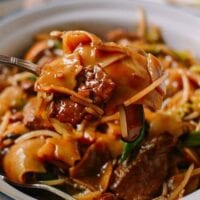

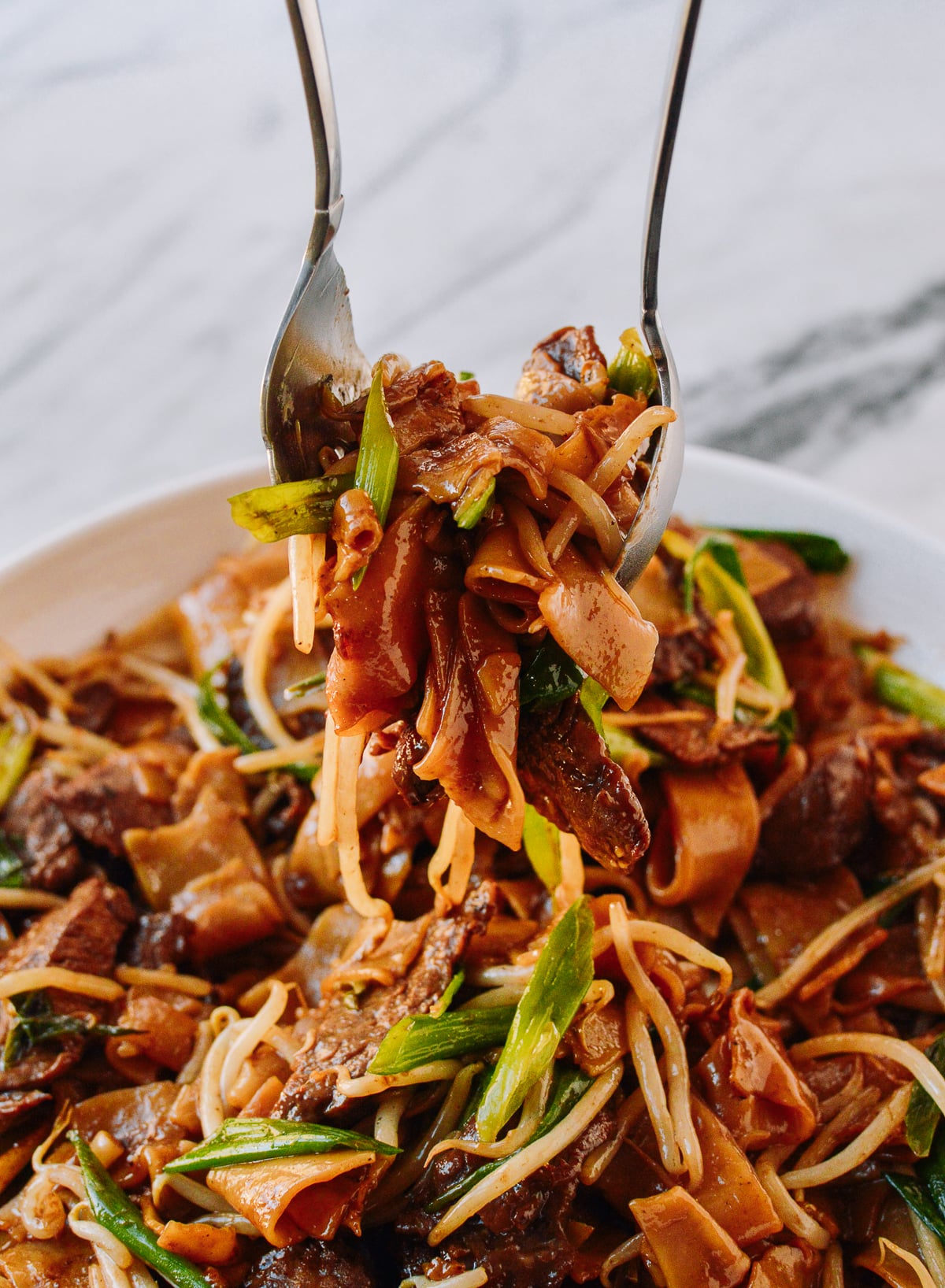
Beef chow fun is a favorite among Chinese food lovers. The problem is, the traditional version isn’t widely available, and there aren’t many good recipes out there (until now!).
What Is Beef Chow Fun?
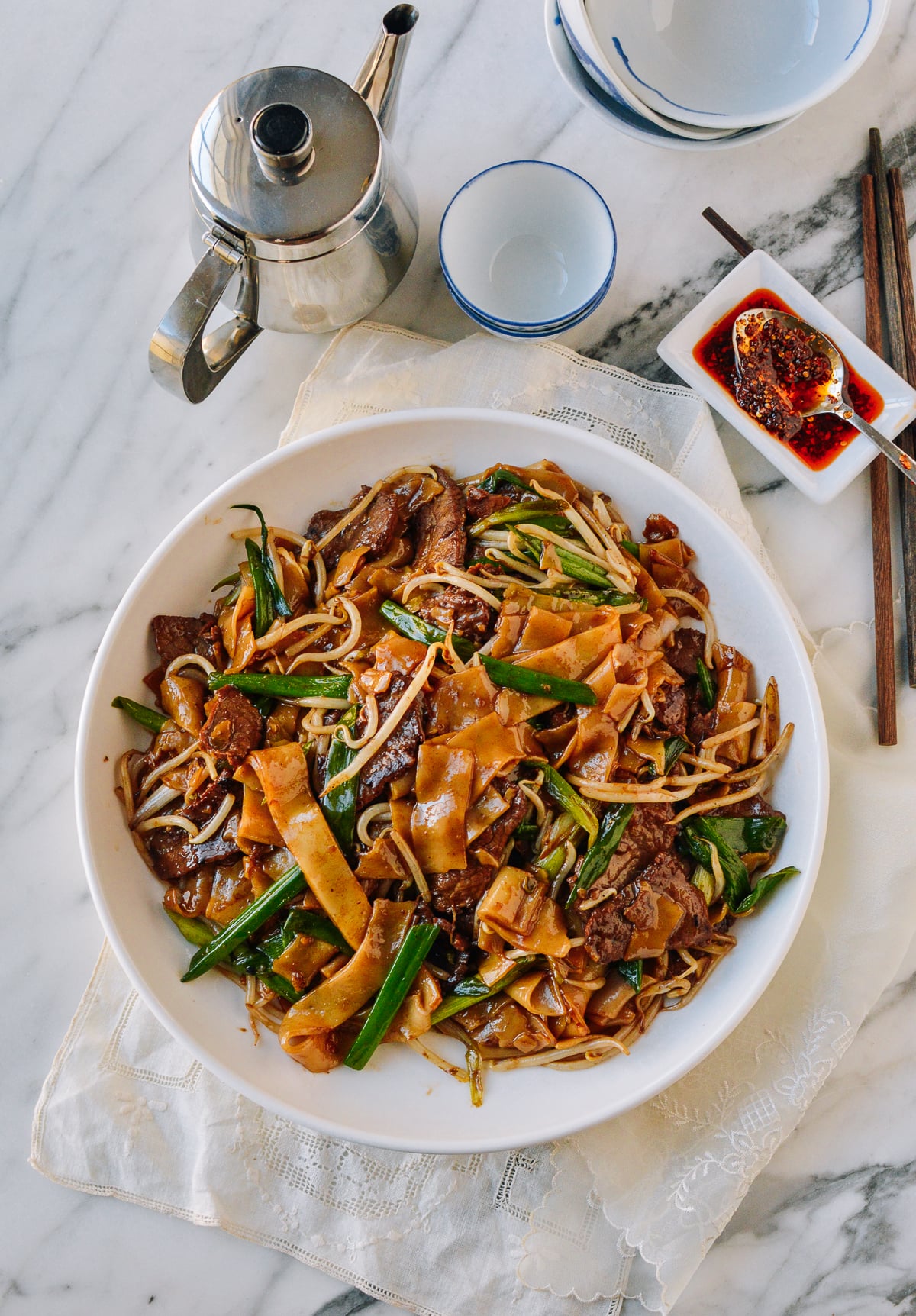
Beef chow fun is a Cantonese dish made from stir-frying beef, wide rice noodles (he fen or huo fun), scallions, ginger, bean sprouts and dark soy sauce.
Known as gon chow ngau huo in Cantonese, you can find it in dim sum restaurants, Cantonese banquet halls, or sometimes Cantonese roast meat places. There is also a saucier version, which you can check out here: Saucy Beef Chow Fun.
Wok Hei & Pow Wok
An essential element in beef chow fun is “wok hei” (鑊氣). Wok hei refers to the “breath of the wok” when cooking over very high heat, and the unique seared umami flavor that results.
You can see examples of old-fashioned high flames in our Xi’An street food post, where street vendors cooked over roaring hot fires. Wok hei is not easy to achieve using a home range burner, but it can be done.
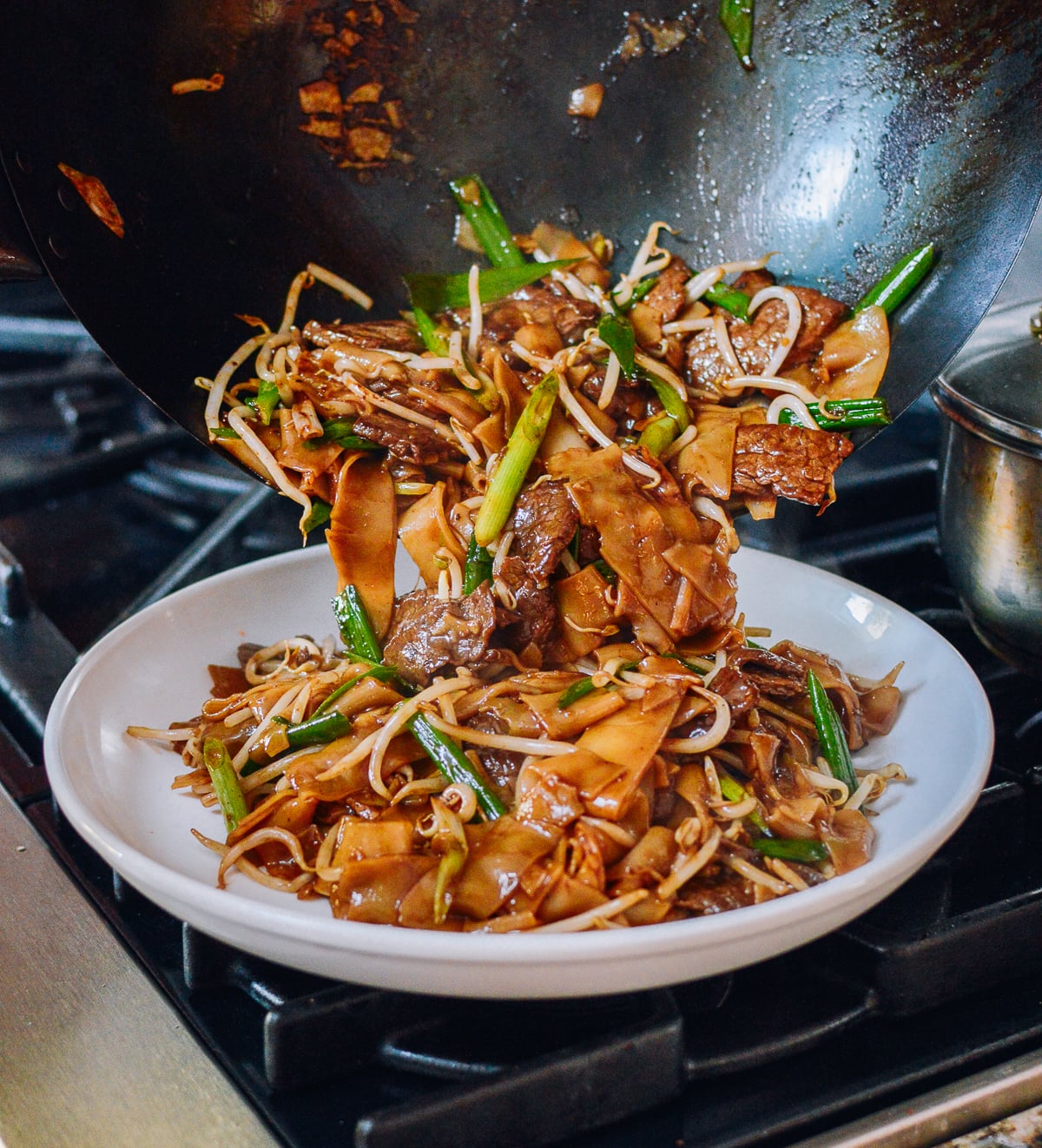
The other essential technique in this dish is “pow wok,” a method of tossing the contents of a wok without a spatula.
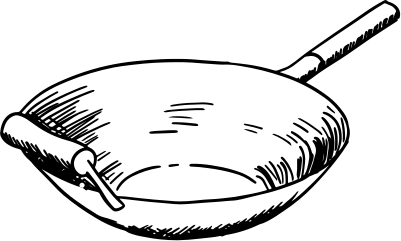
It’s best practiced with a seasoned pow wok with a wooden handle for easy gripping. You may have seen something like it in any local takeout place with an open kitchen.
For this dish, the continuous movement of the noodles in the hot wok prevents sticking and keeps the rice noodles whole. But don’t despair, I have cooked this dish with a metal spatula and it has turned out just fine. We show you both beginner and more advanced techniques in our Beef Chow Fun video (right above the recipe card below).
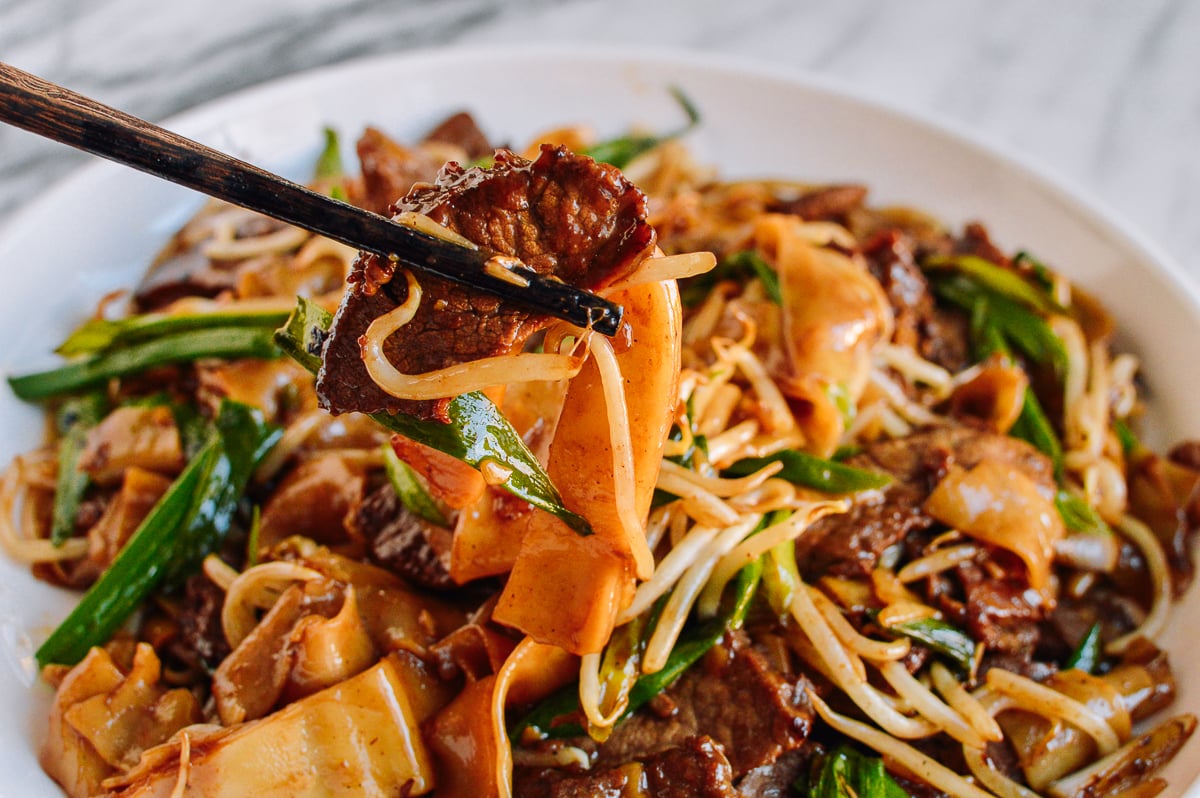
We’ve written the recipe as if you’re using a spatula, but go for the “pow wok” tossing method if you’re brave enough!
Check out our Chinese Cooking tools page for more information on carbon steel woks and other tools we use in our recipes and daily cooking!
Buying Rice Noodles
While all this may sound daunting, it’s actually pretty easy to get a good Beef Chow Fun on the table at home. Let’s talk about the noodles.
You’ll need to find wide rice noodles, and you have a few choices. The most obvious is fresh ones. These can vary widely in quality and are very dependent on freshness. If you can find extremely fresh rice noodles in your local Chinatown, by all means use them.
However, once they’ve been refrigerated or vacuum-sealed, they can be challenging to work with (sticking together or not stir-frying as easily).
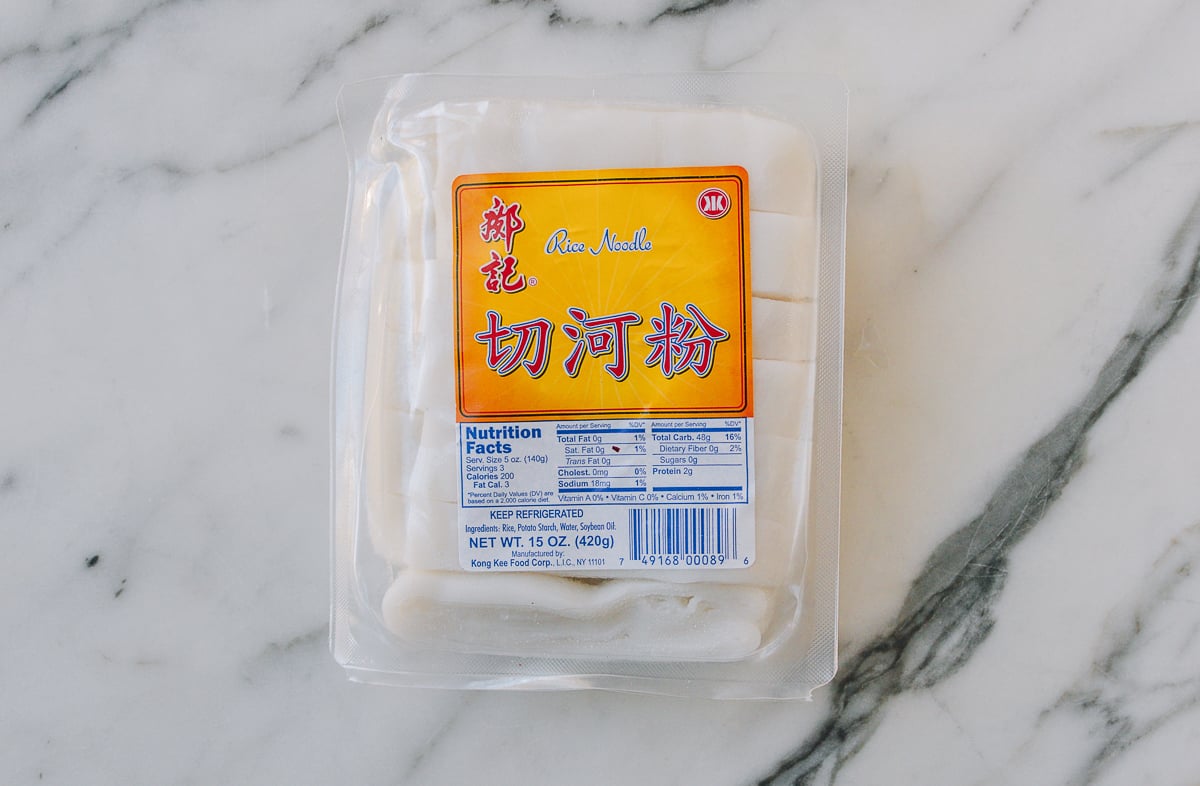
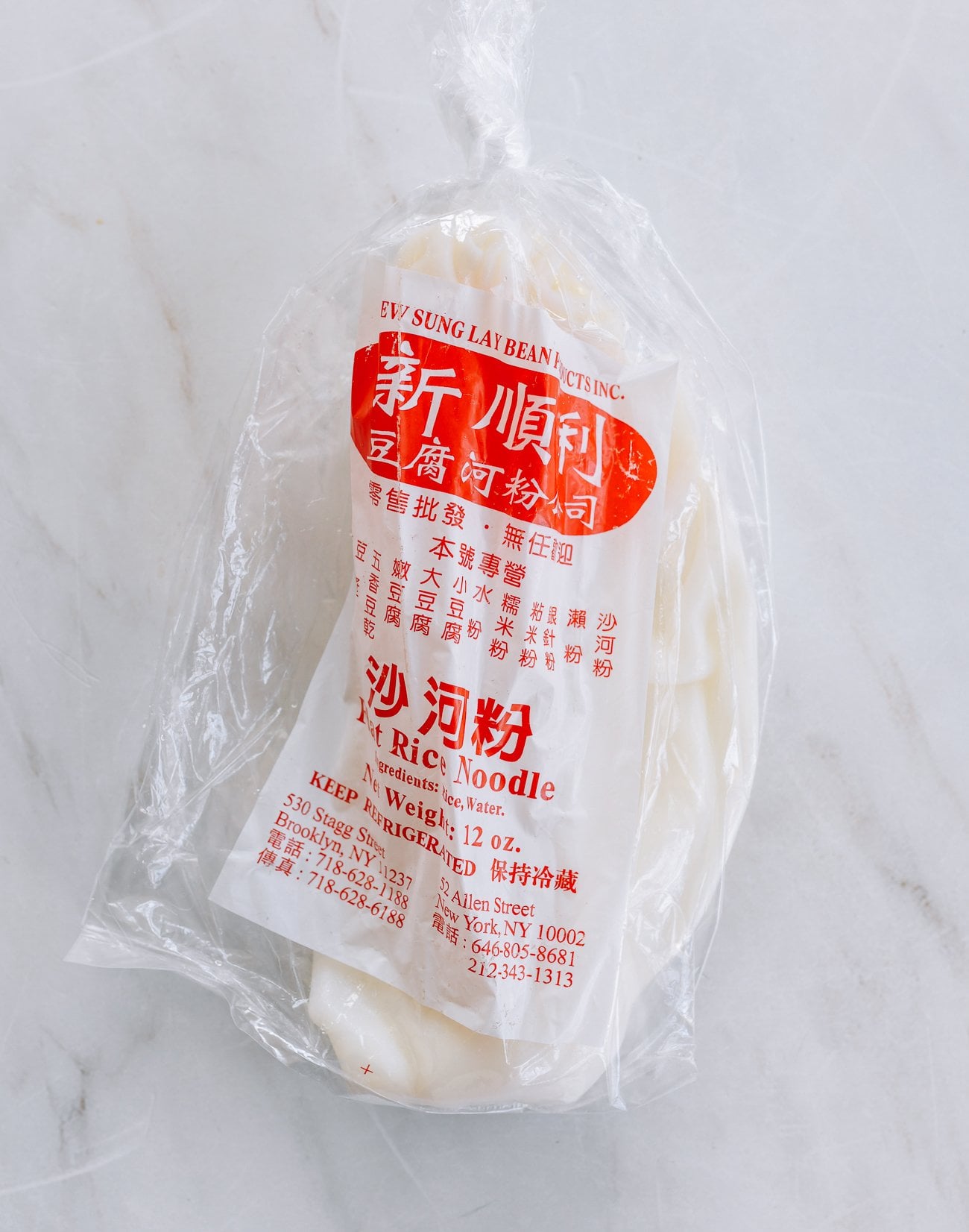
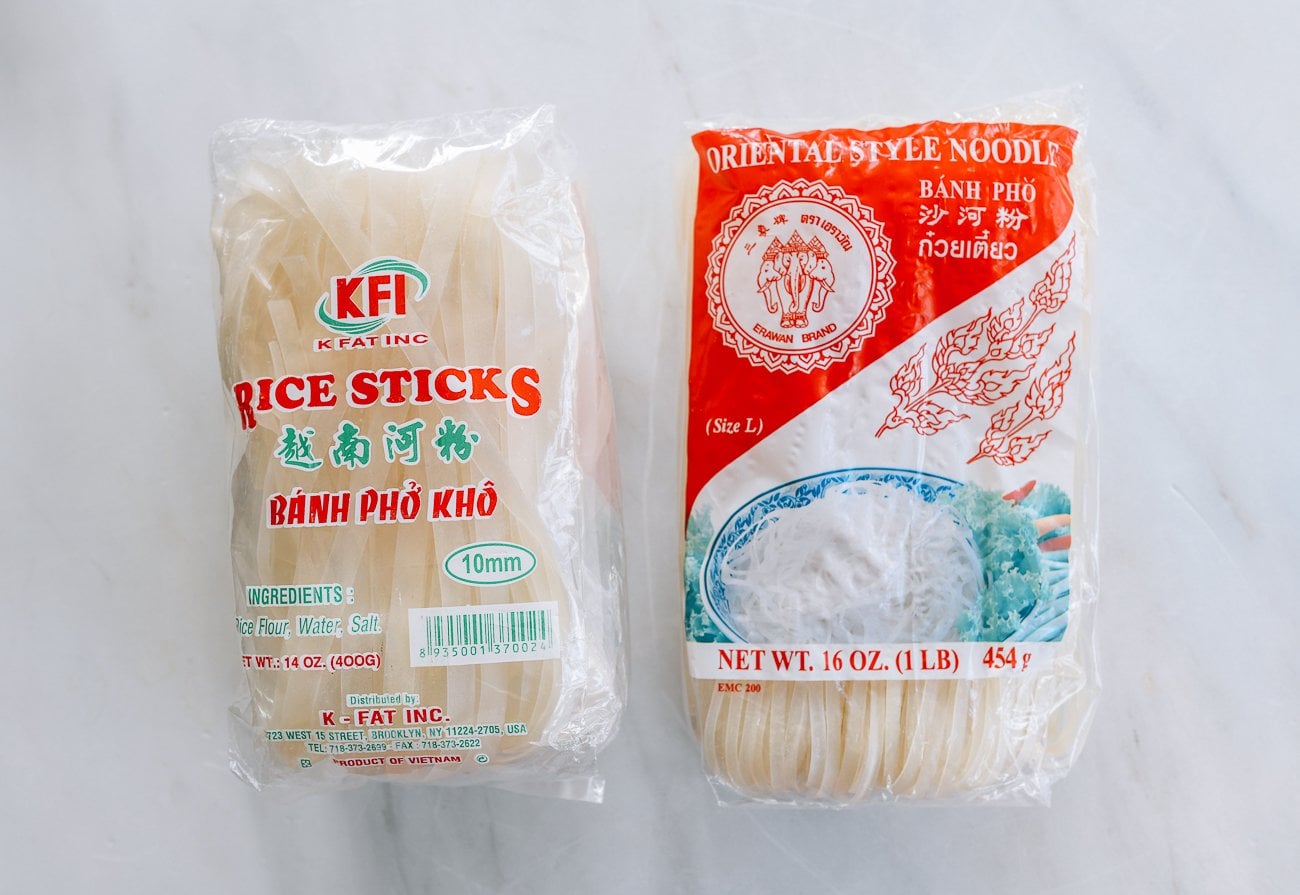
We have gotten much more consistent results with dried rice noodles. Look for noodles similar to what you would use for pad Thai, but choose the thicker noodles (below, left) rather than the thinner ones (below, right).
These just need to be soaked overnight before stir-frying, and they’re shelf-stable, so you can always have them in your pantry ready to go.
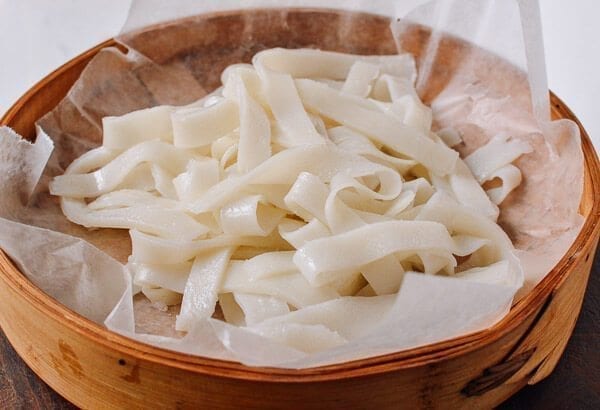
Judy has also published her recipe for Homemade Rice Noodles. Give it a try, and you can make your own any time!
Ok, on to the recipe!
Beef Chow Fun: Recipe Instructions
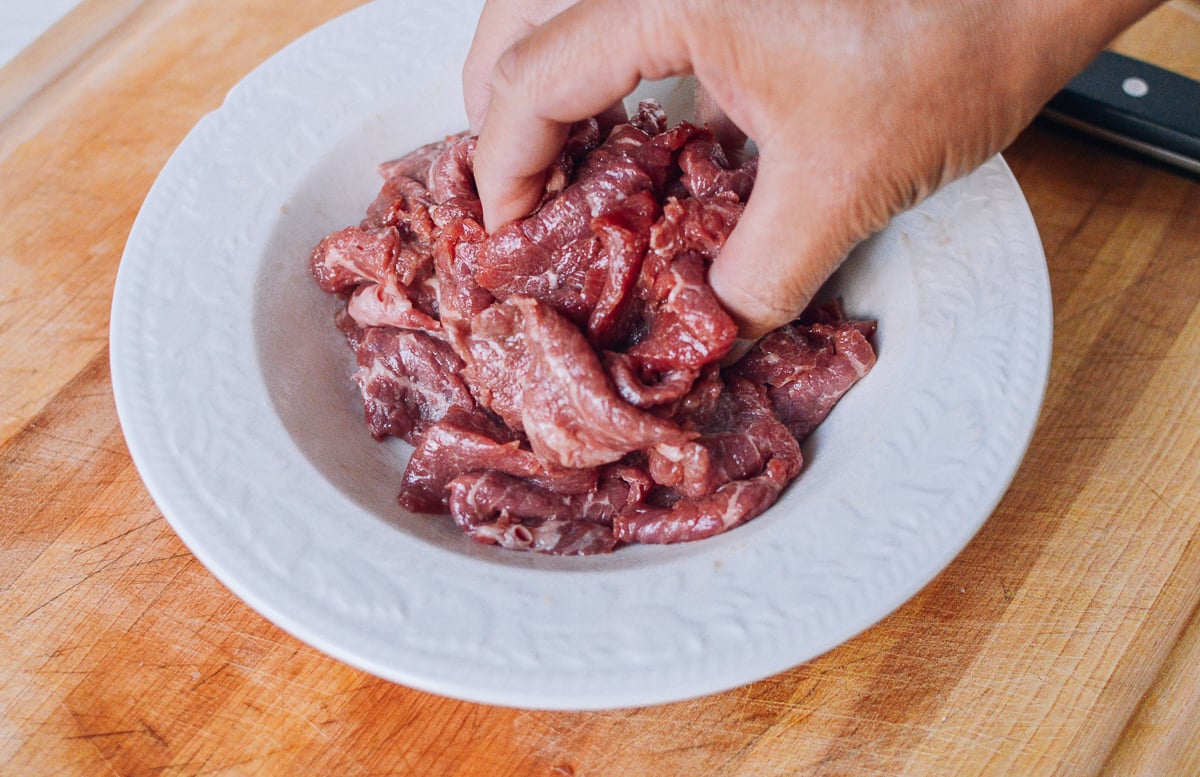
Combine the sliced flank steak, water, baking soda, cornstarch, oyster sauce, Shaoxing wine, and soy sauce. Marinate for at least 30 minutes.
The baking soda tenderizes the meat to achieve a texture similar to what you get in restaurants. The longer you marinate the beef, the more tender it gets.
(Learn more about preparing and tenderizing beef for stir-fry in our article dedicated to the subject!) Another useful tip: freeze the beef before slicing until firm but not solid. This makes slicing the beef much easier!
Also prepare the rest of the ingredients and have them ready before you cook.
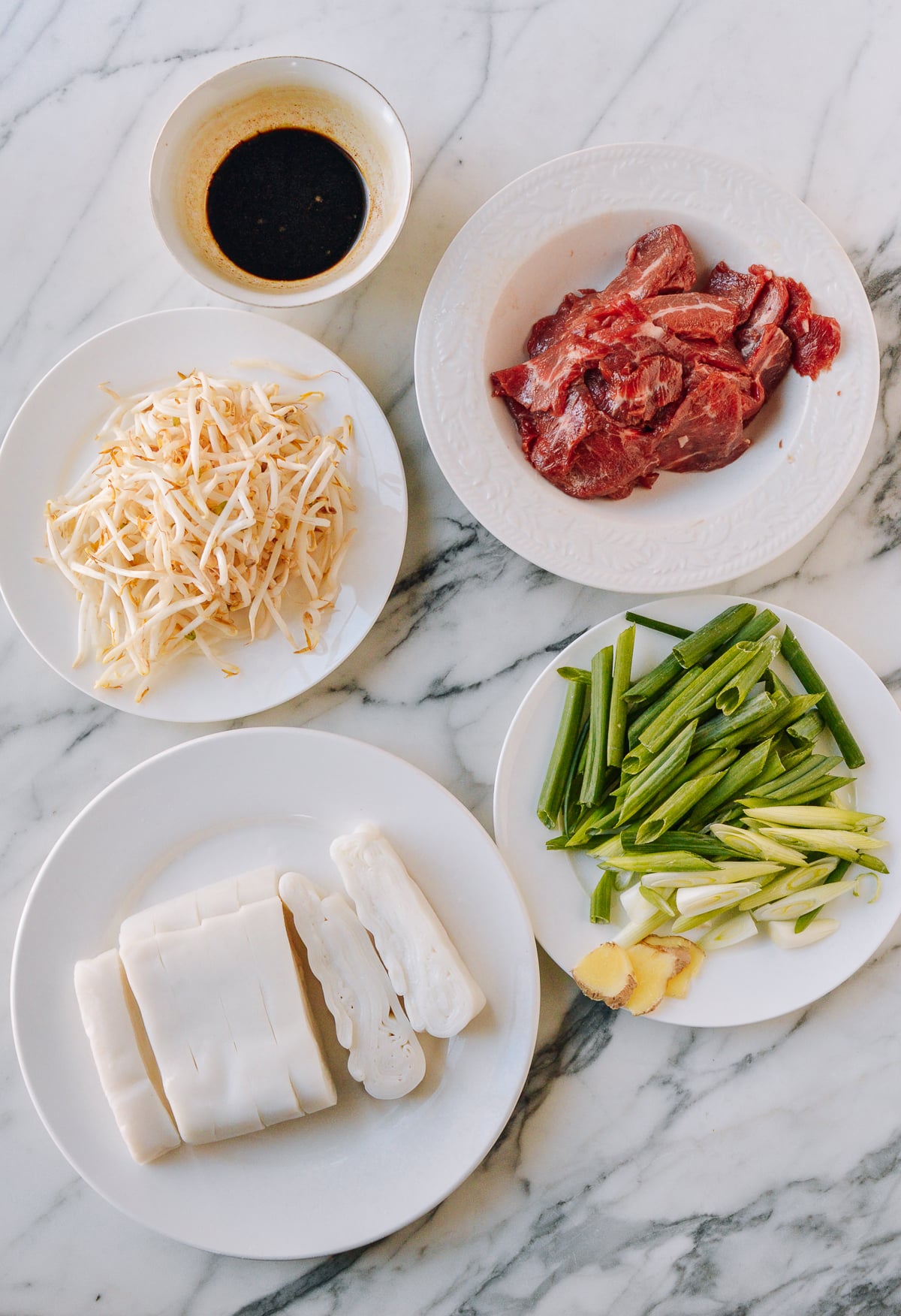
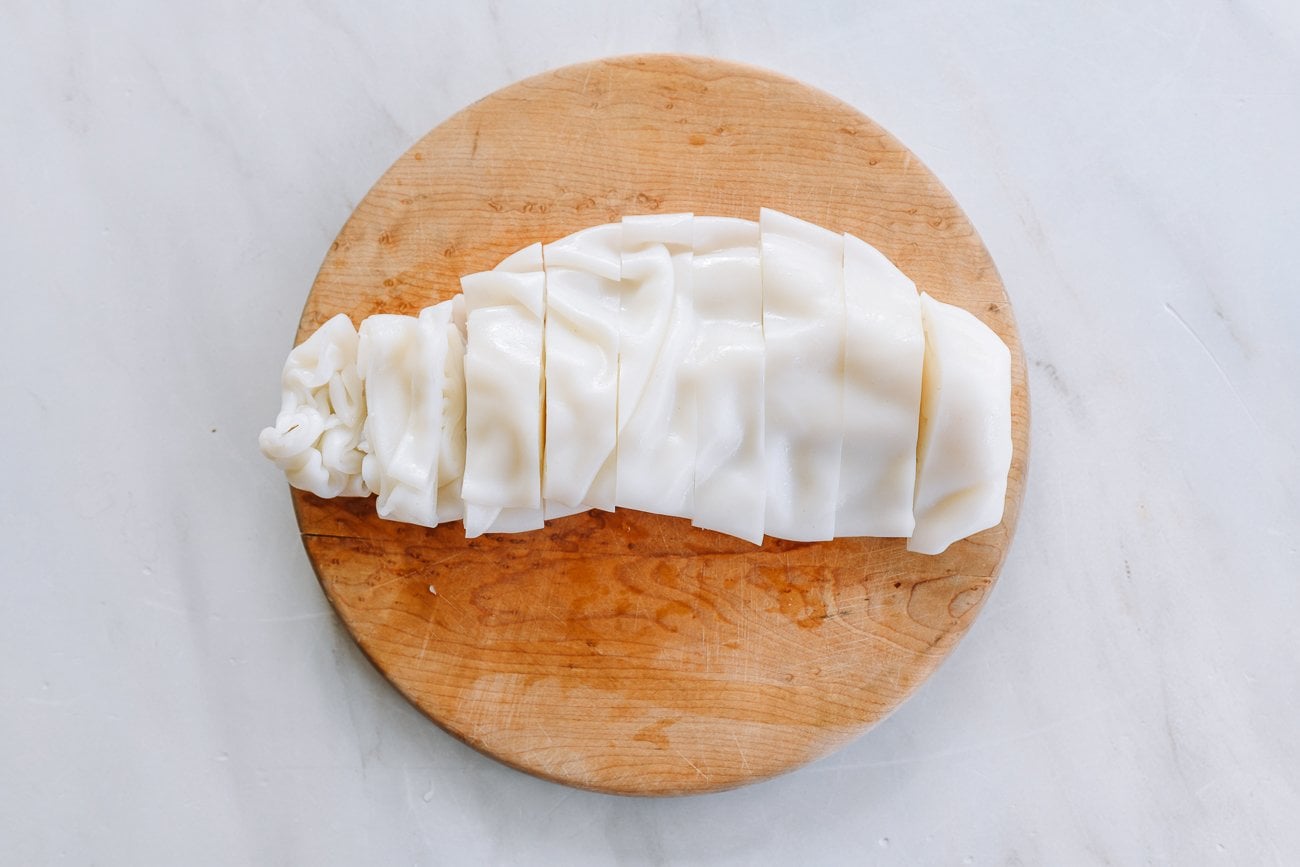
Some fresh rice noodles come as large sheets, while others come sliced. If you have the sheets, slice the rice noodles so they’re about 1 inch wide. If the rice noodles are very stiff and stuck together, you will have to blanch them to loosen them.
Simply bring a wok full of water to a boil, and add the noodles.
Blanch them for 30 seconds or so. You’ll see them loosen into longer strands of noodles. Remove from the wok and transfer to an ice bath. Drain.
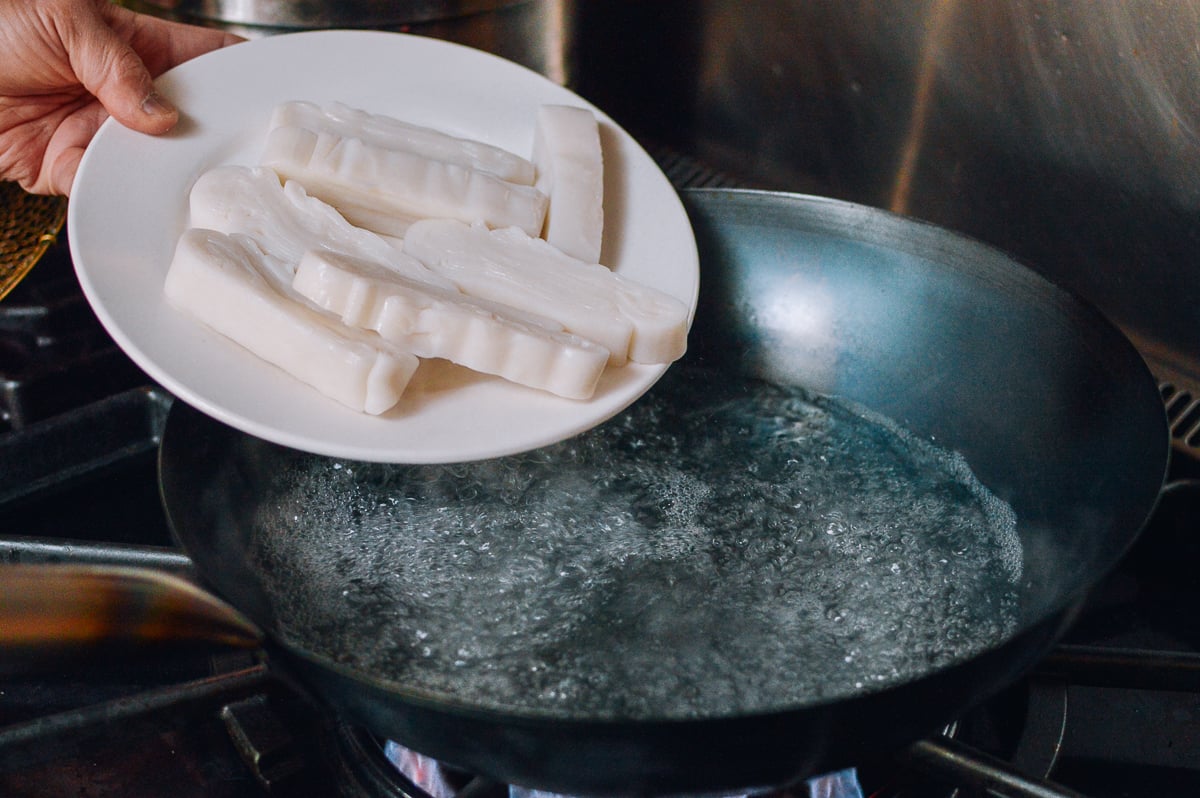
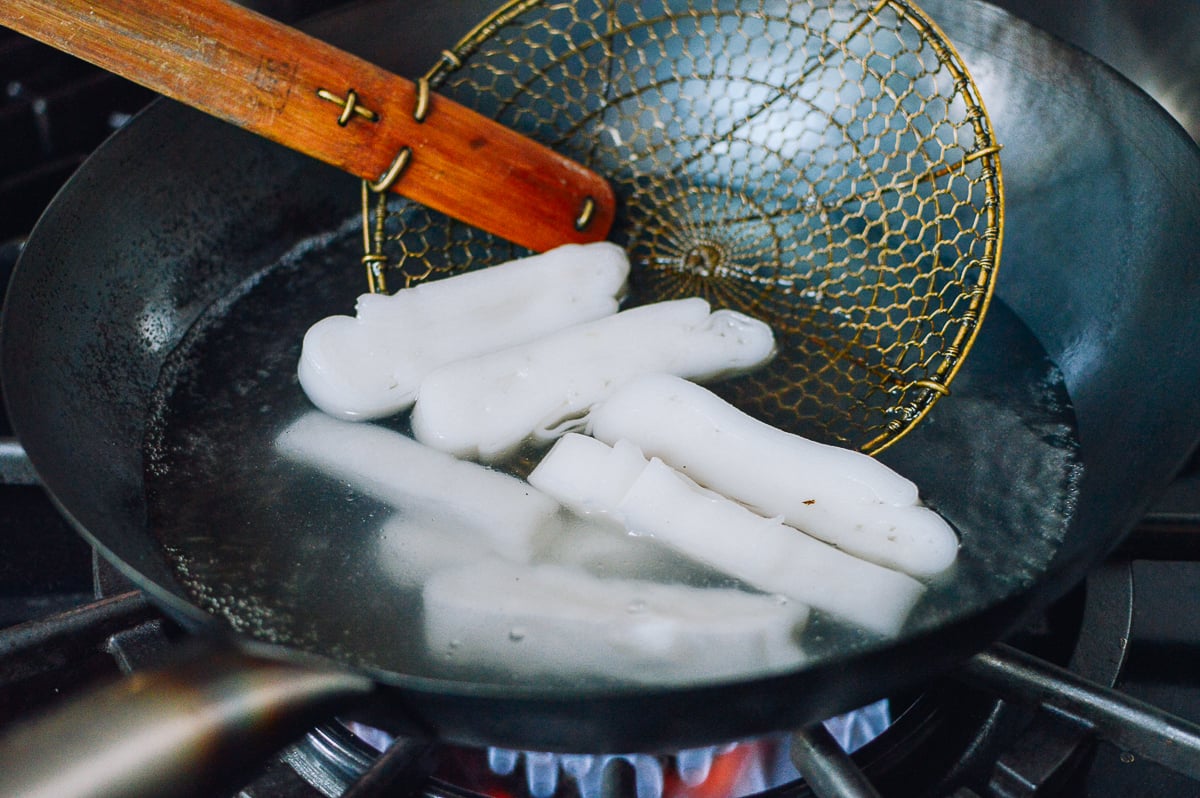
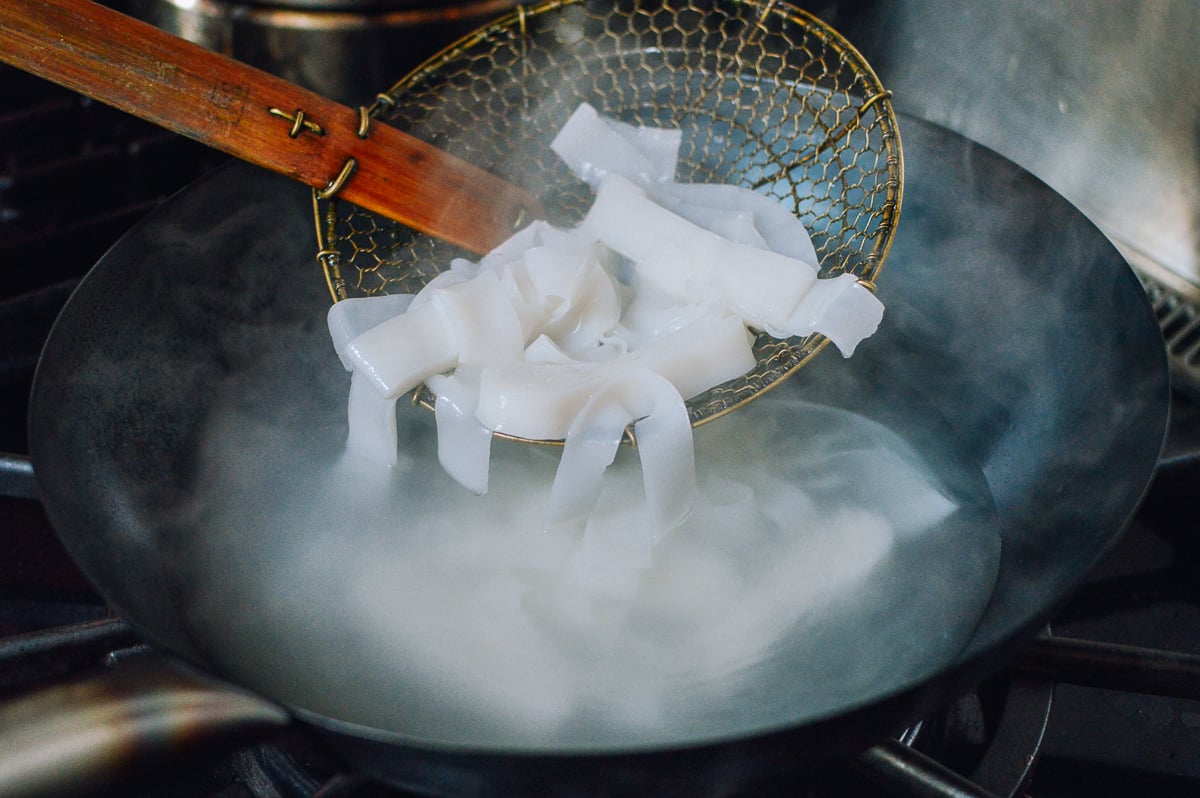
If using dried rice noodles, soak in hot water for a few hours, or in cold water overnight.
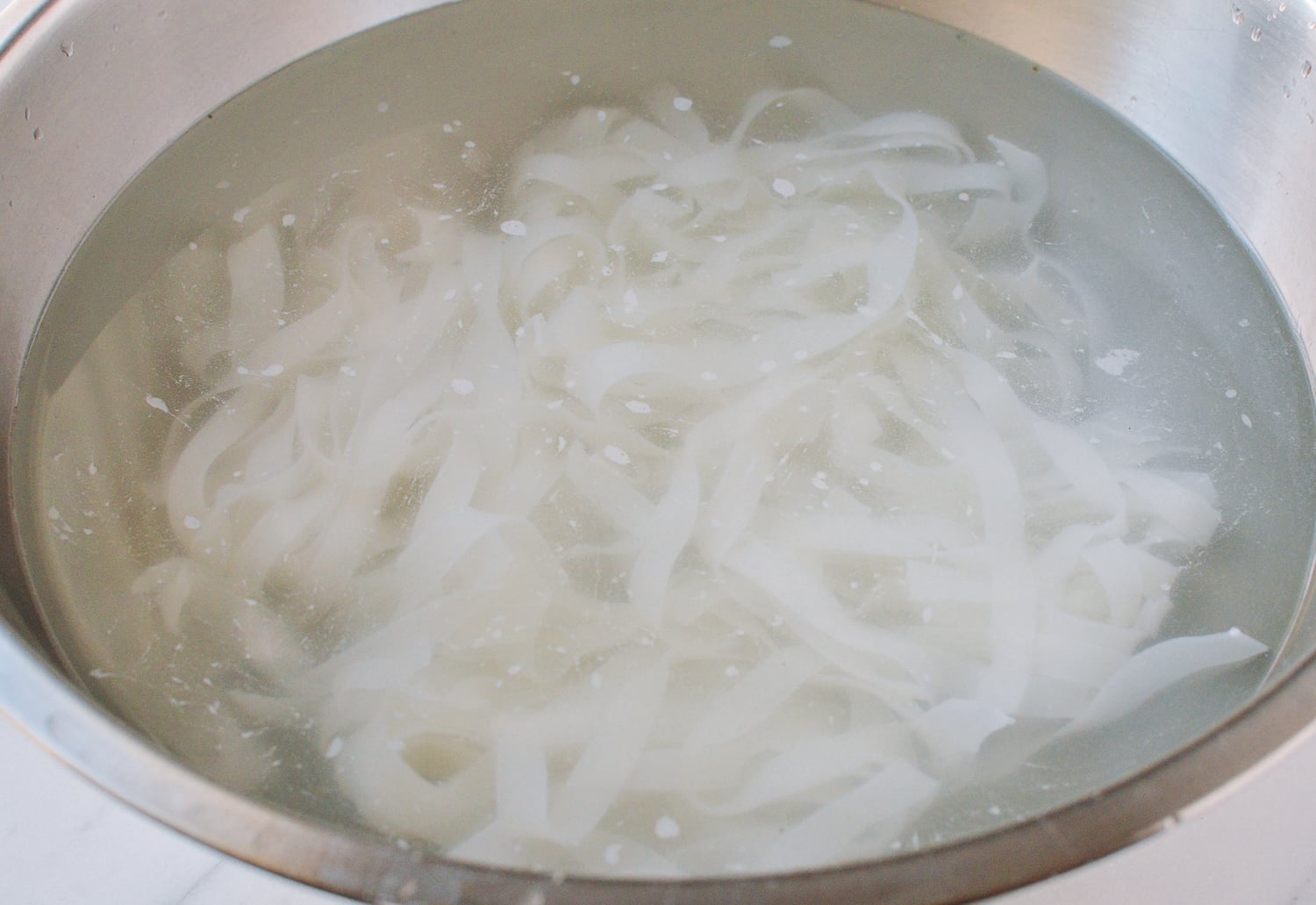
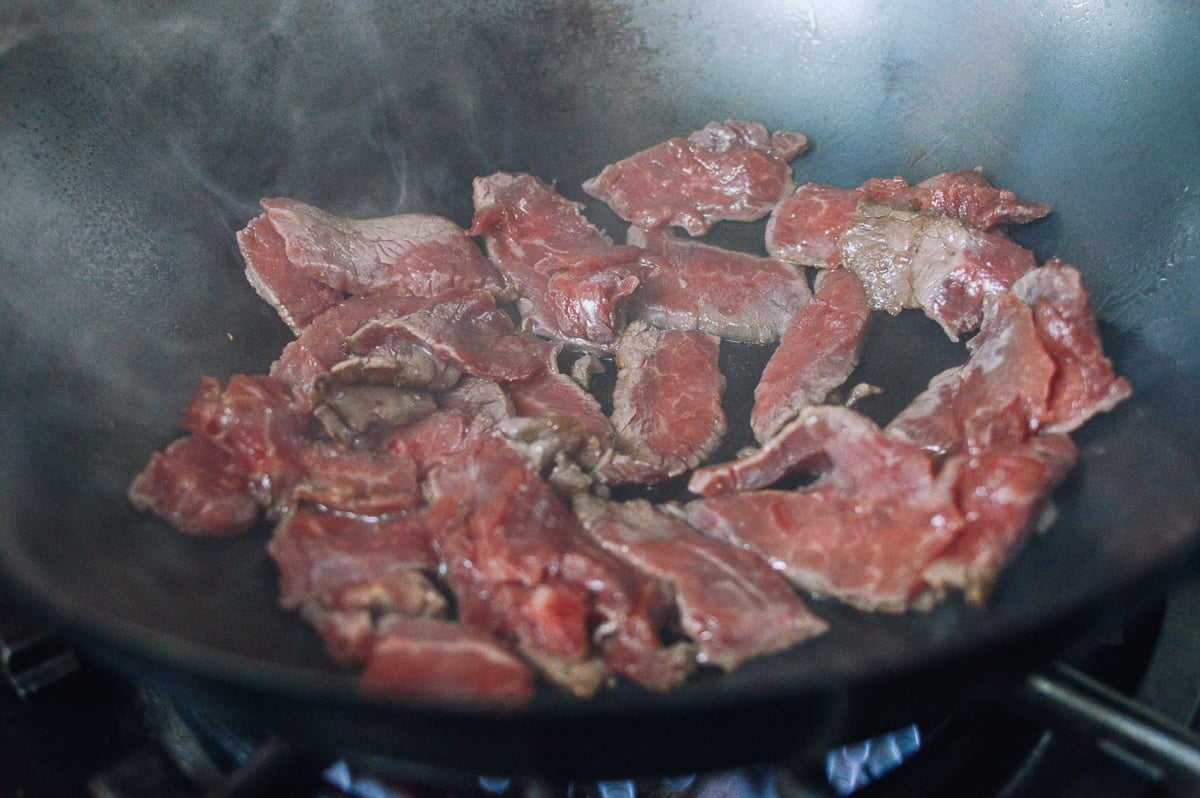
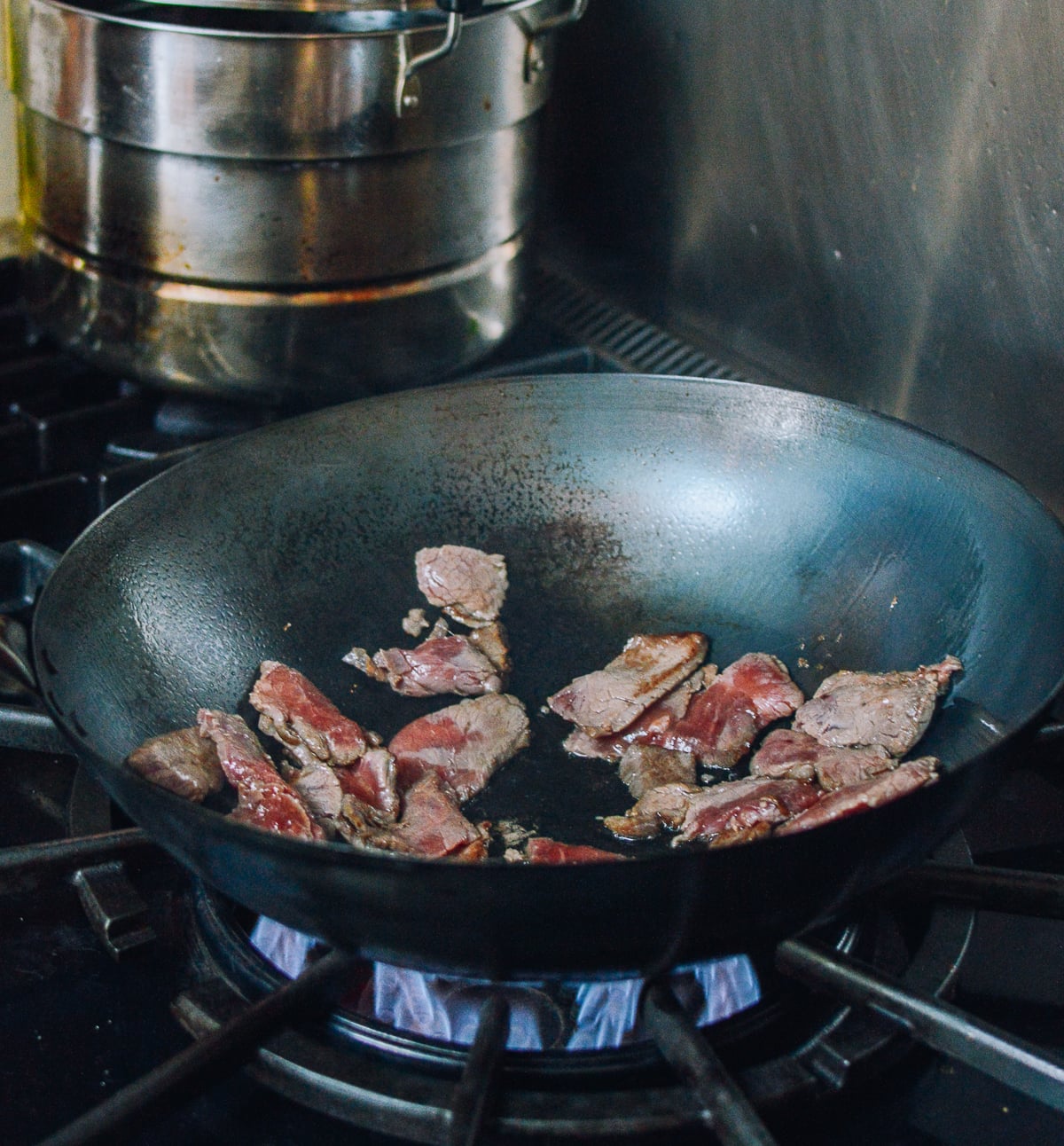
Heat your wok over high heat until smoking, and add 1 1/2 tablespoons vegetable oil to coat the wok. Add the beef and sear until browned. As long as your wok is hot enough, the meat shouldn’t stick. Remove from the wok and set aside.
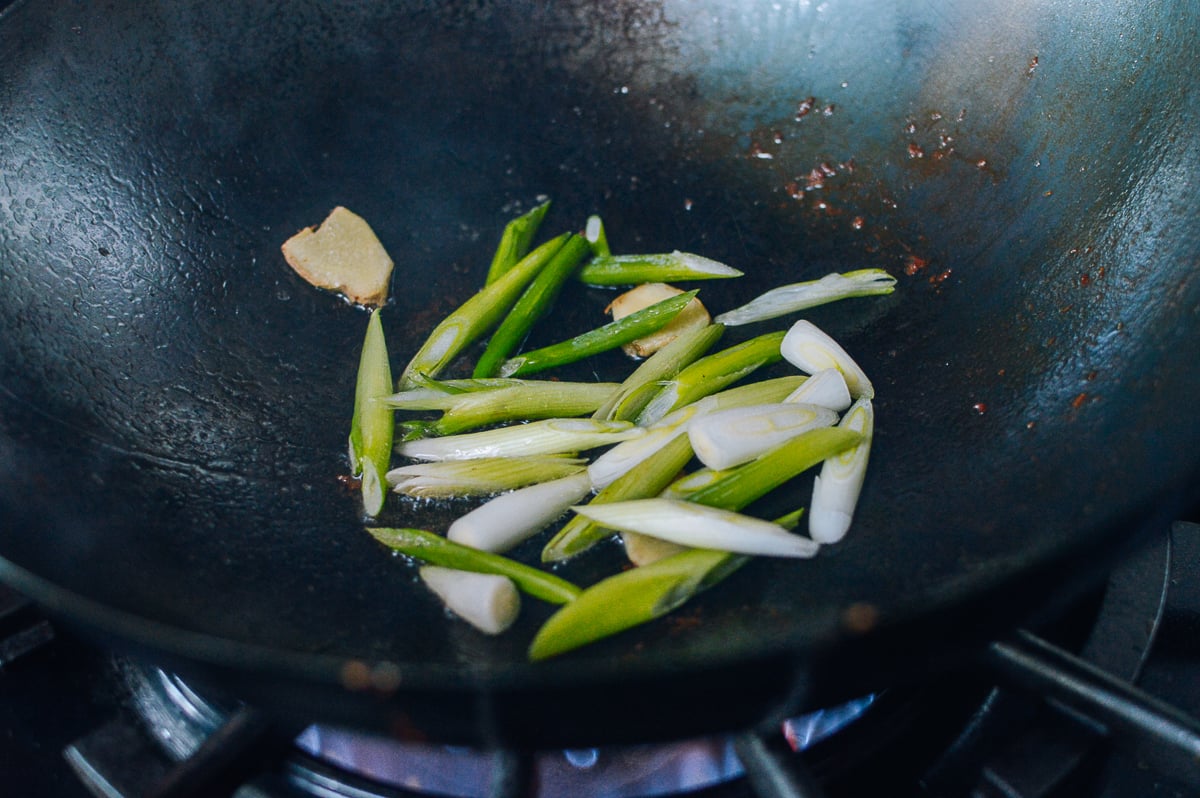
Add another 1 1/2 tablespoons vegetable oil to the wok along with the ginger. Let it infuse the oil with its rich flavor for about 15 seconds, and then add the scallions. Spread the fresh rice noodles evenly in the wok and stir-fry for 15 seconds.
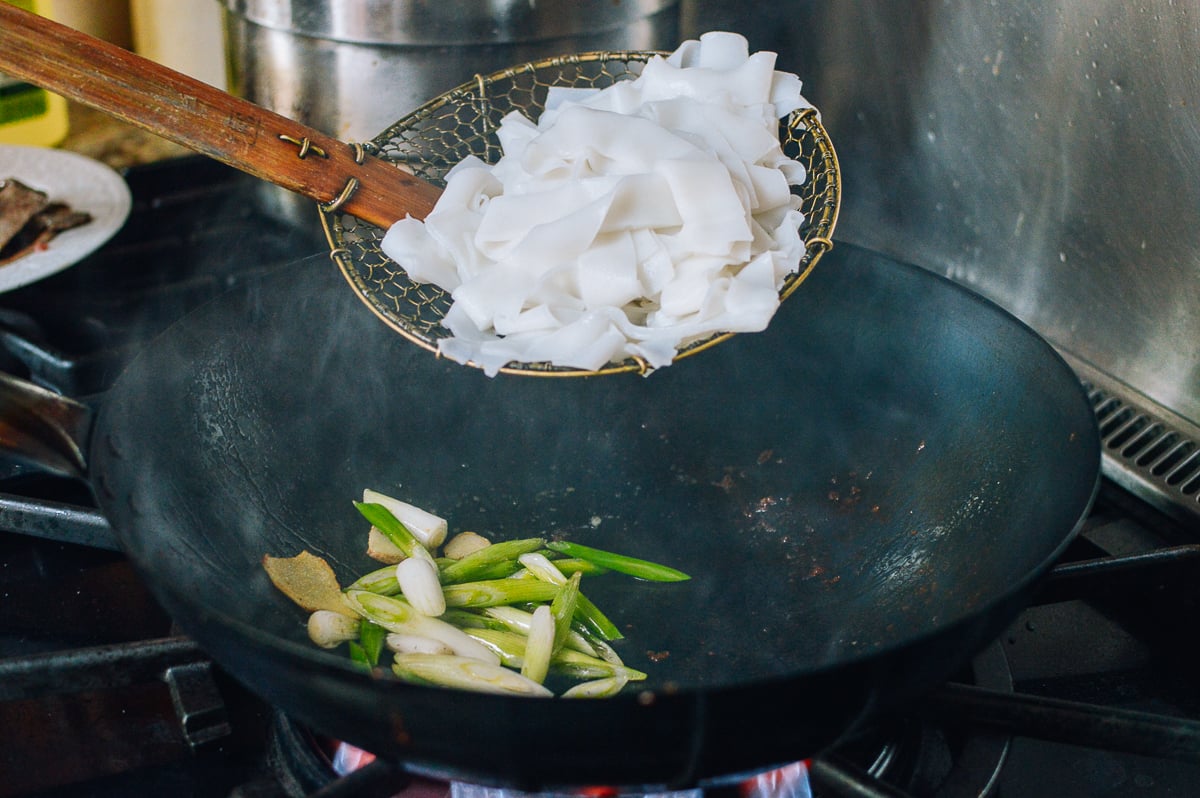
Add 2 tablespoons of Shaoxing wine around the rim of the wok.
Next, add the soy sauces, sesame oil, sugar, and the seared beef.
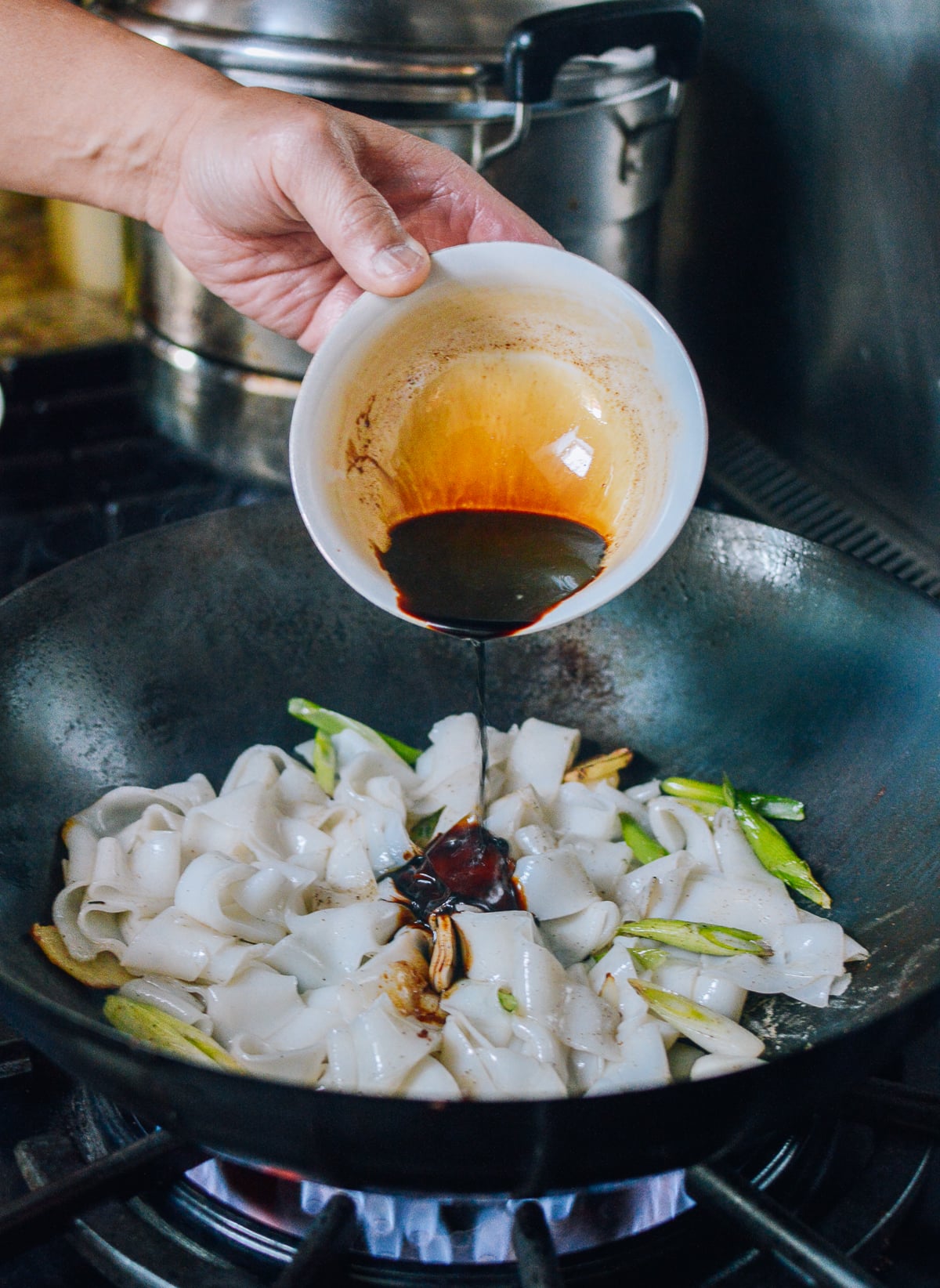
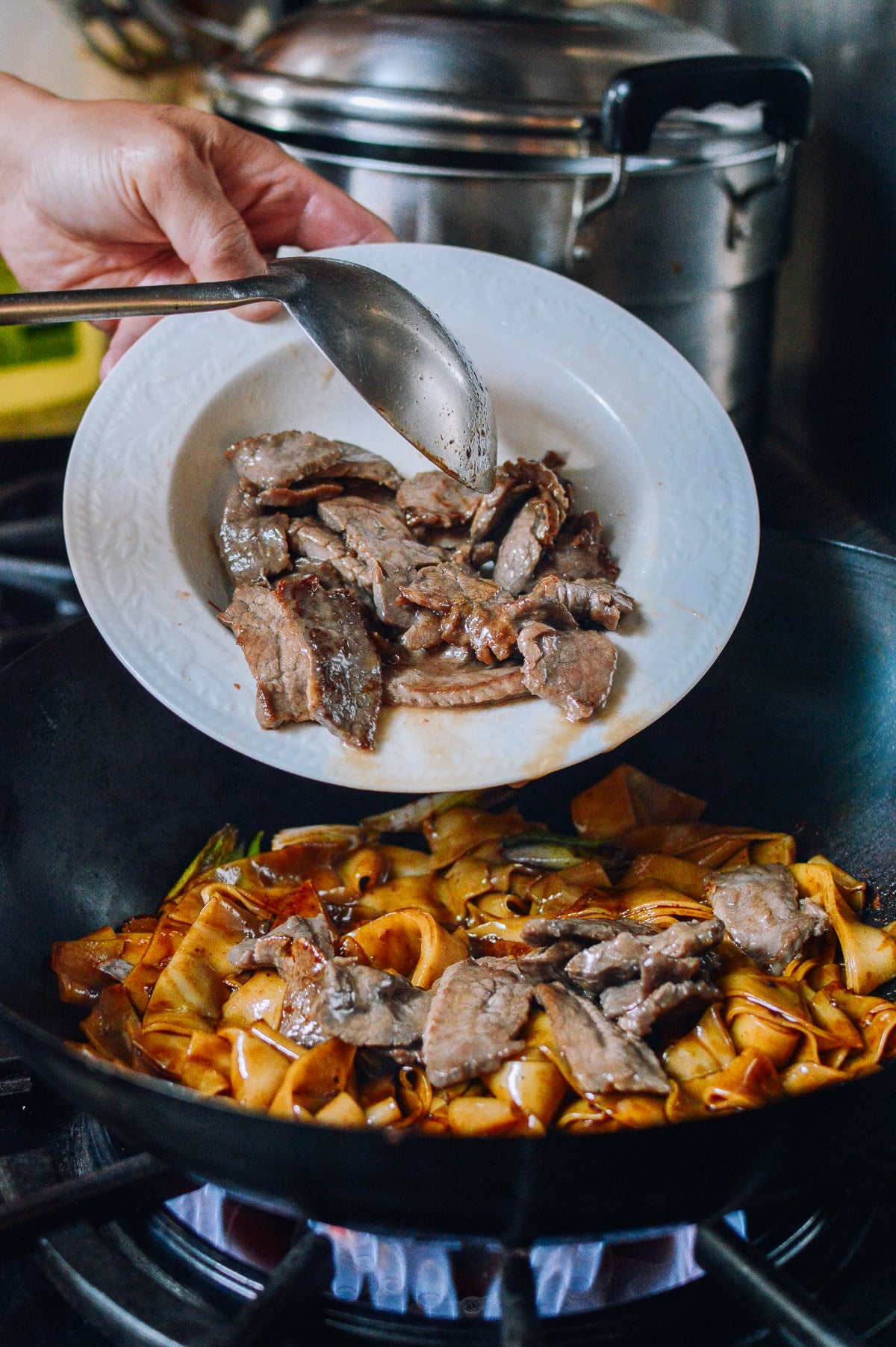
Stir-fry, making sure your metal wok spatula scrapes the bottom of the wok. Lift the noodles in an upward motion to mix well and coat them evenly with the sauce.
Add a bit of salt and white pepper to taste (taste the noodles before adding salt).
If the rice noodles were cold when you started, you may have to toss the noodles longer to heat them through properly. If the rice noodles were fresh/at room temperature or blanched, less time will be required. Your heat should remain as high as possible at all times. That is the key to achieving wok hei.
Add the bean sprouts and stir-fry until they are just tender.
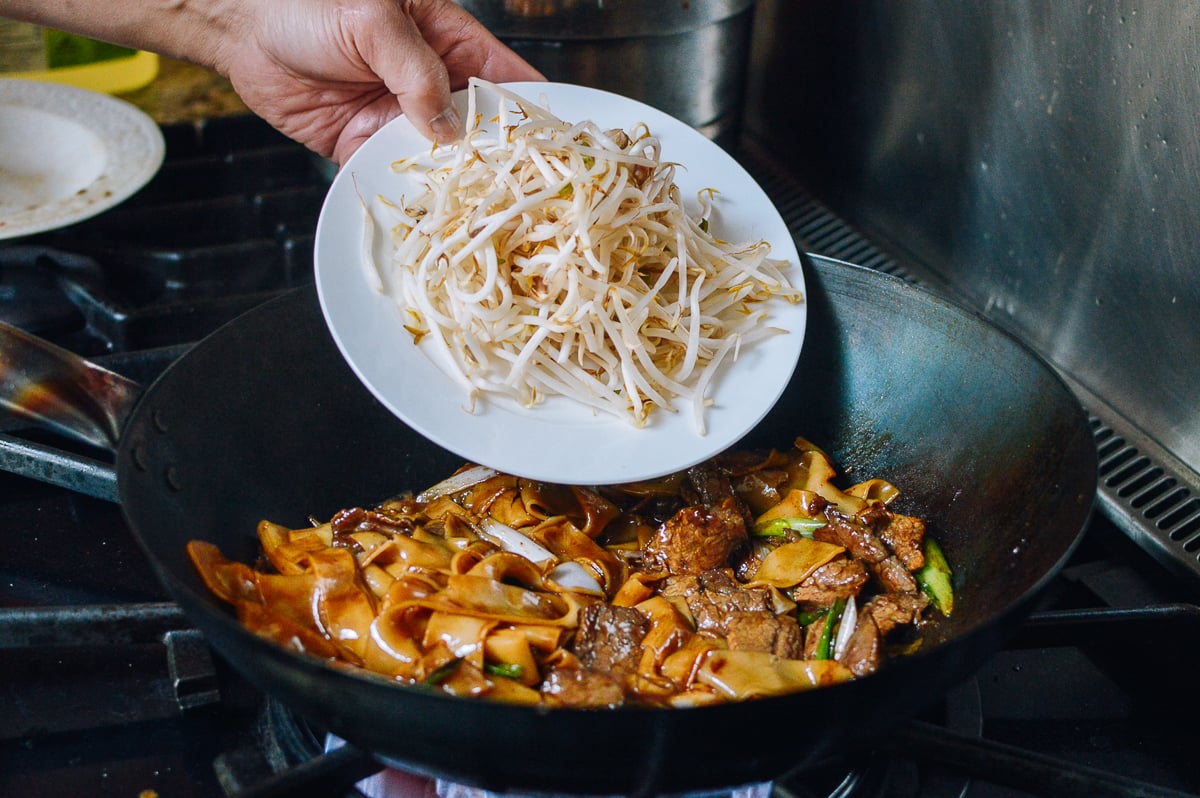
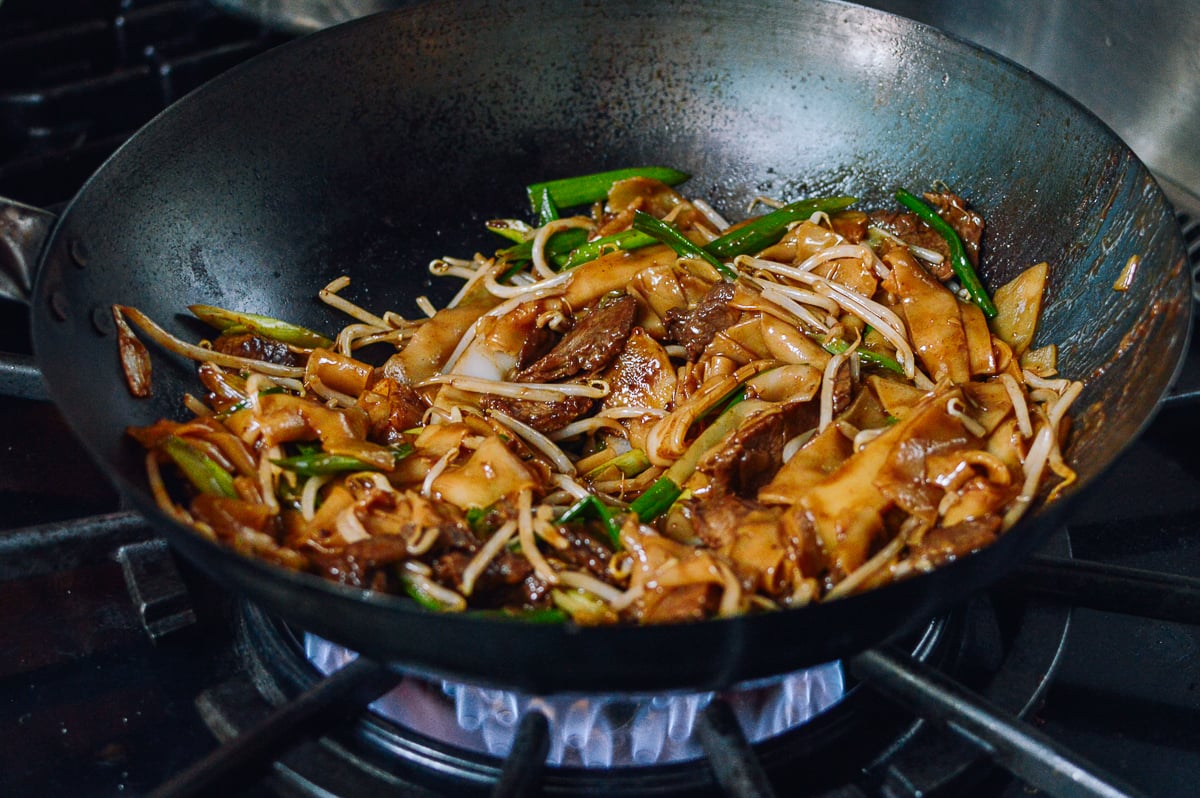
Serve your Beef Chow Fun Noodles piping hot. It’s also great with a little homemade chili oil or chiu chow chili sauce on the side!
Watch: Bill makes Perfect Beef Chow Fun!

Looking for more authentic recipes? Subscribe to our email list and be sure to follow us on Pinterest, Facebook, Instagram, and Youtube!
Recipe
Beef Chow Fun
Ingredients
For the beef & marinade:
- 10 oz. flank steak (225g, sliced into 1/8 thick pieces)
- 1 1/2 tablespoons water
- 1/4 teaspoon baking soda (optional)
- 1 teaspoon cornstarch
- 2 teaspoons oyster sauce
- 2 teaspoons Shaoxing wine
- 1 teaspoon soy sauce
For the rest of the dish:
- 12 oz. fresh wide rice noodles
- 3 tablespoons vegetable oil
- 4 scallions (split in half vertically and cut into 3-inch pieces)
- 3 thin slices ginger
- 2 tablespoons Shaoxing wine
- 2 tablespoons soy sauce
- 2 teaspoons dark soy sauce
- 1/2 teaspoon sesame oil
- 1/4 teaspoon sugar
- salt and white pepper (to taste)
- 4 to 6 ounces fresh mung bean sprouts
Instructions
- Combine the sliced flank steak, water, baking soda, cornstarch, oyster sauce, Shaoxing wine, and soy sauce. Marinate for at least 30 minutes.
- Some fresh rice noodles come as large sheets, while others are already cut. If you have the sheets, slice the rice noodles so they're about 1 inch wide. If the noodles are very stiff and stuck together, bring a wok full of water to a boil, and add the noodles. Blanch them for 30 seconds to loosen. Transfer to an ice bath and drain thoroughly. If using dried rice noodles, soak in hot water for a few hours, or in cold water overnight.
- Heat your wok over high heat until smoking, and add 1 1/2 tablespoons oil to coat the wok. Add the beef and sear until browned. As long as your wok is hot enough, the meat shouldn't stick. Set aside. Add 1 1/2 tablespoons more vegetable oil to the wok. Add the ginger to infuse the oil with its rich flavor for about 15 seconds. Add the scallions.
- Spread the noodles evenly in the wok and stir-fry on high for about 15 seconds. Add the Shaoxing wine around the perimeter of the wok.
- Next, add the soy sauces, sesame oil, sugar, and the seared beef. Stir-fry, making sure your metal wok spatula scrapes the bottom of the wok. Lift the noodles in an upward motion to mix well and coat them evenly with the sauce.
- Add a bit of salt and white pepper to taste (taste the noodles before adding salt). Add the bean sprouts and stir-fry until they are just tender. Serve!
Tips & Notes:
Nutrition Facts
Note: We originally published this post on June 12, 2014. We’ve updated it with new photos, an instructional video, nutrition info, metric measurements, and more, though the original recipe remains. Enjoy!